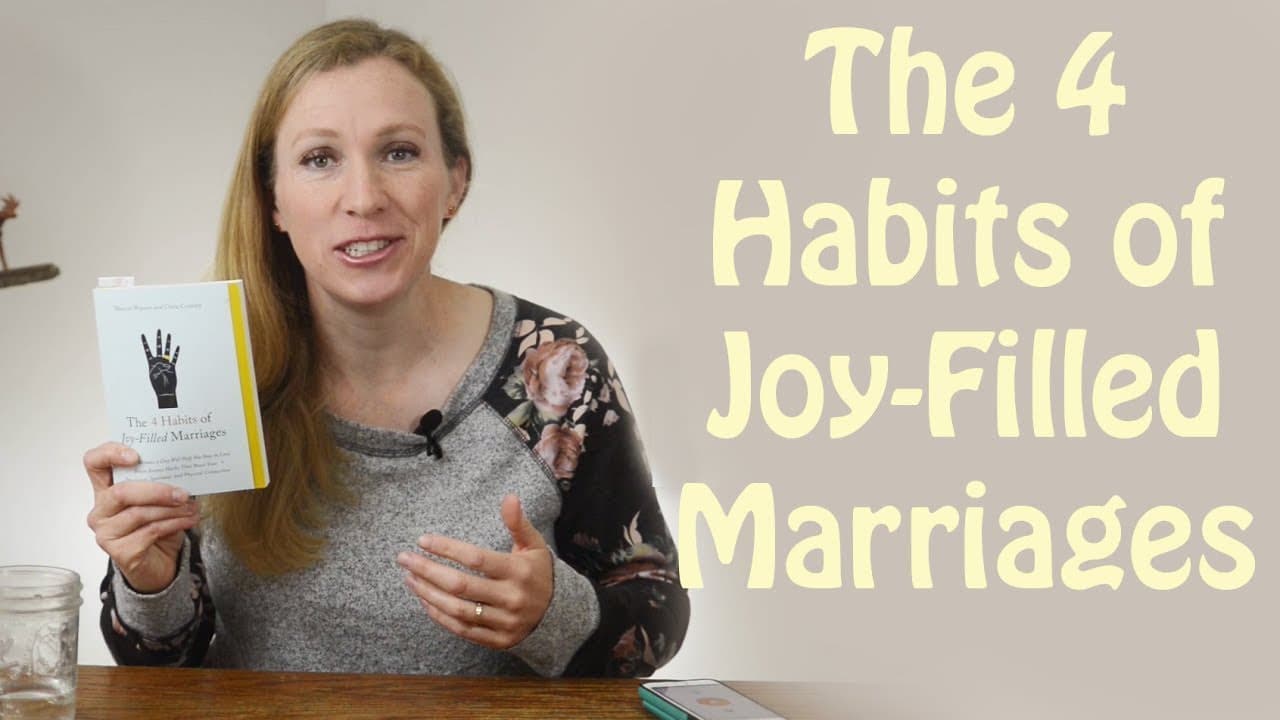
4 Habits of Joy-Filled Marriage Book Review: How Can You Improve Your Marriage in 15 Minutes a Day?
TL;DR
You can improve your marriage in 15 minutes a day by practicing four habits: play together, listen for emotion, appreciate each other, and nurture a rhythm. In The 4 Habits of Joy-Filled Marriages, Chris Coursey and Marcus Warner explain how these exercises shrink the “joy gap” between shared positive experiences and strengthen affection. Read on for practical ways to activate relational thinking and build more joy together.
Transcript
Hi everyone Emma Mcadam here, I've got a new favorite book about relationships and it's called the four habits of joy filled marriages. So in this little nugget of help I'm gonna sum up why I love this book, and what I learned from it including how to turn on the relational circuits of your brain, and I'm also going to talk about what the four ... Read More
Key Insights
- The joy gap is the length of time between having joyful experiences with someone, and shrinking it is the core mechanism this book uses to strengthen a marriage rather than focusing on communication or conflict-management skills.
- The brain has two main settings: a relational mode that is gentle, kind, and connects with others on their level, and a transactional mode focused on problem-solving and risk avoidance that treats a partner's feelings as problems to remove.
- Attachment is described as more important to the brain than physical survival, with loss of attachment through death or divorce ranking among life's most painful experiences and love and connection among the most joyful.
- Two bond types shape relationships: a joy bond focuses on connection, growth, and love, while a fear bond fixates on problems, sees threats that don't exist, and gradually drives partners apart.
- Neuroplasticity means attachment style is not fixed; you can enlarge your 'joy bucket,' your capacity for joy, by constantly using it through relational exercises.
- The acronym CAKE turns on relational circuits: Curiosity (notice your narrative and look for alternative facts), Appreciation (list what you value in your spouse), Kindness (a checklist of things your partner likes), and Eye contact (the foundation of attachment).
- The four habits of joy-filled marriages are playing together, listening for emotion, appreciating each other, and nurturing a rhythm, each practiced through simple daily 15-minute activities.
- Communication is useless if your relational circuits aren't on, so listening for emotion means reflecting back only feelings without problem-solving, which is hard because our knee-jerk reaction is to listen for problems.
Install to Summarize YouTube Videos and Get Transcripts
Explore YouTube Video Summarizer or Get YouTube Transcript Extractor
Questions & Answers
Q: What are the four habits of joy-filled marriages?
The four habits are playing together, listening for emotion, appreciating each other, and nurturing a rhythm. The book supports these habits with simple 15-minute activities that spouses can practice every day to foster more joy and love.
Q: How can you improve your marriage in 15 minutes a day?
Choose one of the book’s short exercises and practice it with your spouse each day. These activities apply the four habits and help shrink the time between joyful shared experiences, increasing affection and appreciation.
Q: What is the joy gap in a marriage?
The joy gap is the length of time between joyful experiences with someone. Shrinking that gap strengthens a marriage because frequent joy encourages affection and appreciation, which in turn foster more joy.
Q: What does the CAKE acronym stand for?
CAKE stands for Curiosity, Appreciation, Kindness, and Eye contact. Curiosity means questioning your assumptions about your spouse, appreciation means identifying what you value, kindness focuses on what your partner likes, and eye contact supports attachment.
Q: How does relational thinking differ from transactional thinking?
The relational part of the brain connects gently and kindly with another person on their level. The transactional part focuses on problem-solving and risk avoidance, which can make a spouse’s feelings seem like problems that need to be removed.
Q: Why does the book focus on joy instead of conflict-management skills?
The book argues that people marry to experience joy and love together, not simply to communicate well or negotiate conflict. Its solution-focused exercises aim to create more positive connection, helping relationships remain intact even during problems or upsetting emotions.
Q: What is the difference between a joy bond and a fear bond?
A joy bond centers a relationship on connection, growth, and love. A fear bond directs attention toward problems and perceived threats, causing partners to notice the negative and gradually grow apart.
Q: Can you change your attachment style according to the book?
Yes. The authors use neuroplasticity to explain that attachment style is not fixed and that people can enlarge their “joy bucket,” or capacity for joy, through repeated practice. The four types of relational exercises are designed to help develop that capacity.
Summary & Key Takeaways
-
Emma McAdam reviews The 4 Habits of Joy-Filled Marriages by Chris Coursey and Marcus Warner, praising it as solution-focused, short, and packed with simple 15-minute daily exercises. Instead of teaching conflict or negotiation skills, it strengthens marriage by shrinking the joy gap and building affection and appreciation between partners.
-
The core idea is that the brain has a relational setting that connects gently with others and a transactional setting focused on problem-solving. Attachment research reveals joy bonds that foster connection and fear bonds that fixate on threats, but neuroplasticity lets you enlarge your joy bucket by practicing relational exercises.
-
The CAKE acronym (Curiosity, Appreciation, Kindness, Eye contact) turns on relational circuits. The four habits are playing together, listening for emotion, appreciating each other, and nurturing a rhythm. Listening for emotion means reflecting feelings back without problem-solving, connecting first so the relationship grows stronger regardless of outcomes.
Read in Other Languages (beta)
Share This Summary 📚
Summarize YouTube Videos and Get Video Transcripts with 1-Click
Try YouTube Summary with ChatGPT & Claude or YouTube Transcript Generator
Explore More Summaries from Therapy in a Nutshell 📚


Summarize YouTube Videos and Get Video Transcripts with 1-Click
Try YouTube Summary with ChatGPT & Claude or YouTube Transcript Generator