How Does AI Enhance Data Management?
TL;DR
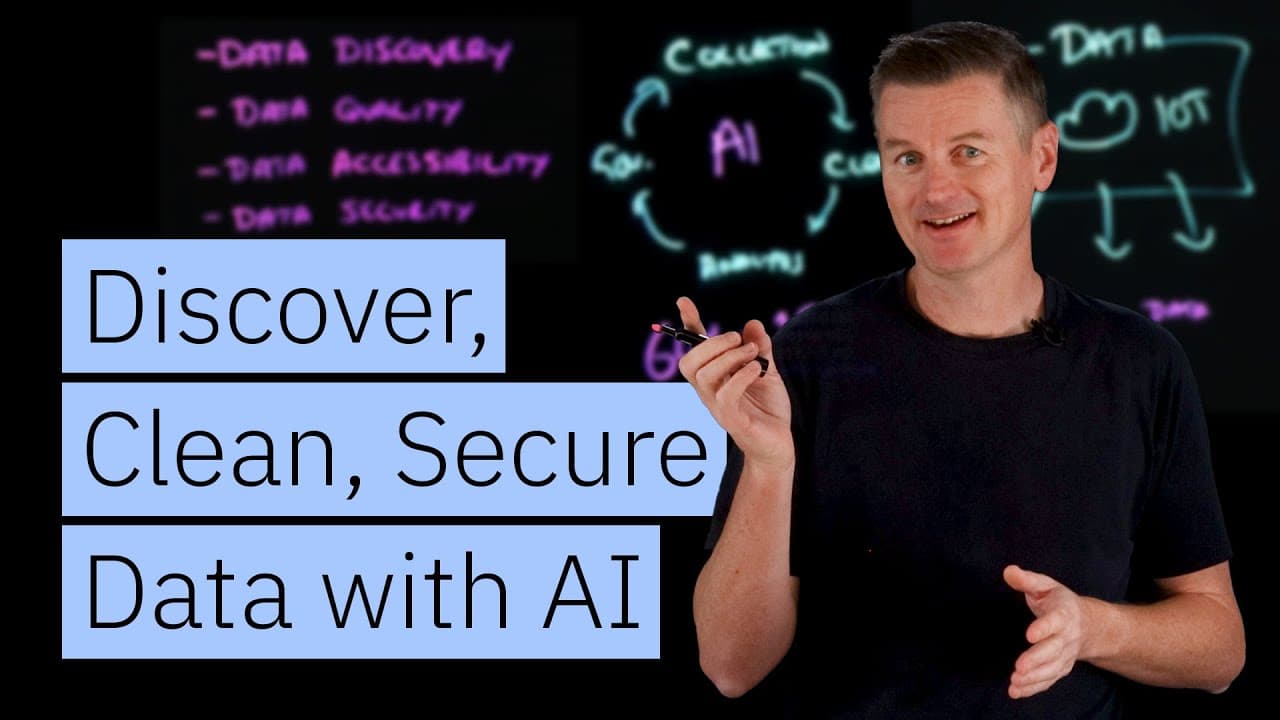
AI data management leverages AI technologies to streamline data collection, cleaning, analysis, and governance, making enterprise data more accurate, accessible, and secure. It addresses challenges like shadow data and bad data, using techniques such as smart classification, natural language processing, and anomaly detection to enhance data discovery, quality, and security.
Transcript
What is AI data management? Well, consider the data management life cycle. So we have a collection stage, a data collection stage. We have a data cleaning stage, a data analysis stage, and then a data governance stage. And this is all in a life cycle, well, AI data management is simply using AI technologies to help automate or streamline each of th... Read More
Key Insights
- AI data management automates data lifecycle stages to improve data accuracy, accessibility, and security.
- 64% of organizations manage at least one petabyte of data, often spread across multiple systems.
- AI helps automate data discovery using smart classification and natural language processing.
- Shadow data refers to unmanaged data assets that organizations may not be aware of.
- AI-powered tools improve data quality through automated cleansing and synthetic data generation.
- Anomaly detection with AI identifies data inconsistencies that deviate from established patterns.
- Natural language data queries allow users to interact with data using plain English requests.
- AI-driven systems enhance data security by implementing adaptive access controls and monitoring user behavior.
Install to Summarize YouTube Videos and Get Transcripts
Explore YouTube Video Summarizer or Get YouTube Transcript Extractor
Questions & Answers
Q: How does AI improve data discovery?
AI improves data discovery by automating the classification and organization of data using smart classification and natural language processing. Smart classification enables machine learning algorithms to label data based on content, making it more visible and searchable. Natural language processing helps process unstructured text, transforming it into structured records, enhancing data accessibility and usability.
Q: What is shadow data?
Shadow data refers to data assets that an organization is not actively managing or may not even be aware of. This data is often distributed across various systems and formats, existing in silos without central visibility. Shadow data poses challenges as it remains unanalyzed and unused, potentially storing costs without providing value to the organization.
Q: How does AI enhance data quality?
AI enhances data quality by automating data cleansing processes and generating synthetic data to fill in missing values. It uses pattern matching to detect anomalies in datasets, alerting users to inconsistencies. By reducing the need for manual data cleaning, AI ensures that the data used for decision-making is accurate, complete, and reliable, minimizing the risks associated with bad data.
Q: What role does AI play in data integration?
AI plays a critical role in data integration by automating the detection of relationships between different datasets. AI-enabled integration tools suggest how to join or merge datasets, streamlining the process of combining data from various sources. This reduces the reliance on manual mapping rules and enhances the efficiency and accuracy of data integration efforts.
Q: How do natural language data queries work?
Natural language data queries allow users to interact with data by asking questions in plain English, rather than using complex coding or SQL queries. AI-powered systems understand the intent behind these queries, translate them into appropriate database queries, and return results. This approach makes data more accessible to non-technical users, facilitating easier and more intuitive data exploration.
Q: What is adaptive access control in AI data management?
Adaptive access control in AI data management determines who can access information based on contextual analysis. Instead of applying static rules, AI-driven systems assess user behavior and typical access patterns to dynamically grant or restrict access to data. This approach enhances security by ensuring that data access is aligned with user needs and organizational policies, reducing the risk of unauthorized access.
Q: How does AI improve data security?
AI improves data security by complementing traditional rules-based measures with smart surveillance and adaptive controls. AI-driven tools can detect a wide range of sensitive information, such as personally identifiable information, and apply rules-based policies for protection. Additionally, AI monitors user behavior to flag deviations and employs algorithms for real-time fraud detection, enhancing overall data security.
Q: Why is AI data management important for organizations?
AI data management is crucial for organizations as it enhances the accuracy, accessibility, and security of enterprise data, enabling more informed insights and better decision-making. By automating data lifecycle processes, AI addresses challenges like shadow data, bad data, and security risks. It streamlines operations, reduces manual efforts, and ensures that data is effectively utilized to drive organizational success.
Summary & Key Takeaways
-
AI data management enhances data lifecycle stages, improving accuracy, accessibility, and security. It addresses challenges like shadow data and bad data, using smart classification and natural language processing for data discovery. AI-powered tools automate data cleansing and synthetic data generation, while anomaly detection identifies inconsistencies.
-
Organizations often manage vast amounts of data spread across various systems. AI helps streamline data integration by automating the detection of relationships between datasets. Natural language data queries enable users to interact with data without needing complex coding, making data more accessible and usable.
-
AI-driven systems enhance data security by implementing adaptive access controls and monitoring user behavior. They complement traditional security measures with smart surveillance, helping detect threats and enforce policies effectively. AI data management ultimately fuels informed insights and better decision-making.
Read in Other Languages (beta)
Share This Summary 📚
Summarize YouTube Videos and Get Video Transcripts with 1-Click
Try YouTube Summary with ChatGPT & Claude or YouTube Transcript Generator
Explore More Summaries from IBM Technology 📚






Summarize YouTube Videos and Get Video Transcripts with 1-Click
Try YouTube Summary with ChatGPT & Claude or YouTube Transcript Generator