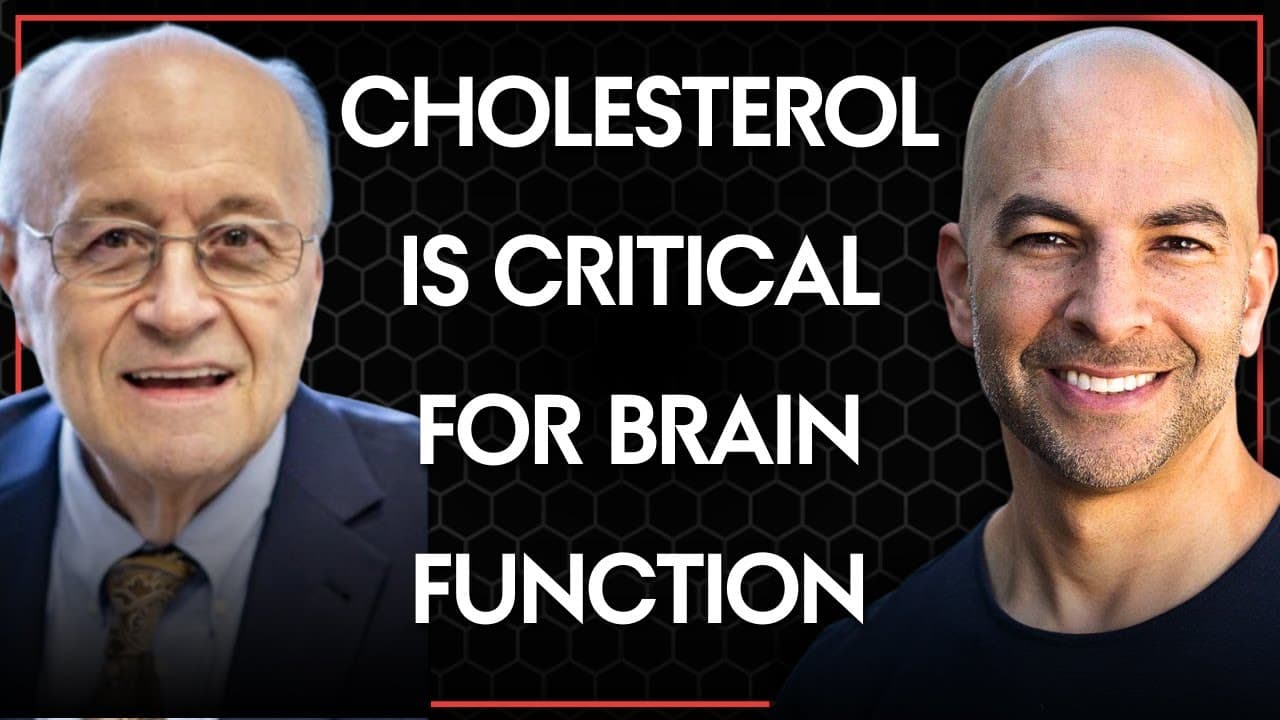
How does brain cholesterol stay separate from peripheral?
TL;DR
Brain cholesterol is synthesized in the brain and not delivered from the periphery. Neurons rely on astrocyte-produced lipoproteins containing apoE for cholesterol delivery, while peripheral cholesterol turnover is rapid. Brain cholesterol molecules can last decades, making brain lipid balance crucial for neural function.
Transcript
let's pivot and talk about the brain a little bit this is an area where your own knowledge has grown rapidly Tom this is clearly an area of immense curiosity for you for me um because you know cholesterol plays an important role in the brain I think to to put it mildly um and people have many questions about the role of cholesterol lowering therapy... Read More
Key Insights
- Brain cholesterol is predominantly synthesized inside the brain, not imported from blood.
- The brain contains its own lipoprotein system, with apoE as the main structural protein.
- Astrocytes supply cholesterol to neurons via brain lipoproteins that interact with neuronal receptors.
- Neurons rely on astrocyte-derived cholesterol for membrane components and myelin support.
- Peripheral lipoproteins do not cross the blood-brain barrier to deliver brain cholesterol.
- Brain cholesterol has a long half-life and can persist for many years.
- Astrocytes and neurons coordinate cholesterol distribution through a dedicated lipoprotein pool.
- Brain HDL-like particles are smaller and rich in apoE, supporting neuron cholesterol uptake.
Install to Summarize YouTube Videos and Get Transcripts
Explore YouTube Video Summarizer or Get YouTube Transcript Extractor
Questions & Answers
Q: How is brain cholesterol produced if it does not come from the bloodstream?
Brain cholesterol is produced de novo within the brain, and none of the cholesterol molecules in the brain are delivered from the peripheral circulation. This means that the brain relies on local enzymatic synthesis to meet its cholesterol needs, ensuring that neuronal membranes and myelin have the necessary lipid components without depending on blood-borne cholesterol.
Q: What cells supply cholesterol to neurons in the brain?
Astrocytes supply cholesterol to neurons in the brain. They synthesize cholesterol and package it into brain lipoproteins that travel through the brain interstitial fluid. These lipoproteins, containing apoE and sometimes apoA1, bind to neuronal receptors and deliver cholesterol to neurons, supporting membrane integrity and function.
Q: What is unique about brain lipoproteins compared to peripheral lipoproteins?
Brain lipoproteins differ from peripheral ones in their protein composition and size. They are apoE-containing particles, often smaller than peripheral high-density lipoproteins, and can include apoA1. They operate within the brain to deliver cholesterol to neurons via receptors, while peripheral lipoproteins rely on ApoB or ApoA1 in the bloodstream.
Q: Do cholesterol molecules in the brain turnover quickly or slowly?
Cholesterol turnover in the brain is very slow. A cholesterol molecule synthesized in the brain can have a half-life of many years, with some estimates suggesting molecules may last up to 30 years. This slow turnover underscores the importance of brain cholesterol for long-term neural structure and function.
Q: Why is brain cholesterol crucial for neurons and myelin?
Cholesterol is essential for neuron membranes and for the formation of myelin. Neurons require cholesterol-rich membranes to support action potentials and signaling, while oligodendrocytes produce myelin whose integrity depends on cholesterol supplied by astrocyte-derived lipoproteins. Without adequate brain cholesterol supply, neural transmission and insulation could be compromised.
Q: Can peripheral LDL or HDL deliver cholesterol to the brain?
Peripherally circulating lipoproteins do not cross the blood-brain barrier to deliver cholesterol to the brain under normal conditions. The brain maintains its own cholesterol pool through local synthesis and the delivery of cholesterol by brain lipoproteins from astrocytes, which interact with neuronal receptors to supply the needed cholesterol.
Q: What role does apoE play in brain cholesterol transport?
ApoE is the main structural protein of brain lipoproteins, organizing the lipoprotein particles that carry cholesterol within the brain. Neurons express receptors that bind apoE-containing lipoproteins, allowing uptake of cholesterol. The apoE-mediated delivery system is central to maintaining cholesterol homeostasis in brain tissue and supporting neural functions.
Q: How does the brain ensure cholesterol delivery adapts to neuronal needs during development and aging?
During development, neurons and astrocytes coordinate cholesterol synthesis and delivery to support growth and myelination. As aging occurs, only certain brain cells maintain cholesterol synthesis, with astrocytes continuing to supply cholesterol via apoE-containing lipoproteins to neurons. This dynamic balance helps preserve membrane integrity and neural signaling across the lifespan.
Summary & Key Takeaways
-
The brain is the primary site of cholesterol synthesis and turnover, with no cholesterol crossing from the blood under normal circumstances. Astrocytes produce brain lipoproteins rich in apoE to deliver cholesterol to neurons, which then reuse or return delipidated particles. This system supports long lasting cholesterol stores essential for neural activity.
-
Brain cholesterol involves a unique lipoprotein system different from the periphery, centered on apoE and apoA1 in brain HDL-like particles. Neurons express LDL receptors and scavenger receptors to acquire cholesterol, while astrocytes supply it via brain HDLs that are smaller than peripheral lipoproteins. The process is energy intensive but crucial for brain structure and signaling.
-
Understanding brain cholesterol emphasizes that synthesis, delivery, and turnover are slow but essential, with molecules persisting for years. The separate brain cholesterol pool means therapies affecting plasma lipids may not directly alter brain cholesterol dynamics, highlighting the need for targeted approaches in neurological health.
Read in Other Languages (beta)
Share This Summary 📚
Summarize YouTube Videos and Get Video Transcripts with 1-Click
Try YouTube Summary with ChatGPT & Claude or YouTube Transcript Generator
Explore More Summaries from Peter Attia MD 📚

Summarize YouTube Videos and Get Video Transcripts with 1-Click
Try YouTube Summary with ChatGPT & Claude or YouTube Transcript Generator