How India's SpaDeX Mission Enables Space Docking
TL;DR
SpaDeX is intended to give India the ability to dock spacecraft with extremely precise relative motion in orbit. The capability could support satellite servicing, assembly of the planned Bharatiya Antariksh Station, lunar missions, private space businesses, and domestic production of technologies that India currently imports.
Transcript
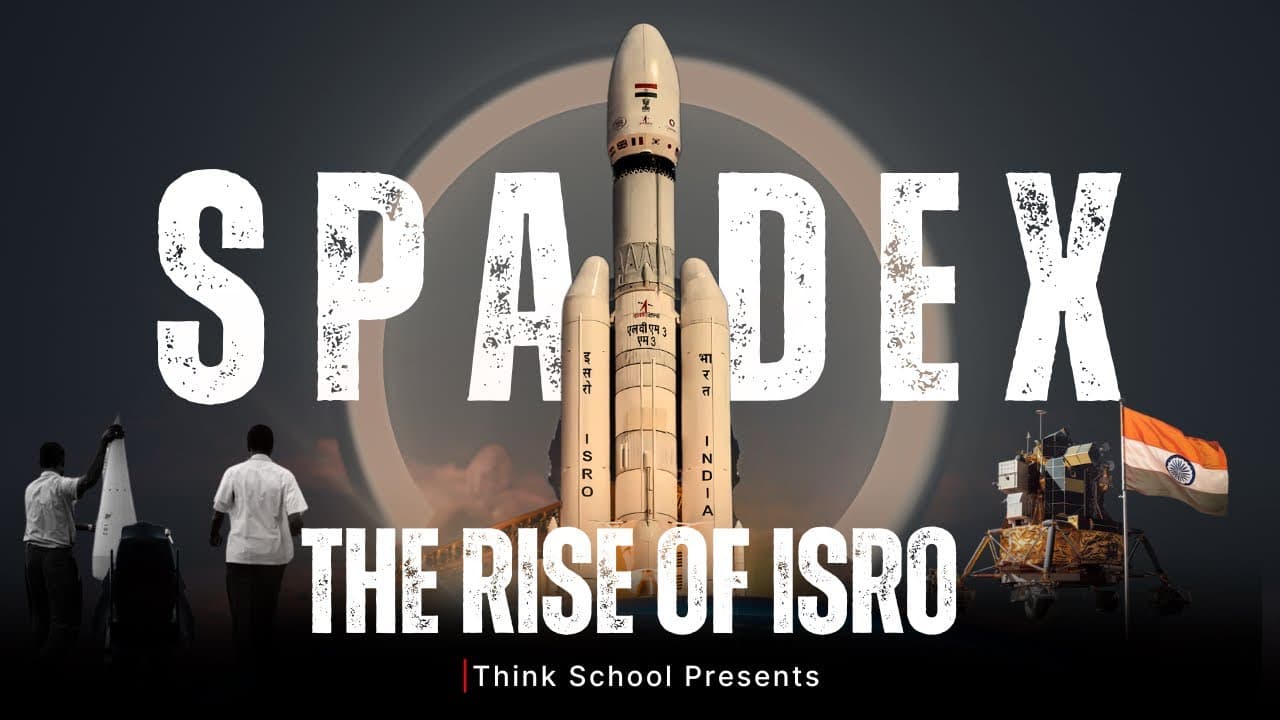
on 30th December 2024 India launched a mission that will go down as one of the most historic Ms in a space journey this mission is the spedex mission the Indian space agency ISRO is gearing up for an exciting Mission prepares to launch it groundbreaking F mission today it is so hard to believe how far we have come once while the Soviets and America... Read More
Key Insights
- SpaDeX is a technology demonstration for joining two independently orbiting satellites called the Chaser and the Target. The spacecraft must coordinate their movement, reduce their relative speed, align with millimeter-level accuracy, and connect without a destructive collision.
- Orbital docking is difficult because both satellites travel at very high speed while their relative motion must become extremely slow. Advanced sensors, computers, and thrusters must continuously assess position, movement, and angle before the docking mechanisms can safely latch together.
- Satellite servicing is a potential economic benefit of docking technology. A specialized vehicle could approach a satellite, repair technical problems, or replenish fuel in orbit, potentially extending the satellite's useful life and reducing the need to replace it immediately.
- Space-station assembly depends on docking because a large orbital station cannot be launched as one complete structure. Its separately launched modules must rendezvous and connect in space, making SpaDeX relevant to India's planned Bharatiya Antariksh Station.
- Future lunar missions can require precise docking between spacecraft operating away from Earth. The transcript links SpaDeX to India's plans for sending an Indian astronaut to the Moon and bringing lunar samples back through the Chandrayaan program.
- Private participation in India's space program is expanding through mission-related manufacturing. Ananth Technologies assembled satellites for an ISRO mission, which the transcript presents as a signal that private companies can assume larger roles within the national space ecosystem.
- Domestic manufacturing is important because India currently imports several mission-critical materials and components. The transcript identifies reinforcement polymers, solar cells, and cryogenic engine materials as areas where successful homegrown alternatives could receive government and venture-capital support.
- Space technology supports public welfare through disaster management, communications, banking connectivity, and agriculture. The transcript argues that satellite data helps predict cyclones, organize evacuations, forecast monsoons, guide crop planning, and connect remote banking infrastructure to the internet.
Install to Summarize YouTube Videos and Get Transcripts
Explore YouTube Video Summarizer or Get YouTube Transcript Extractor
Questions & Answers
Q: What is the SpaDeX space docking experiment?
SpaDeX is an ISRO mission designed to demonstrate orbital docking between two satellites named the Chaser and the Target. After being released separately, the spacecraft coordinate their trajectories with thrusters, sensors, and onboard computers. They must approach slowly, align their positions and angles with very high accuracy, and connect securely without colliding or damaging either satellite.
Q: How does the SpaDeX docking process work?
The Chaser and Target begin separated in orbit and then adjust their motion using onboard thrusters. Although both spacecraft continue moving rapidly around Earth, their speed relative to one another must become extremely small. Sensors and computers monitor every positional and angular adjustment, allowing the Chaser to approach gradually until the docking mechanisms align and latch together safely.
Q: Why is docking spacecraft in orbit so difficult?
Docking is difficult because two independently moving spacecraft must meet with exceptional precision while traveling through orbit at very high speed. A small error in timing, position, relative movement, or angle could cause a collision and destroy both satellites. The maneuver therefore depends on accurate navigation, controlled thrust, advanced sensors, and computers capable of coordinating continuous adjustments.
Q: How could SpaDeX reduce satellite mission costs?
Docking could allow India to send specialized service vehicles to satellites that have exhausted their fuel or developed technical problems. Instead of immediately launching a complete replacement, a servicing craft could potentially refuel or repair the existing satellite in orbit. Extending operational life in this way could make future Indian satellite missions more economical and commercially competitive.
Q: Why is SpaDeX important for India's planned space station?
The planned Bharatiya Antariksh Station must be assembled from components launched separately because the entire structure cannot be sent into orbit as one piece. Each module must approach and connect with other modules in space. SpaDeX helps India develop the rendezvous, alignment, and docking capabilities required to assemble and maintain such an orbital station.
Q: How does SpaDeX support India's future lunar missions?
The transcript connects docking capability with India's plans to send an Indian astronaut to the Moon and return lunar samples through the Chandrayaan program. Such complex missions may involve spacecraft or mission elements meeting and connecting in space. SpaDeX provides a practical demonstration of the precise navigation, controlled approach, alignment, and connection skills needed for those ambitions.
Q: What does SpaDeX mean for private Indian space companies?
SpaDeX demonstrates that private Indian companies can participate directly in major ISRO missions. Ananth Technologies assembled satellites for the mission, which the transcript describes as a historic public-private partnership. Alongside government funding and venture-capital interest, this involvement creates opportunities for startups working in satellite production, servicing systems, specialized materials, propulsion components, and other space technologies.
Q: Why does India invest in space technology despite poverty?
The transcript argues that India's space program directly supports public welfare rather than functioning as a luxury. Satellites monitor weather, predict cyclones, assist evacuations, connect banking infrastructure, and support agricultural planning through monsoon forecasts and crop information. These applications can protect vulnerable communities, improve access to financial services, and help small farmers make decisions based on more accurate data.
Summary & Key Takeaways
-
SpaDeX launches two satellites called the Chaser and the Target into separate orbits before guiding them toward one another. Thrusters, sensors, and onboard computers must coordinate their positions, angles, and relative motion with exceptional precision so the spacecraft can connect safely instead of colliding during the docking maneuver.
-
Docking could make Indian space operations more economical by enabling specialized vehicles to repair or refuel satellites in orbit. The same capability is required to assemble the planned Bharatiya Antariksh Station from separately launched modules and is presented as important for future astronaut and lunar sample-return missions.
-
SpaDeX also signals expanding opportunities for private Indian space companies, investors, and entrepreneurs. The mission involved privately assembled satellites, while government funding and venture capital are supporting startups. The broader push for self-reliance could create demand for domestic alternatives to imported spacecraft materials, solar cells, and engine components.
Read in Other Languages (beta)
Share This Summary 📚
Summarize YouTube Videos and Get Video Transcripts with 1-Click
Try YouTube Summary with ChatGPT & Claude or YouTube Transcript Generator
Explore More Summaries from Think School 📚






Summarize YouTube Videos and Get Video Transcripts with 1-Click
Try YouTube Summary with ChatGPT & Claude or YouTube Transcript Generator