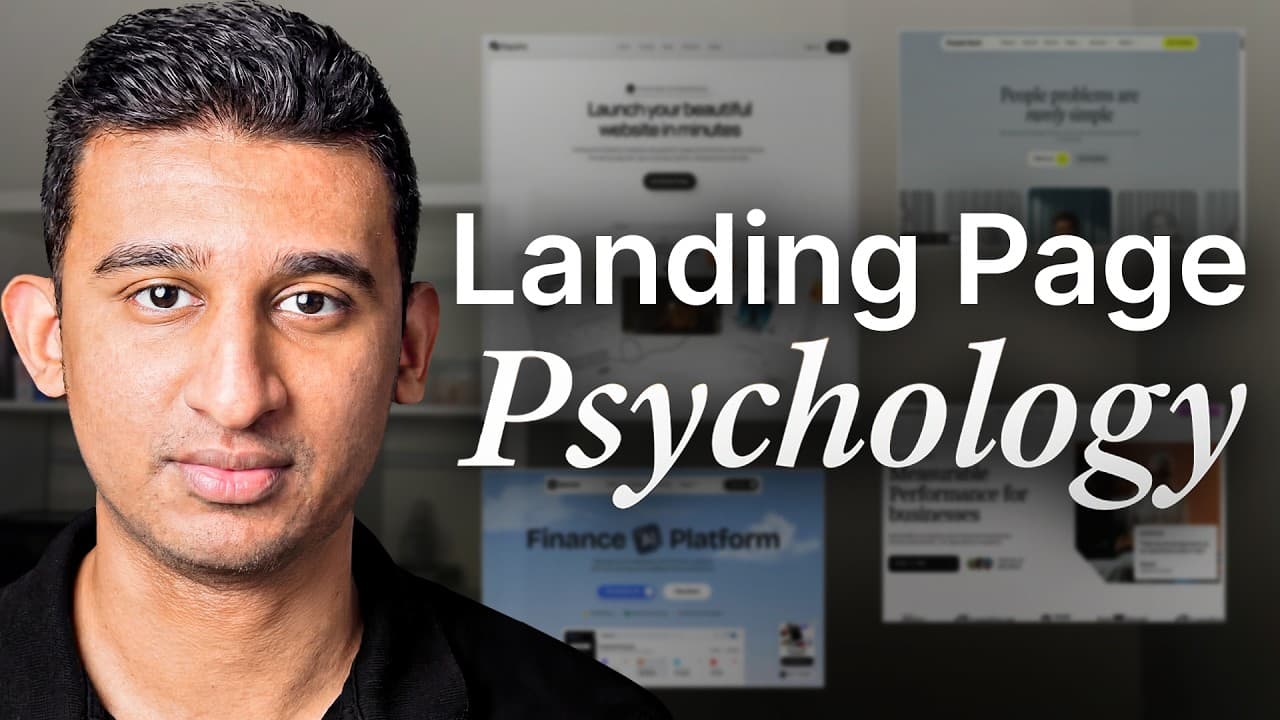
How to boost landing page conversions with psychology
TL;DR
The key to higher landing page conversions is tapping into core human desires and simplifying the message. By using Life Force 8 desires, increasing cognitive fluency, showing the labor behind the scenes, and leveraging loss aversion, you can lift conversions without changing the design or offer. These principles are applied through clear language, visible effort, and targeted framing, with real client examples and testing outcomes.
Transcript
Did you know that there's a few variables on your landing page that controls more of your conversions than your design and offer combined? Most marketers don't pay attention to it and most CRO courses don't even teach it. I run The Relics, a conversion rate optimization firm. And over the past several years, I've personally audited more than 1,500 ... Read More
Key Insights
- Life Force 8 reveals eight core desires that drive action, and tapping into these desires can dramatically increase conversions by aligning messaging with intrinsic needs.
- Cognitive fluency is crucial because easier to understand copy and cleaner layouts reduce mental effort, boosting trust and willingness to convert.
- Sellers should describe not only what is offered but why the buyer needs it, linking outcomes to deeper emotional goals like security, status, or belonging.
- Labor illusion shows that revealing behind the scenes effort or process increases perceived value and trust, even if it slows down the experience slightly.
- Loss aversion is a powerful driver; framing offers with potential losses or price objections mitigates risk and increases urgency to act.
- The halo effect can influence perception by leveraging positive associations from related attributes or endorsements, amplifying overall credibility.
- A practical approach includes a ready-made swipe file of high converting pages and the option for a personalized audit to accelerate performance gains.
- Testing and iteration are essential; real world results from client pages demonstrate how psychological principles translate into measurable conversion lifts.
- More videos from this channel:
- More from this channel: Arsh Sanwarwala | ThrillX
Install to Summarize YouTube Videos and Get Transcripts
Explore YouTube Video Summarizer or Get YouTube Transcript Extractor
Questions & Answers
Q: How can the Life Force 8 framework be used on a landing page to improve conversions
Life Force 8 provides eight core desires that humans are biologically wired to seek, such as care, freedom from fear, social approval, status, attractiveness, comfort, survival, and enjoyment of life. By aligning headlines, benefits, and calls to action with these underlying desires, the page resonates more deeply with visitors. The approach goes beyond generic outcomes to address why the visitor wants the result, which increases motivation to convert and reduces hesitation during the decision journey.
Q: What is cognitive fluency and why does it matter for landing pages
Cognitive fluency is the ease with which information is processed. When copy is simple, sentences are short, and the layout has breathing room, visitors understand the message quickly and form trust more readily. Conversely, jargon and long paragraphs create friction and erode credibility. Improving fluency lowers mental effort, increases perceived honesty, and raises conversion likelihood.
Q: What is the labor illusion and how does it affect perceived value
The labor illusion is the idea that showing the behind the scenes effort behind a product or service increases perceived value. When a page demonstrates steps, processes, or progress bars, visitors feel the offering is more thorough and reliable, which helps justify price and reduces objections. This can improve trust even if the final price remains the same.
Q: How does loss aversion influence landing page design
Loss aversion emphasizes the pain of missing out or the risk of making the wrong choice. By framing offers to highlight what visitors stand to lose by not acting, and by preemptively addressing price objections and risks, you push visitors toward conversion. Clear articulation of benefits and risk mitigation helps overcome hesitation.
Q: What role does the halo effect play in page credibility
The halo effect leverages positive associations from related attributes to boost overall credibility. By pairing strong design, credible testimonials, reputable client logos, or expert endorsements with your core message, visitors infer quality across the whole page. This bias can raise trust and willingness to convert even when some elements are neutral.
Q: Why is it important to sell the core desire rather than just the outcome
Selling the core desire taps into the deeper motivation behind a purchase, not just the surface benefit. People buy to satisfy needs like security, status, or belonging, not merely for the outcome itself. Addressing the underlying why helps create an emotional connection and reduces the likelihood that visitors will disengage when they encounter obstacles.
Q: How can a landing page demonstrate labor behind the product without slowing the user experience
Show progress indicators, explain key steps, or present a concise breakdown of what goes into delivering the product. While this adds some perceived complexity, it reassures visitors that significant effort underpins the offer. The balance is to reveal enough process to build trust while keeping the user journey smooth and focused on the core message.
Q: What practical steps can marketers take to start applying these psychological principles
Begin with a backlog of core desires and map each page section to a relevant one. Rewrite headlines to reflect the why behind the benefit, simplify copy to a fifth grade reading level, and incorporate a visible process or feature list. Use a test plan to measure impact on conversions and iterate based on data to maximize lift while maintaining a clean, trust-inspiring experience.
Summary & Key Takeaways
-
A landing page salience improves when you frame the core desire behind the outcome, focusing on why a person wants the result rather than the result itself. This shifts buyer motivation toward deeper emotional drivers and reduces hesitation.
-
Cognitive fluency increases trust by delivering simple, plain language and a clean layout that a 12 year old could understand, thereby reducing friction and boosting perceived credibility.
-
Labor illusion enhances perceived value by exposing the process and effort behind the product, making the price feel justified and the offering more trustworthy to potential buyers.
Read in Other Languages (beta)
Share This Summary 📚
Summarize YouTube Videos and Get Video Transcripts with 1-Click
Try YouTube Summary with ChatGPT & Claude or YouTube Transcript Generator
Explore More Summaries from Arsh Sanwarwala | ThrillX 📚



Summarize YouTube Videos and Get Video Transcripts with 1-Click
Try YouTube Summary with ChatGPT & Claude or YouTube Transcript Generator