How to Build a Landing Page That Converts
TL;DR
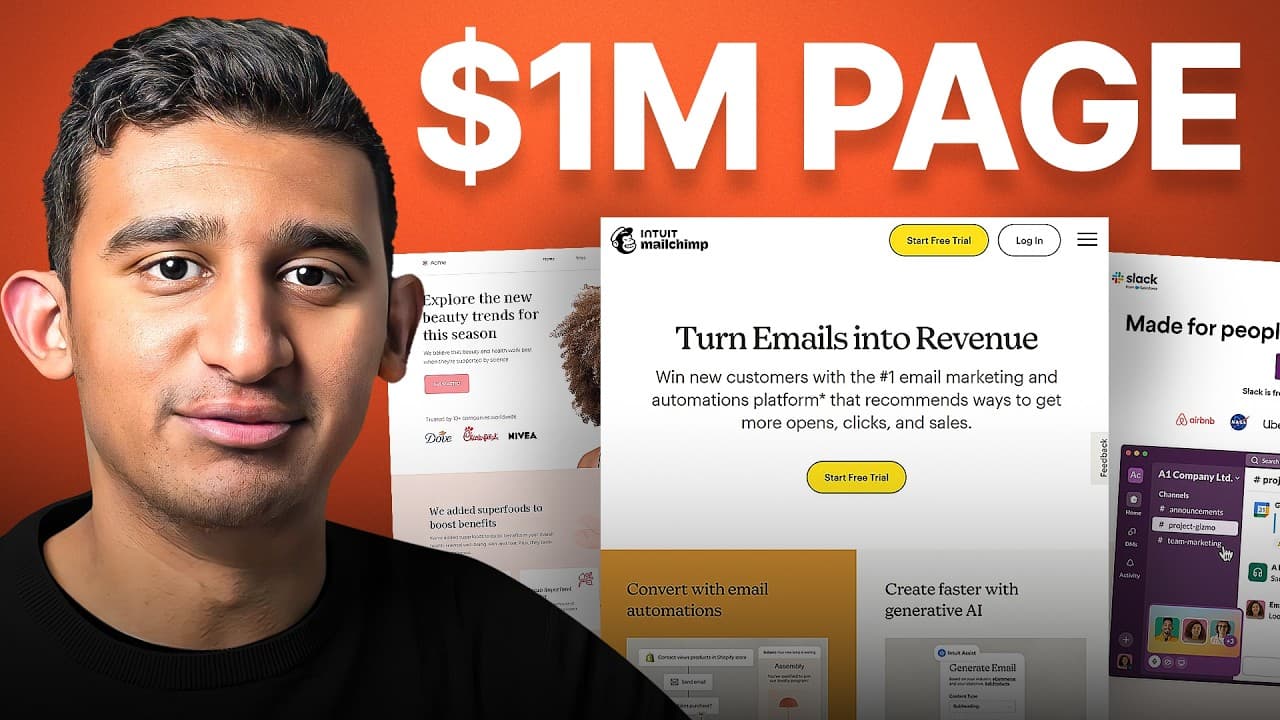
Put most of your initial effort into the above-the-fold section, where every visitor forms a first impression and many decide whether to continue. Lead with a concrete benefit, reinforce it with a differentiated subheadline, visible social proof, a clear call to action, anxiety-reducing terms, and relevant imagery, then structure the rest for emotional impact and fast scanning.
Transcript
Do you ever wonder why some landing pages convert as high as 15% while others barely struggle to get any leads or sales? Well, over my last several years of experience in conversion rate optimization and landing page design, I've spent thousands of hours studying more than 1,500 plus landing pages to find out what actually makes them convert. Acros... Read More
Key Insights
- The five-second rule is the foundation of landing-page performance because visitors must quickly understand the page’s relevance. The above-the-fold area deserves 80 to 90% of the initial effort because every visitor sees it, while 60% may never scroll beyond it.
- A strong headline is a concise statement of the visitor’s desired benefit, not a description of the company or product. Jargon and vague wording increase processing effort, while quantified outcomes such as time saved can make the value more immediate and concrete.
- The subheadline is where the offer can explain what it does and how it produces the promised result. It should communicate the unique selling proposition and distinguish the product or service from competing options after the headline has established why the visitor should care.
- Social proof is most effective when it appears above the fold, where it can establish credibility before visitors decide whether to continue. Reviews, testimonials, and featured publications are valid forms, and the presenter recommends showing at least two forms in this opening section.
- Fear, uncertainty, and doubt can be reduced directly beneath the call to action through free trials, return policies, or warranties. The agency reports conversion-rate increases of 40% to 60% from testing this small addition, showing that reassurance can materially affect action.
- Emotional persuasion works by connecting the offer with an existing frustration or desired future state. Relevant images and problem-focused copy can create that connection, while logical details then help visitors rationalize a decision initially shaped by emotion.
- Long landing pages do not inherently reduce conversions because structure and relevance matter more than length. Every section should move visitors closer to action through value propositions, social proof, case studies, objection handling, or explanations of why the offer fits their problem.
- Visitors scan landing pages instead of reading every sentence, with the transcript stating that people read only 20% of website content. Benefit-focused headings, subheadings, bullet points, and bold emphasis should therefore communicate the main argument even when body text is skipped.
Install to Summarize YouTube Videos and Get Transcripts
Explore YouTube Video Summarizer or Get YouTube Transcript Extractor
Questions & Answers
Q: How should the above-the-fold section of a landing page be structured?
The above-the-fold section should begin with a compelling headline focused on the visitor’s desired benefit. A subheadline should then explain the offer and its unique selling proposition. The section should also include at least two forms of social proof, a clear benefit-driven call to action, reassurance such as a free trial or warranty, and imagery or video that supports the message.
Q: What should a high-converting landing page headline say?
A high-converting headline should answer the visitor’s immediate question: why should I care? It should communicate one concrete, meaningful benefit connected to the visitor’s desired outcome rather than merely naming the company, course, product, or service. The transcript recommends avoiding jargon and vague language because they force visitors to interpret the message instead of quickly recognizing its value.
Q: What is the difference between a headline and subheadline on a landing page?
The headline should capture attention by stating the strongest benefit or dream outcome for the intended customer. The subheadline should provide the supporting explanation, including who the business is, what the offer does, and how it helps achieve the promised result. It should also convey the unique selling proposition that separates the offer from competitors in the market.
Q: Why should social proof appear above the fold?
Social proof should appear above the fold because every visitor sees that section, while the transcript states that 60% of people may never scroll past it. Reviews, testimonials, and featured publications can establish trust immediately and give visitors a reason to continue. Based on repeated A/B testing, the presenter recommends displaying at least two forms of social proof in this area.
Q: How can a landing page reduce fear, uncertainty, and doubt?
A landing page can reduce fear, uncertainty, and doubt by placing clear reassurance immediately beneath its call-to-action button. Depending on the offer, that reassurance might include a free trial, return policy, or warranty. These details address anxieties about buying online or contacting a service provider before they prevent action. The agency reports increases of 40% to 60% from testing this adjustment.
Q: How can emotional persuasion improve landing-page conversions?
Emotional persuasion improves a landing page by connecting the offer to a frustration the visitor already feels or an improved future they want. Images of happy customers, purposeful colors, design choices, and emotionally specific copy can establish this connection. The problem-agitate-solve framework supports the process by naming the problem, intensifying its significance, and then presenting the offer as a solution.
Q: Do long landing pages reduce conversion rates?
Long landing pages do not necessarily reduce conversion rates. The transcript argues that poor structure is the real problem and that length is acceptable when every section contributes value or moves the visitor closer to action. A complete page may need several value propositions, social-proof sections, case studies, answers to objections, and explanations showing why the offer is the best fit.
Q: How should landing pages be designed for visitors who scan?
Landing pages should be organized so that visitors can identify the central benefits without reading all the body copy. Use descriptive, benefit-focused headings and subheadings instead of generic labels such as “What We Do.” Bullet points can surface major value propositions, while bold text can emphasize crucial phrases. On mobile, important reviews should remain exposed rather than hidden inside carousels or dropdown menus.
Summary & Key Takeaways
-
The above-the-fold section must quickly communicate why visitors should care. Its core elements are a benefit-driven headline, an explanatory subheadline, at least two forms of social proof, a prominent call to action, reassurance that reduces fear and uncertainty, and an image or video that supports the central message.
-
Effective landing pages appeal to emotion before supplying logical justification. Images, colors, design, and problem-focused copy can connect the offer to a visitor’s frustration or desired outcome. The problem-agitate-solve framework strengthens that connection by identifying the problem, intensifying its emotional significance, and presenting the offer as a way forward.
-
Page length is less important than structure and value. A longer page can work when each section advances the sale through value propositions, proof, case studies, reassurance, and objection handling. Because visitors scan most content, informative headings, subheadings, bullet points, bold text, and fully visible mobile reviews make essential information easier to find.
Read in Other Languages (beta)
Share This Summary 📚
Summarize YouTube Videos and Get Video Transcripts with 1-Click
Try YouTube Summary with ChatGPT & Claude or YouTube Transcript Generator
Explore More Summaries from Arsh Sanwarwala | ThrillX 📚
Summarize YouTube Videos and Get Video Transcripts with 1-Click
Try YouTube Summary with ChatGPT & Claude or YouTube Transcript Generator