How Does UPI Credit Card Linking Threaten Visa?
TL;DR
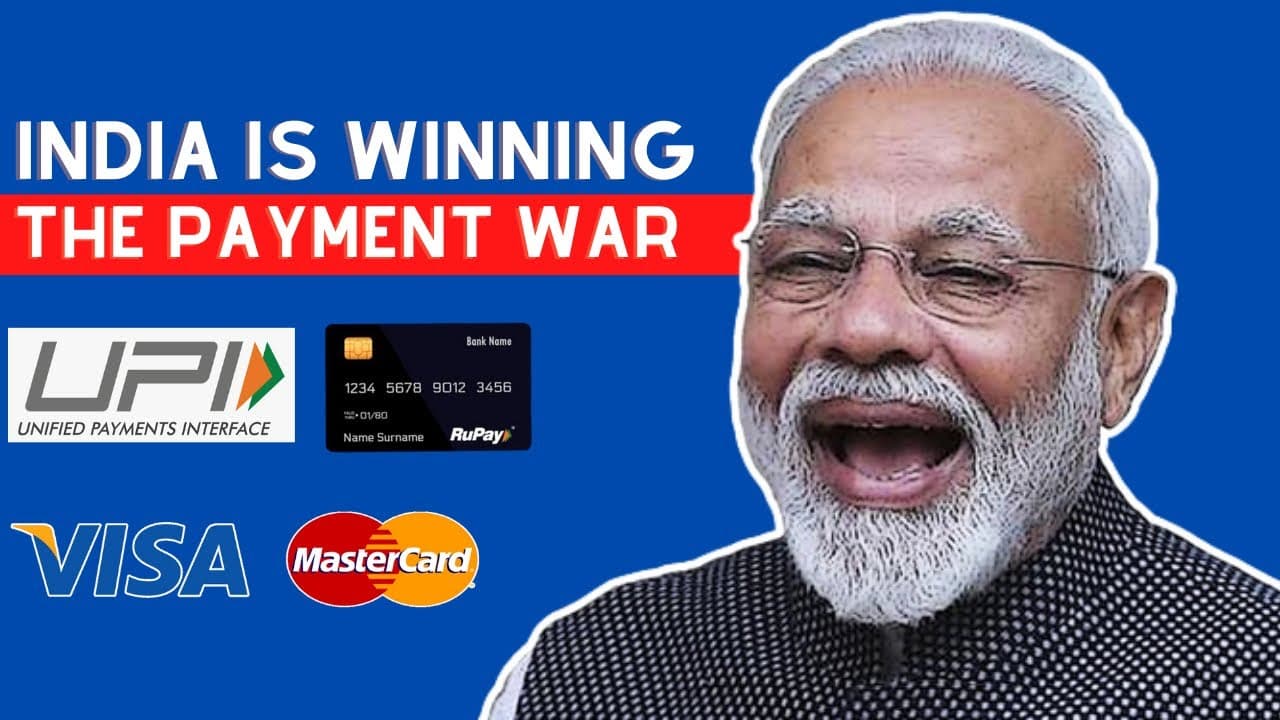
Linking RuPay credit cards to UPI lets you pay from a credit card through a UPI app without using the physical card at all. The threat to Visa and Mastercard is the fear that zero MDR gets extended to credit cards, since merchants would then stop accepting networks that still charge a fee, collapsing their market in India.
Transcript
use of upi the reserve bank is proposed to allow the linking of credit cards to the upi platform the rbi said this facility will be enabled on repair credits the rupee credit cards will be linked to the upi platform this will provide additional convenience to the users and enhance the scope of digital payments rbi is given a major push to the digit... Read More
Key Insights
- Credit card linking to UPI means a RuPay credit card holder can complete credit card transactions through a UPI app using only a mobile phone, without physically presenting or using the card, which is why the announcement was treated as a major shift in India's credit market.
- The card payment flow works by routing information through four parties: the merchant's payment gateway collects card details, the acquiring bank forwards them, the card network routes the request, and the issuing bank approves or declines based on card status and available limit.
- Authorization is the process where the issuing bank confirms the card is not blocked and the credit limit or account balance is sufficient, then returns an authorization code and places the transaction amount on hold in the customer's account before the merchant receives approval.
- The merchant discount rate is not an arbitrary deduction but payment for real value: it compensates the issuing bank for de-risking the transaction and the card network for maintaining the infrastructure that makes the payment complete without hassle.
- Interchange fee is what the customer's bank charges the merchant's bank because the issuing bank takes on the risk of paying the vendor on the customer's behalf, expecting repayment later from the cardholder.
- Switching fee is what the card network charges the customer's bank for enabling the transaction, covering the exorbitant cost of maintaining the payment infrastructure that connects banks, gateways, and merchants.
- Zero MDR for debit cards is defensible because no credit risk exists: the money already sits in the customer's account and simply moves to the merchant, so the bank is not fronting funds and is not owed a risk premium.
- Zero MDR on credit cards would leave banks unrewarded for genuine credit risk, or force the government to fund another heavy compensation program, while simultaneously destroying the fee revenue that gives Visa and Mastercard any incentive to operate in India.
Install to Summarize YouTube Videos and Get Transcripts
Explore YouTube Video Summarizer or Get YouTube Transcript Extractor
Questions & Answers
Q: What is UPI credit card linking and how does it work?
UPI credit card linking is a facility approved by the Reserve Bank of India that lets users connect their credit cards to UPI platforms, enabled first on RuPay credit cards. Once linked, a person who owns a RuPay credit card and a mobile phone can make credit card transactions through a UPI app without using the physical credit card at all. RBI framed it as providing additional convenience to users and enhancing the scope of digital payments, part of a series of measures pushing the digitization agenda forward.
Q: How does a credit card transaction actually get processed in the backend?
When a cardholder enters card details on a website, the site captures the card information and transmits it to the merchant's payment gateway. The gateway collects the card information and transaction amount and passes it to the merchant's acquiring bank. The acquiring bank captures the transaction and forwards it to the credit card network, which routes it to the issuing bank and requests approval. The issuing bank checks card status and available limit, then sends back an authorization code. That approval travels back through the network, the payment processor, the acquiring bank, and finally to the merchant's terminal, which prints or displays a receipt.
Q: What is MDR or merchant discount rate?
MDR stands for merchant discount rate, the fee charged jointly by the issuing bank and the credit card network to carry out a transaction. It is deducted from the merchant's revenue, so the merchant receives the transaction amount minus this fee. On top of MDR, the payment gateway levies its own separate charge, reducing the merchant's take further. MDR is not a random deduction but payment for value adding processes performed by the customer's bank and the card network.
Q: What is the difference between interchange fee and switching fee?
MDR splits into two components. The interchange fee is what the customer's bank charges the merchant's bank because the issuing bank takes a risk by paying the vendor on the customer's behalf, and needs to be compensated for providing that de-risking value. The switching fee is what the card network charges the customer's bank, because the network spends an exorbitant amount maintaining the humongous infrastructure that ensures the payment is carried out without any hassles. Both fees are ultimately deducted from the merchant's revenue as MDR.
Q: Why is MDR higher for credit cards than debit cards?
Two differences separate the two instruments. With a debit card, the amount is deducted directly from the customer's bank account, so no repayment process exists and the bank takes no credit risk. With a credit card, the issuing bank pays the merchant on the customer's behalf and waits to be repaid. Because of this risk and the associated value, credit card MDR is set considerably higher than debit card MDR, which is capped at a much lower level by regulation.
Q: Why would zero MDR on credit cards be a problem?
Three reasons are given. First, unlike a debit card transaction where the money already exists in the account, a credit card transaction means the bank fronts money on the hope of repayment, so zero MDR leaves the bank unrewarded for that credit risk or forces the government into another hefty compensation payout. Second, if RuPay charges nothing while Visa and Mastercard still charge, shopkeepers will simply stop accepting Visa and Mastercard. Third, credit card spending is concentrated among richer users and larger businesses that do not mind paying MDR.
Q: Why does the video call this a threat to Visa and Mastercard?
If zero MDR applies to RuPay credit cards while Visa and Mastercard transactions still carry a fee, merchants have an obvious incentive to refuse the foreign networks entirely, and their market in India would collapse. That would strip away a valuable source of income for those companies, income drawn mostly from wealthier customers and larger merchants. With no fee revenue, Visa and Mastercard would have no incentive whatsoever to operate in India, and the video argues they could quit the market.
Q: What happens if Visa and Mastercard leave the Indian market?
The video identifies two consequences. First, the government would have to absorb the entire load of compensating banks for the losses they incur from zero MDR transactions, and that burden is described as enormous given the scale involved. Second, the government's own card network would become a monopoly, since no competing network would remain to serve Indian merchants and cardholders. The video frames the combined outcome as effectively nationalizing India's card network market.
Summary & Key Takeaways
-
The Reserve Bank of India allowed users to link their credit cards to UPI platforms, starting with RuPay credit cards. RBI framed it as added convenience for users and a wider scope for digital payments, part of a broader push on the digitization agenda. UPI is described as India's most inclusive payment mode, with a very large user and merchant base.
-
A card transaction passes through a chain: the merchant's payment gateway captures card details, forwards them to the acquiring bank, which routes to the card network, which asks the issuing bank for approval. The issuing bank checks whether the card is active and whether enough credit limit or balance exists, then returns an authorization code back down the chain.
-
The fee deducted from the merchant is the merchant discount rate, split into an interchange fee paid to the customer's bank for taking on credit risk and a switching fee paid to the network for running the infrastructure. Debit card MDR is capped much lower than credit card MDR, and the payment gateway charges its own separate percentage on top.
-
The government already set zero MDR for RuPay debit cards and UPI, compensating banks for their losses with a large one-year payout. The fear now is that zero MDR gets extended to credit cards, which is a different situation because the issuing bank is fronting money and carrying real repayment risk rather than moving funds that already exist.
-
Extending zero MDR to credit cards would push merchants to refuse Visa and Mastercard, since those networks would still deduct a fee while RuPay deducted nothing. The video calls this effectively nationalizing India's card network market, leaving the government's own network as a monopoly and the government carrying the full cost of compensating banks.
Read in Other Languages (beta)
Share This Summary 📚
Summarize YouTube Videos and Get Video Transcripts with 1-Click
Try YouTube Summary with ChatGPT & Claude or YouTube Transcript Generator
Explore More Summaries from Think School 📚





Summarize YouTube Videos and Get Video Transcripts with 1-Click
Try YouTube Summary with ChatGPT & Claude or YouTube Transcript Generator