Why Did BYJU'S Lose Money and Investor Trust?
TL;DR
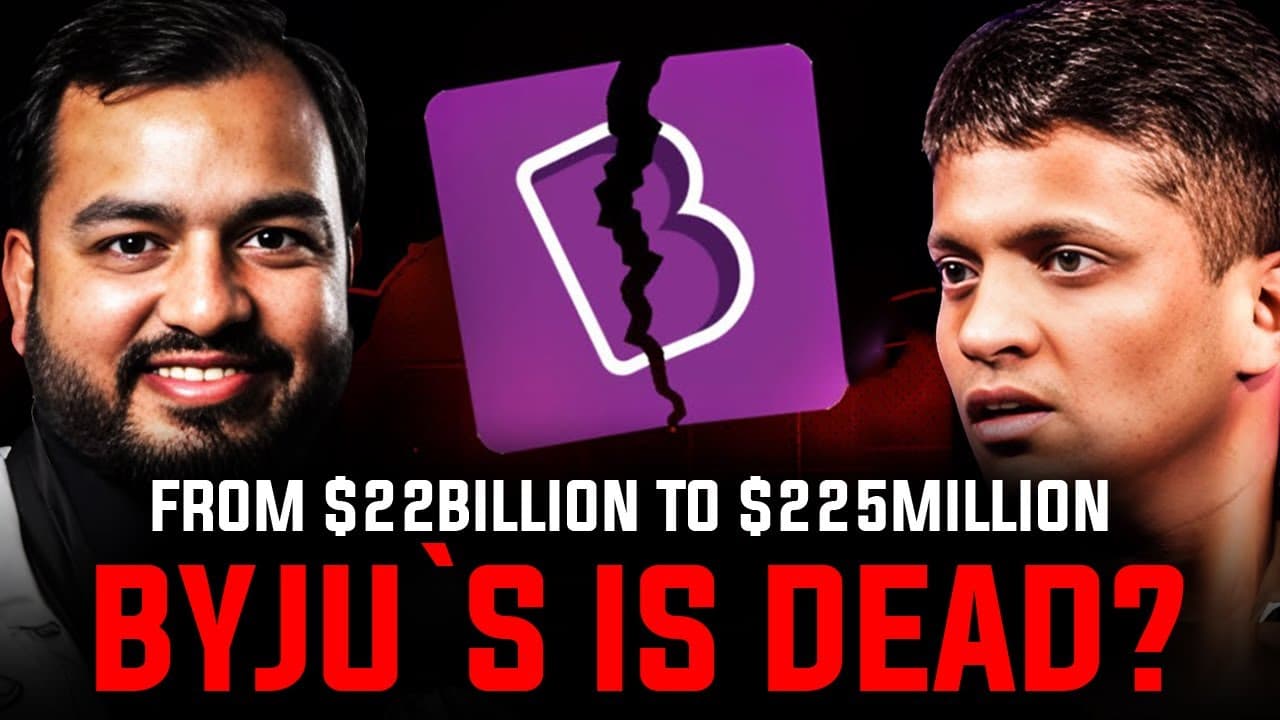
BYJU'S declined because rapid expansion was paired with heavy marketing costs, mounting losses, aggressive sales practices, loan-related customer complaints, and delayed financial reporting. Its experience shows that revenue and user growth cannot protect a company when spending, governance, accounting concerns, customer trust, and operating discipline deteriorate at the same time.
Transcript
hi everybody in 2011 a company that just started with 25 students went on to become one of the most valued startups in Indian history in just 10 years by 2021 not just Millions but hundreds of millions of students were using the resources the greatest star in the country was endorsing them and within no time it became an epitome of the booming edte... Read More
Key Insights
- BYJU'S growth was driven by a learning app, educational content, physical learning materials, tuition services, and a rapidly expanding audience. This combination produced substantial revenue growth and made the company a benchmark for other education technology businesses before its financial and governance problems became prominent.
- Marketing was BYJU'S largest reported cost during a crucial period, covering major sports sponsorships and celebrity endorsements. Such spending was not automatically irrational, but the narrow gap between promotional expenditure and revenue made the model vulnerable when growth slowed and losses continued to rise.
- Aggressive sales practices damaged customer trust by allegedly using repeated follow-ups and anxiety about children's academic futures to encourage purchases. Reports described sales teams approaching families in schools, malls, temples, markets, and other public places, including households with limited incomes.
- Employee sales pressure contributed to harmful customer interactions because associates reportedly faced demanding weekly targets and the possibility of dismissal. Under those conditions, some employees allegedly made misleading statements, frightened parents about academic failure, or pushed families toward expensive packages extending across multiple years.
- Education purchases were sometimes financed through loans, and an investigation cited in the transcript found that some customers did not realize they were entering loan agreements. This created serious affordability, consent, cancellation, and refund concerns, particularly for families with limited income.
- BYJU'S financing model reduced lenders' risk by making the company responsible when participating borrowers defaulted. This arrangement helped financing partners lend more readily to lower-income customers, but it also exposed BYJU'S to repayment liabilities and connected aggressive course sales with additional financial risk.
- Financial reporting problems intensified the crisis because the company failed to file accounts on time while losses, layoffs, valuation reductions, and investor disputes were already attracting scrutiny. Auditor and board departures further weakened confidence in the company's governance and financial transparency.
- BYJU'S demonstrates that user growth and rising revenue do not guarantee a durable company. Heavy promotion, mounting losses, questionable sales methods, financing liabilities, delayed reporting, and damaged stakeholder trust can combine into a crisis even after a business reaches enormous scale and public visibility.
Install to Summarize YouTube Videos and Get Transcripts
Explore YouTube Video Summarizer or Get YouTube Transcript Extractor
Questions & Answers
Q: Why did BYJU'S fall into a financial crisis?
BYJU'S entered a financial crisis because rapid growth was accompanied by very high promotional spending, mounting operating losses, controversial sales methods, financing exposure, and financial reporting delays. The company also faced layoffs, investor disagreements, auditor and board departures, foreign exchange scrutiny, and reputational damage. Together, these problems weakened confidence in the business and contributed to a sharp reduction in its valuation.
Q: How did marketing spending increase BYJU'S business risk?
Marketing increased BYJU'S risk because advertising and promotion became its single largest cost during a key reporting period. The company spent heavily on major sports sponsorships and prominent celebrity ambassadors. Although this strategy strengthened recognition, promotional expenditure came close to the scale of reported revenue, leaving the business exposed when losses mounted and its growth strategy failed to produce sufficiently strong financial outcomes.
Q: How did BYJU'S sales practices damage customer trust?
BYJU'S sales practices damaged trust through allegations of persistent follow-ups, fear-based messaging, and pressure to purchase costly, long-term learning packages. Reports cited in the transcript said some representatives suggested that children might fail without the courses. Sales associates also approached families across schools, malls, temples, markets, and local businesses, including households whose income made the products difficult to afford.
Q: Why were some BYJU'S customers taking loans for courses?
Some customers used loans because BYJU'S courses could be expensive, while financing partnerships made credit easier to obtain. The transcript cites an investigation finding that some complainants were unaware they had been enrolled in loans when purchasing subscriptions. This created problems involving informed consent, interest payments, cancellations, refunds, and affordability, especially for lower-income families targeted by sales representatives.
Q: How did BYJU'S protect lenders financing its customers?
BYJU'S used an arrangement described as a first loss and deposit guarantee strategy. Under this structure, the company acted as a guarantor for customers borrowing from financing partners. If a borrower defaulted, BYJU'S could become responsible for repayments. This protection made lenders more willing to finance customers with limited income, while transferring meaningful default risk back to BYJU'S.
Q: What role did employee sales targets play in the crisis?
Employee sales targets allegedly placed associates under intense pressure to meet demanding weekly goals or risk losing their jobs. According to reports cited in the transcript, that pressure encouraged some representatives to make misleading claims, frighten parents about their children's prospects, or sell packages covering multiple years. These behaviors may have supported short-term sales, but they damaged the brand's reputation and customer relationships.
Q: Why did BYJU'S financial reporting problems concern investors?
Financial reporting delays raised concerns because the company failed to file its accounts on time while already confronting large losses, layoffs, valuation reductions, and questions about business fundamentals. The departure of an auditor and multiple board members added to the uncertainty. The transcript also introduces revenue recognition as an important accounting issue, emphasizing that revenue should be recognized when earned rather than simply when cash is received.
Q: What business lessons can leaders learn from BYJU'S decline?
BYJU'S decline shows that rapid user growth, rising revenue, celebrity promotion, and a high valuation cannot substitute for sustainable economics and trustworthy operations. Leaders must control spending, monitor liabilities created by financing arrangements, protect customers from misleading sales tactics, report financial results promptly, and maintain confidence among employees, auditors, directors, investors, and customers as the organization expands.
Summary & Key Takeaways
-
BYJU'S grew from a small education venture into a widely used learning company selling digital materials, reference books, tuition, and related services. Its learning app attracted a rapidly expanding user base, revenue increased substantially, and major celebrity endorsements helped turn the company into a prominent symbol of India's growing education technology industry.
-
The company's costs and losses rose alongside its growth. Advertising and promotion became its largest expense, with spending covering major sports sponsorships and celebrity ambassadors. Although aggressive marketing supported visibility, the relationship between promotional spending and revenue created significant risk when the business could not establish equally strong financial and operating foundations.
-
Customer trust weakened amid allegations of persistent follow-ups, fear-based selling, demanding employee targets, expensive long-term packages, and unclear loan arrangements. Meanwhile, delayed financial accounts, investor concerns, board and auditor departures, layoffs, foreign exchange scrutiny, and questions about accounting practices intensified the crisis and contributed to a severe valuation decline.
Read in Other Languages (beta)
Share This Summary 📚
Summarize YouTube Videos and Get Video Transcripts with 1-Click
Try YouTube Summary with ChatGPT & Claude or YouTube Transcript Generator
Explore More Summaries from Think School 📚






Summarize YouTube Videos and Get Video Transcripts with 1-Click
Try YouTube Summary with ChatGPT & Claude or YouTube Transcript Generator