How Is Enterprise AI Innovation Changing in 2026?
TL;DR
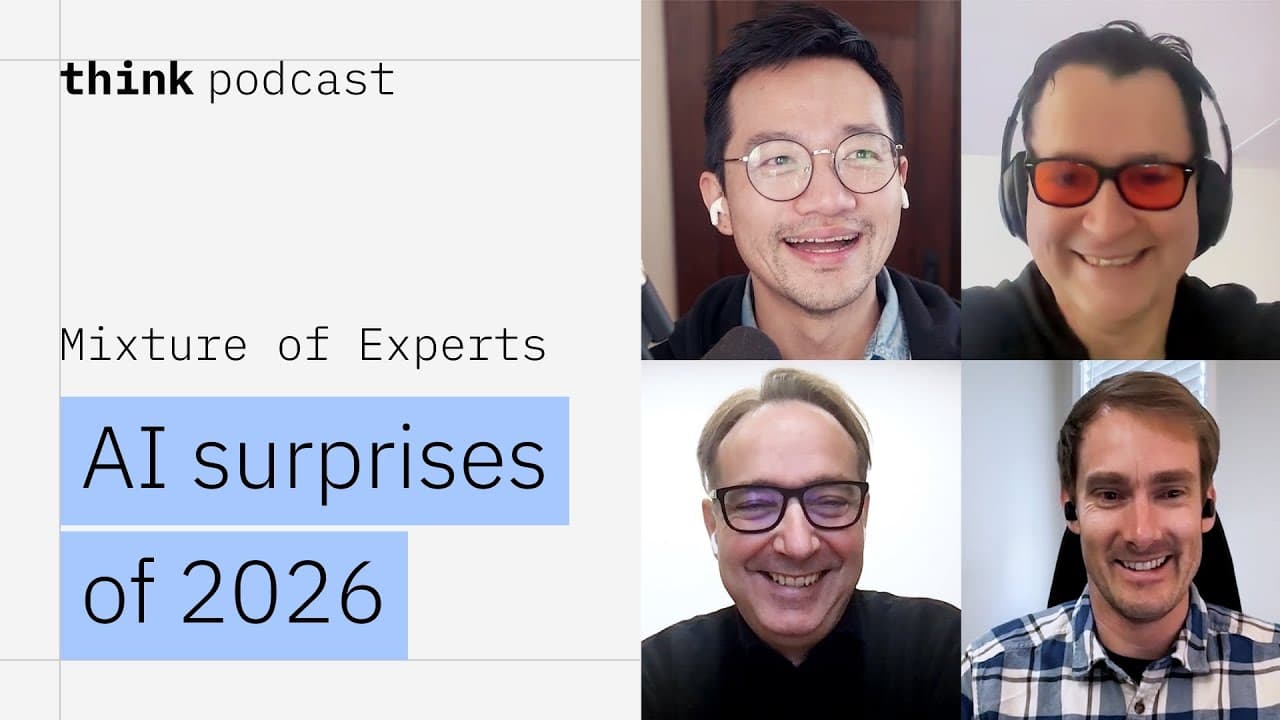
Enterprise AI is shifting from efficiency-focused assistance toward innovation powered by agentic systems, especially in software development. Claude Code’s popularity illustrates the move toward agentic coding, while Open Responses proposes a shared standard for agent APIs. At the same time, advertising in ChatGPT raises unresolved questions about inference costs, access, privacy, trust, and whether commercial incentives can remain separate from generated answers.
Transcript
I've-I've changed my mind. I want the AI now to have my ad profile. I want... I-I... You've convinced me. I was just thinking of it as, like, a sycophantic AI with ... It'd be like, oh my god, Chris, if you have this aftershave, you're gonna smell great. You're gonna be like, the best-smelling guy in the whole wide world. I want to be able to ask q... Read More
Key Insights
- ChatGPT advertising is presented as a way to help pay for costly inference, data centers, partnerships, and compute while preserving free or lower-priced access. The panel views this business-model change as unsurprising because someone must ultimately cover the operating cost of serving a very large user base.
- The eight-dollar Go tier is notable because it reportedly combines higher usage limits with advertising. This arrangement resembles streaming services that initially offered inexpensive ad-free access but later introduced advertisements into cheaper plans when their original economics proved difficult to sustain.
- Trust depends on keeping generated content independent from advertising incentives. OpenAI’s stated principles, as discussed by the panel, say that advertising profiles will not influence generated answers and that advertisements will exist in parallel with model output, although the participants question how durable that commitment will be.
- Advertising profiles can create privacy concerns beyond the chatbot itself. One panelist wants to ask about Pokémon for his children without causing Pokémon promotions to appear throughout his broader internet experience, illustrating why users may resist their AI conversations being shared with other advertisers.
- Advertising can subsidize access for students, educators, and people who cannot afford subscriptions. The panel identifies this as a potentially positive outcome, provided that commercial incentives do not compromise the assistant’s usefulness, independence, or position as a trusted partner.
- Claude Code’s popularity reflects a shift from assisted AI toward agentic AI coding. Developers are discovering systems that can participate more directly in software creation, and the discussion frames this as a meaningful transformation in how software may be built rather than another incremental coding aid.
- Enterprise AI strategy is moving from efficiency toward innovation. IBM’s Enterprise 2030 study is described as revealing how executives plan to use AI not only to improve existing operations but also to power new forms of enterprise innovation by the end of the decade.
- Open Responses is a proposed standard for agent APIs that could reshape AI development. Its promise lies in creating a more common interface for agents, while its adoption also raises questions about transparency, organizational control, and how much developers can understand or influence underlying systems.
Install to Summarize YouTube Videos and Get Transcripts
Explore YouTube Video Summarizer or Get YouTube Transcript Extractor
Questions & Answers
Q: Why is OpenAI introducing ads into ChatGPT?
OpenAI is introducing advertising as a practical way to support the cost of offering ChatGPT, particularly through free and lower-priced tiers. The panel notes that inference requires substantial compute and points to investments in data centers and partnerships. With approximately 800 million weekly ChatGPT users cited in the discussion, the service needs revenue sources beyond subscriptions to pay for widespread usage.
Q: Will advertisements influence ChatGPT’s generated answers?
The principles discussed by the panel state that generated content will not be influenced by an advertising profile. Instead, advertisements are expected to exist in parallel with model responses. The panel welcomes that separation but remains cautious because such principles are not described as legally binding. Preserving trust will depend on maintaining a clear firewall between answer generation and the economic incentives of advertisers.
Q: How could ChatGPT advertising affect user privacy?
ChatGPT advertising could affect privacy if conversation topics become part of a wider advertising profile or are shared across an advertising ecosystem. One panelist explains that he wants to ask questions about Pokémon for his children without seeing Pokémon promotions everywhere afterward. His preferred boundary is for advertising information to remain contained rather than being sold or transferred to other advertisers.
Q: Can advertising make AI access more affordable?
Advertising could subsidize free or lower-cost AI access for students, educators, and others who cannot afford a subscription. The panel treats this broader accessibility as a positive potential outcome of the model. The tradeoff is that providers must preserve answer quality and independence, clearly separate advertisements from generated content, and avoid turning private conversations into profiles used throughout a larger advertising ecosystem.
Q: Why is Claude Code described as having a breakout moment?
Claude Code is described as having a breakout moment because interest in it is rapidly expanding and developers are discovering what agentic coding can accomplish. The discussion connects its popularity to a broader shift from AI systems that merely assist with individual tasks toward agents that participate more actively in software development. That change is presented as transforming how software gets built.
Q: What does agentic AI coding mean for software development?
Agentic AI coding represents a shift from conventional assistance toward systems that can act more independently within software-building workflows. The panel identifies this as a central change occurring in 2026, with Claude Code serving as a prominent example. Developers are beginning to explore what these agents can do, and that discovery is changing expectations about how software development work can be organized and performed.
Q: How are enterprise AI priorities expected to change by 2030?
IBM’s Enterprise 2030 report indicates that executives plan to shift their emphasis from AI-driven efficiency toward AI-powered innovation. Rather than limiting AI to improving the speed or cost of existing work, enterprises are preparing to use it as a source of broader innovation. The report is discussed as evidence that organizational ambitions for AI are expanding as companies look toward 2030.
Q: What is Open Responses and why does it matter?
Open Responses is a Hugging Face project presented as a new standard for agent APIs. It could reshape AI development by giving developers a common way to work with agent systems. The panel also connects the proposal to questions about transparency and control, suggesting that a shared interface is valuable only alongside careful consideration of what developers can inspect, govern, and influence.
Summary & Key Takeaways
-
OpenAI confirmed that advertising is coming to ChatGPT, prompting debate about how free and lower-cost access will be funded. The panel considers ads inevitable because inference and data-center capacity cost money, but stresses that generated answers should remain independent from advertising profiles and that user information should not feed a broader advertising ecosystem.
-
Claude Code’s rapid rise is presented as a possible breakout moment for agentic coding. The broader change is from AI that merely assists developers to AI agents that participate more actively in building software. This adoption signals that developers are beginning to understand what agentic coding can do and how it can transform development workflows.
-
IBM’s Enterprise 2030 report indicates that executives plan to move beyond using AI primarily for efficiency and toward using it for innovation. Hugging Face’s Open Responses project introduces a potential standard for agent APIs, which could reshape AI development while creating important questions about transparency, interoperability, control, and the organizations defining those interfaces.
Read in Other Languages (beta)
Share This Summary 📚
Summarize YouTube Videos and Get Video Transcripts with 1-Click
Try YouTube Summary with ChatGPT & Claude or YouTube Transcript Generator
Explore More Summaries from IBM Technology 📚


Summarize YouTube Videos and Get Video Transcripts with 1-Click
Try YouTube Summary with ChatGPT & Claude or YouTube Transcript Generator