How Do AI Agents Transform Intelligent Systems?
TL;DR
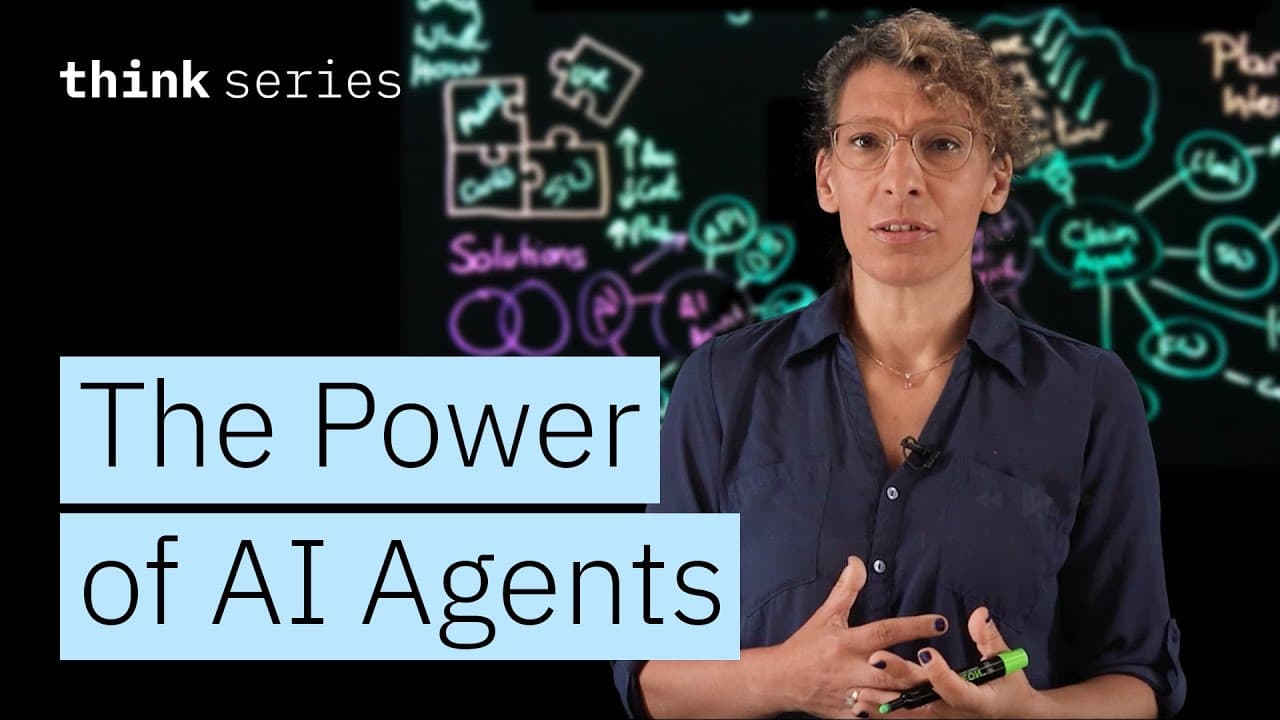
AI agents are powerful because they are goal-driven, context-aware, and can plan and execute complex workflows autonomously. They interact within ecosystems, including the metaverse, to enhance productivity and decision accuracy while reducing operational costs. By automating complex processes, AI agents enable seamless integration of AI capabilities into infrastructure, leading to innovative solutions.
Transcript
The AI ecosystem continues its rapid evolution. Today's users are quickly learning that the strategic integration of AI's various capabilities into holistic solutions is the key to unleashing the full power of the technology. But mapping this Venn diagram of a team's overall goals into an end-to-end AI strategy with components that work seamlessly ... Read More
Key Insights
- AI agents are initiative, goal-driven, and context-aware, unlike traditional reactive AI models.
- AI agents maintain short- and long-term memories, allowing them to learn, reflect, and adjust future behavior.
- AI agents can autonomously plan and execute multistep workflows, enhancing productivity.
- Agentic AI automates the integration of AI models, reducing manual efforts and operational costs.
- AI agents interact with various ecosystem components, including APIs, databases, and other agents.
- AI agents can utilize cloud resources and hardware accelerators for efficient task execution.
- AI agents improve decision accuracy and reduce overhead by automating complex processes.
- AI agents enable holistic solutions by combining AI capabilities to solve real-world problems.
Install to Summarize YouTube Videos and Get Transcripts
Explore YouTube Video Summarizer or Get YouTube Transcript Extractor
Questions & Answers
Q: How do AI agents differ from traditional AI models?
AI agents differ from traditional AI models by being initiative, goal-driven, and context-aware. They maintain short- and long-term memories, enabling them to learn, reflect, and adjust their behavior. Unlike reactive models, AI agents can autonomously plan and execute complex workflows, enhancing productivity and decision-making in intelligent systems.
Q: What role do AI agents play in workflow automation?
AI agents play a crucial role in workflow automation by autonomously planning and executing multistep processes. They interact with various ecosystem components, such as APIs and databases, to carry out tasks efficiently. By automating complex workflows, AI agents reduce manual efforts, improve productivity, and lower operational costs in intelligent systems.
Q: How do AI agents interact within ecosystems?
AI agents interact within ecosystems by communicating with APIs, databases, and other AI agents. They can access cloud resources and utilize hardware accelerators to optimize task execution. This interaction allows AI agents to autonomously manage complex processes, enhancing the integration of AI capabilities and enabling innovative solutions to real-world problems.
Q: What is the significance of agentic AI in infrastructure transformation?
Agentic AI is significant in infrastructure transformation as it automates the integration of diverse AI models into cohesive solutions. By autonomously assembling AI capabilities, agentic AI reduces manual efforts, operational costs, and enhances decision accuracy. This automation enables seamless AI integration, driving innovation, and improving productivity in intelligent systems.
Q: How do AI agents enhance decision accuracy?
AI agents enhance decision accuracy by autonomously managing complex processes and optimizing task execution. They interact with various ecosystem components to access necessary resources and leverage AI models effectively. This autonomous capability reduces manual errors and allows for more precise and informed decision-making in intelligent systems.
Q: What are the benefits of using AI agents in intelligent systems?
The benefits of using AI agents in intelligent systems include increased productivity, reduced operational costs, and enhanced decision accuracy. AI agents autonomously plan and execute workflows, interact with ecosystem components, and optimize resource utilization. This automation leads to innovative solutions, seamless AI integration, and a transformative impact on intelligent system operations.
Q: How do AI agents utilize cloud resources?
AI agents utilize cloud resources by outsourcing specific tasks to cloud-based AI models and processing capabilities. They can access NLP models, LLMs, and GPU banks in the cloud to efficiently execute tasks such as data parsing, policy matching, and image processing. This capability enhances task execution efficiency and optimizes resource utilization in intelligent systems.
Q: What is an example of AI agents solving real-world problems?
An example of AI agents solving real-world problems is in the insurance industry, where an AI claim agent autonomously processes claims. It plans workflows, interacts with databases, and utilizes cloud resources for tasks like policy matching and fraud detection. This automation streamlines the claims process, reduces manual efforts, and improves accuracy and efficiency in insurance operations.
Summary & Key Takeaways
-
AI agents are transformative because they are autonomous, goal-driven, and can plan complex workflows. They interact with ecosystem components, including APIs and databases, to execute tasks efficiently. By automating AI integration, they reduce manual work and operational costs, enhancing productivity and decision accuracy.
-
Agentic AI leverages AI agents to automate the assembly of AI models, enabling seamless infrastructure integration. This results in higher inference accuracy and lower operational costs, as AI agents manage complex processes autonomously, interacting with cloud resources and hardware accelerators to optimize task execution.
-
AI agents facilitate innovative solutions by interacting within ecosystems to solve real-world problems. They enable workflow automation, improving productivity and reducing overhead. By understanding and utilizing AI agents' capabilities, organizations can unlock the full potential of AI technology for transformative impact.
Read in Other Languages (beta)
Share This Summary 📚
Summarize YouTube Videos and Get Video Transcripts with 1-Click
Try YouTube Summary with ChatGPT & Claude or YouTube Transcript Generator
Explore More Summaries from IBM Technology 📚
Summarize YouTube Videos and Get Video Transcripts with 1-Click
Try YouTube Summary with ChatGPT & Claude or YouTube Transcript Generator