How do different saturated fats affect LDL and heart health
TL;DR
Stearic acid tends to raise LDL less than other saturated fats, while palmitic, lauric, and myristic acids raise LDL more, and cheese shows a weaker LDL impact than butter due to a matrix effect. Replacing saturated fats with unsaturated fats lowers LDL, but replacing them with refined carbohydrates does not. Choose fats from avocado, olive oil, nuts, or fatty fish for better lipid profiles.
Transcript
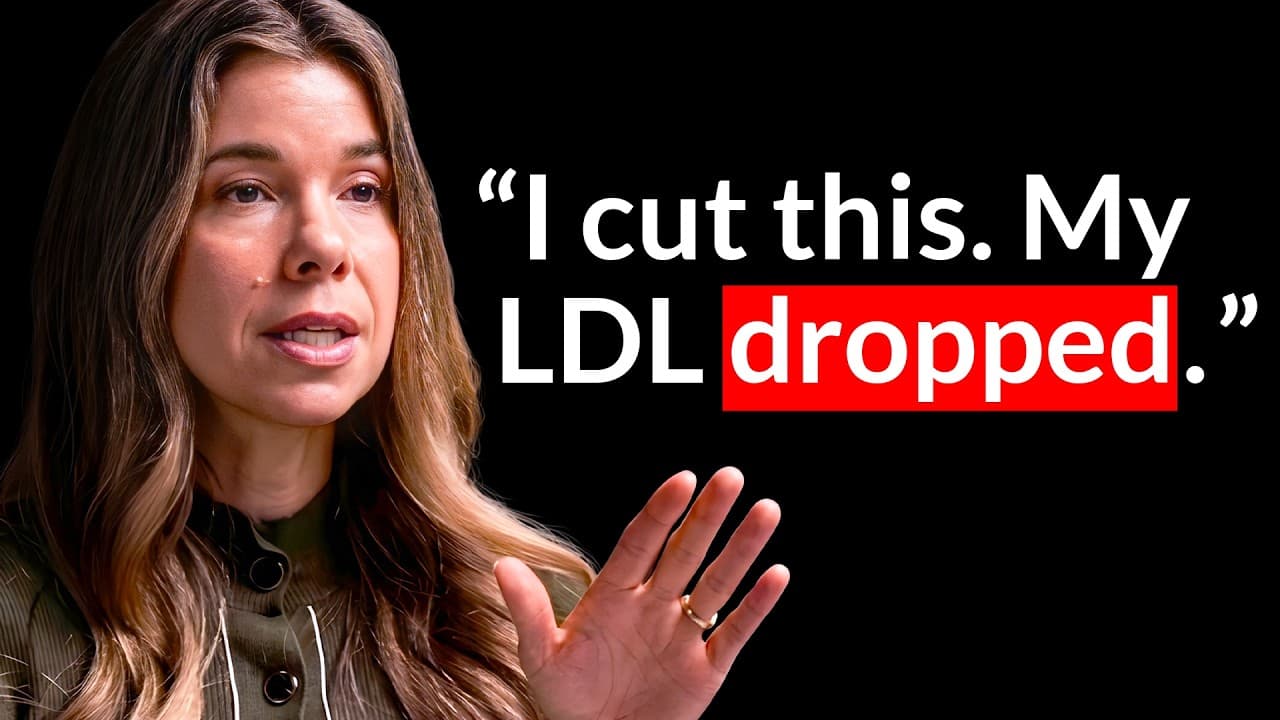
Okay, so the next question I was really interested in myself and it was submitted by David. David asks, is there a hierarchy of saturated fats in terms of causing harm by raising LDL? For instance, stearic acid from chocolate doesn't raise LDL much and now I'm hearing more that the saturated fat in dairy doesn't raise LDL. So in a in a nutshell, le... Read More
Key Insights
- Stearic acid tends to raise LDL less than other saturated fats.
- Down regulating the LDL receptor in the liver increases LDL particles in circulation.
- Cheese has a weaker LDL-raising effect than butter due to the matrix effect.
- Coconut oil generally raises LDL compared to unsaturated fats.
- Replacing saturated fats with monounsaturated or polyunsaturated fats lowers LDL.
- Replacing saturated fats with refined carbohydrates does not reduce cardiovascular risk.
- Beef tallow may have high palmitic acid content, making it less ideal for LDL reduction.
- Overall diet composition matters more than any single fatty acid.
- More videos from this channel:
- More from this channel: FoundMyFitness Clips
Install to Summarize YouTube Videos and Get Transcripts
Explore YouTube Video Summarizer or Get YouTube Transcript Extractor
Questions & Answers
Q: How to lower LDL by fat substitutions in the diet?
Lowering LDL comes from replacing saturated fats with monounsaturated or polyunsaturated fats, which typically lowers LDL and total apoB. It is important to avoid replacing fats with refined carbohydrates or ultra-processed foods, as these do not improve cardiovascular risk. Favor sources like avocado, olive oil, nuts, and fatty fish to support a healthier lipid profile.
Q: Why does cheese raise LDL less than butter despite similar saturated fat content?
Cheese appears to have a weaker impact on LDL than butter due to the matrix effect, where calcium and protein plus the structure of cheese can bind some fatty acids, reducing their absorption. This means cheese may be less LDL raising even with similar saturated fat levels.
Q: What is the LDL effect of stearic acid compared to palmitic acid?
Stearic acid, which is common in chocolate and cocoa butter, tends to raise LDL less than palmitic acid. This is because stearic acid causes less down regulation of LDL receptors in the liver, helping clear LDL from circulation more effectively than palmitic acid.
Q: Does coconut oil raise LDL and by how much?
Coconut oil tends to raise LDL compared to unsaturated fats, though it is not always as potent as butter in every study. It does not appear neutral for LDL, and cutting it from the diet can lower apoB containing lipoproteins in some individuals.
Q: Is beef tallow a good cooking fat for LDL reduction?
Beef tallow may be high in palmitic acid, which is associated with LDL raising effects. This makes it less ideal for lowering LDL compared to cooking with avocado oil or olive oil, which provide monounsaturated and polyunsaturated fats that support better lipid profiles.
Q: What is the impact of replacing saturated fats with refined carbohydrates?
Replacing saturated fats with refined carbohydrates does not reduce cardiovascular risk and can be detrimental. The evidence suggests that the benefits come from replacing saturated fats with unsaturated fats rather than with refined carbs.
Q: What does the evidence say about LDL and cardiovascular disease strength?
The evidence strongly links high LDL particle number and apoB with cardiovascular risk. Genetics can influence LDL levels, such as PCSK9 variants, which illustrate that lowering LDL can be associated with longer life. The overall message is that dietary patterns matter and a food-first approach is best.
Q: What foods should be prioritized to lower apoB and LDL?
To lower apoB and LDL, prioritize foods high in monounsaturated and polyunsaturated fats such as avocado, olive oil, and nuts, plus fatty fish. Avoid or limit saturated fats, especially from butter and palm oil, and minimize intake of refined carbohydrates to support cardiovascular health.
Summary & Key Takeaways
-
Stearic acid is linked to less LDL receptor down regulation in the liver, making it less likely to raise LDL compared to other saturated fats. This helps explain why chocolate and cocoa butter can appear neutral for LDL. The overall message is to favor mono and polyunsaturated fats over saturated fats.
-
Dairy fat effects vary: butter consistently raises LDL, while cheese may raise LDL less due to the matrix effect of calcium and protein binding, reducing absorption of saturated fats.
-
Coconut oil tends to raise LDL more than many unsaturated fats, but not always as much as butter, and is not neutral for LDL. The practical takeaway is to limit coconut oil if lowering apoB and LDL is a goal.
Read in Other Languages (beta)
Share This Summary 📚
Summarize YouTube Videos and Get Video Transcripts with 1-Click
Try YouTube Summary with ChatGPT & Claude or YouTube Transcript Generator
Explore More Summaries from FoundMyFitness Clips 📚






Summarize YouTube Videos and Get Video Transcripts with 1-Click
Try YouTube Summary with ChatGPT & Claude or YouTube Transcript Generator