How Can 9 Minutes of Exercise Improve Health?
TL;DR
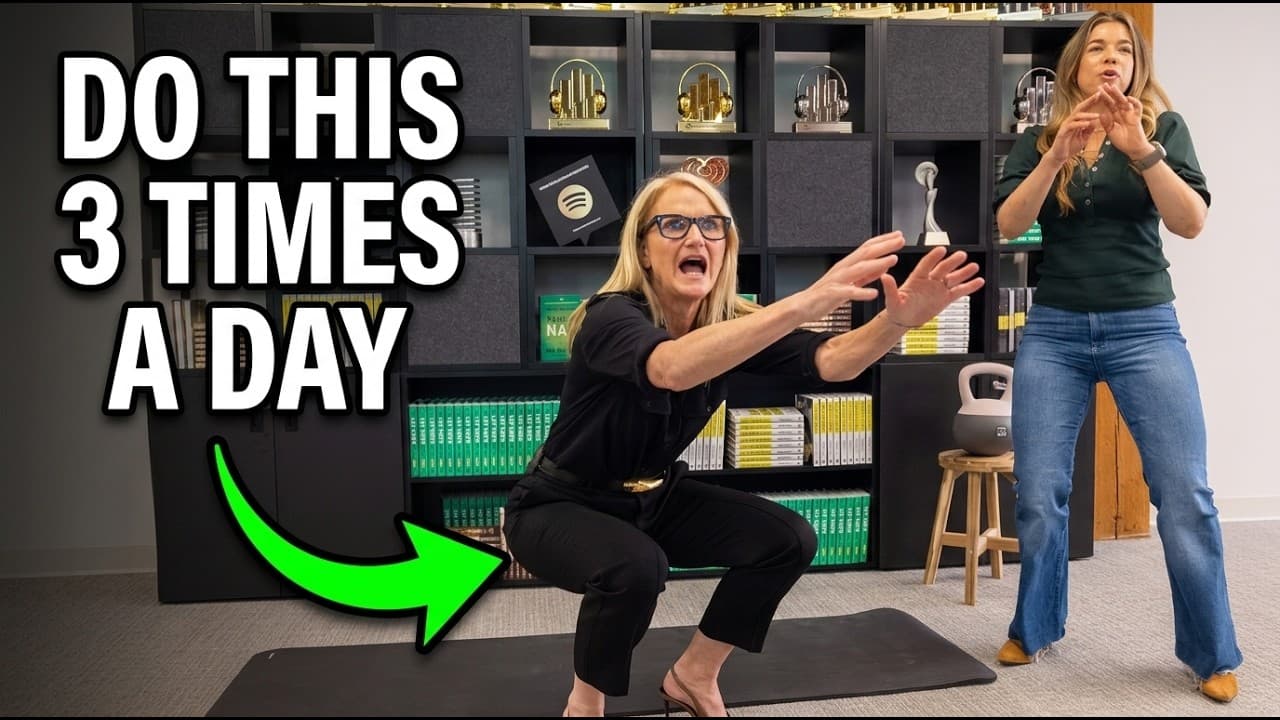
Three minutes of vigorous activity performed three times a day can count as meaningful exercise, even when it comes from stairs, hills, squats, or active play. The research discussed associates these nine daily minutes with substantial reductions in all-cause, cancer-related, and cardiovascular-related mortality, while even one minute can quickly increase energy and blood flow to the brain.
Transcript
But, when you're really thinking about I've got a little bit of time and I want the maximum positive impact in terms of my health, this breathless exercise is a complete shift. >> It's a game-changer for people that don't have a lot of time, that want to get health benefits, that feel overwhelmed when they have to think about getting a gym membersh... Read More
Key Insights
- Exercise snacks are short bursts of movement lasting roughly one to three minutes that raise the heart rate enough to make ordinary conversation difficult. Examples include bodyweight squats, jumping jacks, high knees, burpees, brisk hill walking, stair climbing, cycling, jogging, and active play.
- Vigorous intermittent lifestyle activity is vigorous movement incorporated into ordinary life rather than completed during a dedicated gym session. Walking quickly up office stairs, jogging a short commute, or playing tag with children or grandchildren can provide the breathless activity described in the research.
- Nine daily minutes can be divided into three manageable sessions of three minutes each. The suggested routine places one session after breakfast, another after lunch, and a third after dinner, reducing the need to reserve a continuous block of time for exercise.
- The studies discussed associate three vigorous three-minute sessions per day with a 40% reduction in cancer-related mortality, a 40% reduction in all-cause mortality, and a 50% reduction in cardiovascular-related mortality, even among participants who did not identify as regular exercisers.
- Everyday movement counts when it creates the required physical intensity. The body responds to vigorous activity whether it happens in a gym, on a staircase, while walking uphill, during a commute, or while running around with a child, grandchild, or puppy.
- One minute of vigorous movement can produce an immediate subjective change. After completing a minute of bodyweight squats, the host reported being out of breath, feeling a flood of energy, experiencing a racing heart, and noticing greater clarity.
- Walking uphill is a practical starting option for people who have not previously exercised until breathless. It avoids some of the flexibility demands of bodyweight squats, and beginners can initially move slowly before increasing their pace as their bodies adapt.
- Progression can begin with one minute of vigorous activity per day for approximately a week, followed by two minutes and eventually longer sessions. Repeated practice makes the activity feel easier, allowing a person to work toward three-minute sessions performed three times daily.
- More videos from this channel:
- More from this channel: FoundMyFitness Clips
Install to Summarize YouTube Videos and Get Transcripts
Explore YouTube Video Summarizer or Get YouTube Transcript Extractor
Questions & Answers
Q: What is an exercise snack?
An exercise snack is a short burst of movement, generally lasting one to three minutes, that raises the heart rate and makes a person breathless enough to speak only a few words. It may be a structured activity such as squats, jumping jacks, high knees, or burpees, or an intense part of daily life such as climbing stairs quickly.
Q: How can nine minutes of vigorous activity be divided throughout the day?
Nine minutes can be divided into three sessions of three minutes each. The routine suggested in the discussion is to complete one vigorous session after breakfast, one after lunch, and one after dinner. Each session should raise the heart rate and create enough breathlessness that speaking normally becomes difficult, without requiring a continuous gym workout.
Q: What health outcomes were associated with nine minutes of vigorous activity?
The studies described associated three minutes of breathless activity performed three times daily with a 40% reduction in cancer-related mortality, a 40% reduction in all-cause mortality, and a 50% reduction in cardiovascular-related mortality. These findings also applied to people who did not identify themselves as gym-goers or regular exercisers.
Q: What everyday activities can count as vigorous exercise?
Everyday activities can count when they are performed intensely enough to raise the heart rate and make conversation difficult. Examples given include walking rapidly up office stairs, briskly walking or jogging a short commute, cycling, walking uphill, playing tag with children or grandchildren, and running around with a puppy for a few minutes.
Q: How breathless should someone become during an exercise snack?
The target intensity is a level at which the person cannot comfortably speak more than a few words. The activity should noticeably raise the heart rate and produce breathlessness, whether it involves squats, stairs, hill walking, jumping jacks, or active play. Reaching this breathless state is presented as more important than exercising in a gym.
Q: How should a beginner start doing exercise snacks?
A beginner can start with one minute of vigorous activity per day for about a week, then progress to two minutes and gradually move faster as the body adapts. Walking uphill or climbing stairs can be suitable starting activities. The longer-term target discussed is three-minute sessions performed three times throughout the day.
Q: Can one minute of vigorous exercise make a noticeable difference?
One minute can create an immediate noticeable response. During the demonstration, a minute of bodyweight squats left the participants breathless and raised their heart rates. The host also reported a flood of energy and greater mental clarity, while Dr. Rhonda Patrick connected the quick improvement in feeling with increased blood flow to the brain.
Q: Do short activity bursts count if someone never goes to a gym?
Short vigorous bursts count even when a person does not visit a gym or identify as someone who exercises. The discussion emphasizes that the body responds to the activity itself, not its location. Fast stair climbing, hill walking, active play, cycling, jogging, or structured movements can therefore contribute when they produce sufficient breathlessness.
Summary & Key Takeaways
-
Exercise snacks are brief periods of vigorous movement that raise the heart rate and make speaking difficult beyond a few words. They can be structured exercises, such as bodyweight squats or jumping jacks, or ordinary activities performed intensely, such as climbing stairs quickly, walking uphill, jogging, cycling, or playing tag.
-
The suggested daily target is three minutes of breathless activity after breakfast, lunch, and dinner, totaling nine minutes. The studies discussed associate this pattern with a 40% reduction in cancer-related mortality, a 40% reduction in all-cause mortality, and a 50% reduction in cardiovascular-related mortality among people who do not identify as exercisers.
-
Beginners can start with one minute a day and gradually increase the duration and speed as their bodies adapt. Walking uphill or climbing stairs may be accessible starting points, while squats, jumping jacks, high knees, and burpees offer structured alternatives. A one-minute squat demonstration produced breathlessness, increased energy, and greater mental clarity.
Read in Other Languages (beta)
Share This Summary 📚
Summarize YouTube Videos and Get Video Transcripts with 1-Click
Try YouTube Summary with ChatGPT & Claude or YouTube Transcript Generator
Explore More Summaries from FoundMyFitness Clips 📚



Summarize YouTube Videos and Get Video Transcripts with 1-Click
Try YouTube Summary with ChatGPT & Claude or YouTube Transcript Generator