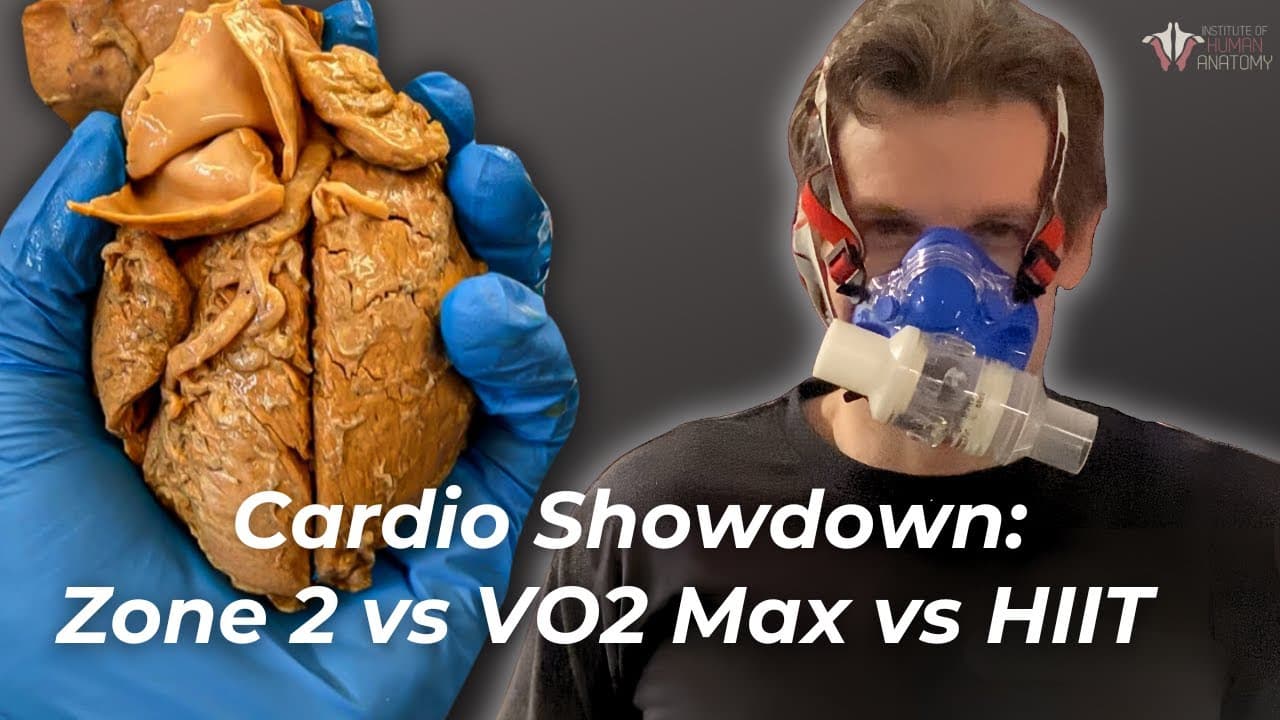
How to Combine Cardio for Better Heart Fitness
TL;DR
Use steady Zone 2 exercise to build aerobic capacity, then add high-intensity intervals to challenge the heart near its upper limit. Zone 2 strengthens the heart, increases mitochondrial development, and supports endurance, while VO2 max sessions provide the greater intensity needed for further cardiac strength adaptations. The methods overlap, so neither adaptation exists entirely in isolation.
Transcript
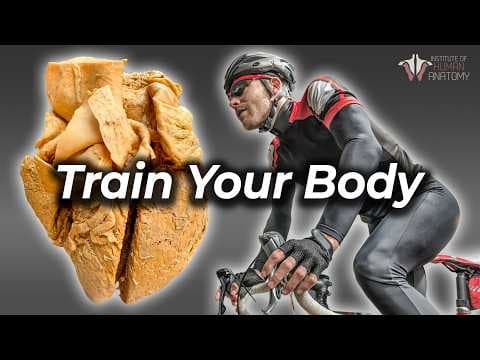
this is one of the most incredible organs in the human body it never takes a break the human heart beats 24 hours a day 7 days a week for the entirety of your life which equates to about 2.5 billion beats in the average human lifetime and so many of us have often wondered what is the best way to increase the strength and overall health of the heart... Read More
Key Insights
- The human heart works continuously throughout life, producing about 2.5 billion beats in an average lifetime. Cardiovascular exercise can improve the strength and endurance of this organ while also creating adaptations in blood vessels, working muscles, mitochondria, and capillaries.
- Cardiovascular adaptations are systemic changes involving the heart, blood vessels, and other cardiovascular structures. Musculoskeletal adaptations occur more locally within working muscles, but neither category exists in isolation because training for one quality can produce improvements in several related physiological qualities.
- Zone 2 training is steady-state cardiovascular exercise performed at approximately 65–75% of maximum heart rate. Common options include running, cycling, swimming, and rowing, with sessions ranging from about 30 minutes to two or three hours for people preparing for endurance events.
- The talk test is a practical way to estimate Zone 2 intensity without a heart-rate monitor. A person should be capable of maintaining a conversation, although someone listening would still be able to tell from the person's breathing that exercise is taking place.
- Steady-state training strengthens the heart and allows it to pump more blood with each beat. Consistent participation may therefore lower resting heart rate, while mitochondrial development within heart muscle fibers improves the heart's capacity to sustain prolonged work.
- Zone 2 exercise develops mitochondria and capillaries in the slow-twitch fibers of working muscles. These changes help the muscles use oxygen, glucose, and fatty acids to produce ATP while improving nutrient delivery and the removal of metabolic byproducts.
- VO2 max is the maximum amount of oxygen a person can consume during exercise. Laboratory testing progressively increases exercise difficulty until the participant cannot continue, revealing the point at which maximum oxygen consumption occurs and how long that intensity can be sustained.
- VO2 max training uses repeated intervals lasting approximately three to eight minutes. A four-by-four session alternates four minutes of hard work with four minutes of recovery four times, and an appropriately selected intensity makes the closing seconds of the fourth work interval extremely difficult.
Install to Summarize YouTube Videos and Get Transcripts
Explore YouTube Video Summarizer or Get YouTube Transcript Extractor
Questions & Answers
Q: How should Zone 2 cardio be performed?
Zone 2 cardio should maintain a steady effort within a narrow range of approximately 65–75% of maximum heart rate. Running, cycling, swimming, and rowing can all be used. Without a heart-rate monitor, apply the talk test: conversation should remain possible, but another person should still hear that you are exercising from your breathing and delivery.
Q: What cardiovascular adaptations does Zone 2 training produce?
Zone 2 training strengthens the heart, increases the amount of blood it can pump with each beat, and stimulates the development of more mitochondria within heart muscle fibers. Consistent training may also reduce resting heart rate. These changes improve cardiac endurance and can carry over to VO2 max and anaerobic capacity because both depend partly on heart function.
Q: How does steady-state cardio improve working muscles?
Steady-state cardio repeatedly recruits slow-twitch muscle fibers in the limbs used for the activity. Those fibers develop more mitochondria, allowing them to use oxygen, glucose, and fatty acids to make ATP. They also develop more capillaries, improving the cardiovascular system's ability to deliver nutrients and remove metabolic byproducts from active muscle tissue.
Q: What is VO2 max and how is it measured?
VO2 max is the maximum amount of oxygen a person can consume during exercise. In a laboratory test, a mask measures oxygen and carbon dioxide while exercise becomes progressively harder. One described treadmill protocol holds speed at 6 miles per hour and raises the incline by about 2% every two minutes until the participant cannot continue.
Q: How do you perform a four-by-four VO2 max workout?
A four-by-four workout consists of four minutes of high-intensity work followed by four minutes of recovery, repeated four times. It can be completed on a treadmill, track, bicycle, or stationary bike. The intensity should make the fourth work interval extremely difficult, particularly during its final 15–30 seconds, while remaining repeatable across all four intervals.
Q: How can you tell whether VO2 max intervals are hard enough?
The first interval may feel challenging but manageable, while the fourth should become extremely difficult near the end. If you could continue beyond the fourth interval by another 20, 30, or 40 seconds, the selected intensity may have been too low. The described sessions can bring the heart rate close to its maximum during the final interval.
Q: Why can high-intensity training strengthen the heart beyond Zone 2 work?
Zone 2 work can initially strengthen the heart, but steady intensity eventually emphasizes endurance more than additional strength. The comparison is similar to push-ups: they first increase strength, but performing 30–50 repetitions mainly develops muscular endurance unless load increases. Higher-intensity VO2 max work provides the greater cardiac challenge needed to pursue further strength adaptations.
Q: Should cardiovascular training focus on only one exercise intensity?
Cardiovascular adaptations do not occur in complete isolation. Steady-state exercise primarily develops the aerobic base, yet it can also improve VO2 max, anaerobic capacity, and muscular endurance. Higher-intensity work further challenges cardiac strength and top-end aerobic performance. Using aspects of different methods therefore targets complementary qualities, with particularly broad crossover in beginners and untrained athletes.
Summary & Key Takeaways
-
Cardiovascular training creates both systemic and local adaptations. Systemic changes involve the heart, blood vessels, and related cardiovascular structures, while local changes occur within working muscles. Although training methods emphasize different outcomes, their effects overlap, especially in beginners and untrained athletes, who can experience improvements across several areas from one activity.
-
Zone 2 training uses a steady intensity of roughly 65–75% of maximum heart rate. Sessions may last from 30 minutes to several hours, depending on endurance goals. Consistent training strengthens the heart, increases blood pumped per beat, develops mitochondria, supports capillary growth, and may reduce resting heart rate.
-
VO2 max training uses repeated high-intensity intervals lasting approximately three to eight minutes. One example is four minutes of work followed by four minutes of recovery, repeated four times. The final interval should be extremely difficult, potentially bringing the athlete close to maximum heart rate and challenging the heart beyond steady-state demands.
Read in Other Languages (beta)
Share This Summary 📚
Summarize YouTube Videos and Get Video Transcripts with 1-Click
Try YouTube Summary with ChatGPT & Claude or YouTube Transcript Generator
Explore More Summaries from Institute of Human Anatomy 📚


Summarize YouTube Videos and Get Video Transcripts with 1-Click
Try YouTube Summary with ChatGPT & Claude or YouTube Transcript Generator