How Do Muscle Fibers Adapt to Different Exercises?
TL;DR
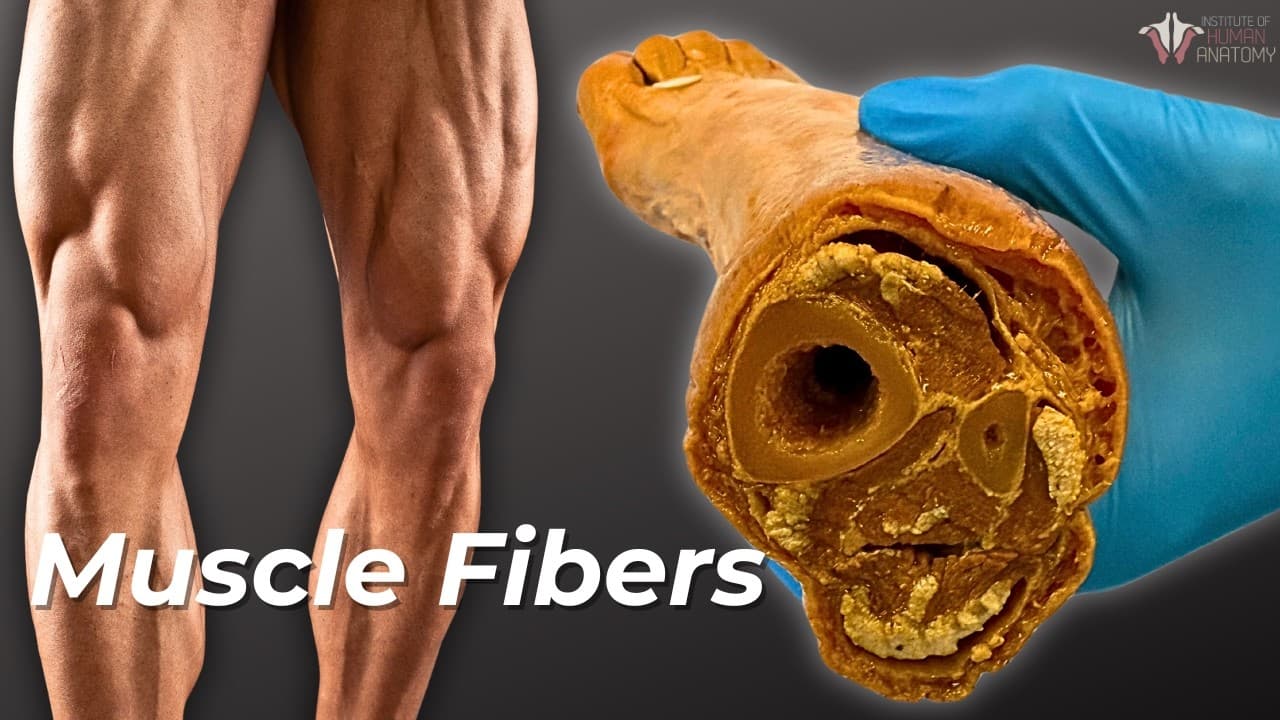
Muscle fibers adapt to training types, with fast-twitch fibers excelling in explosive activities and slow-twitch fibers supporting endurance. Genetics influences fiber composition, but specific training can encourage conversions between types, enhancing athletic performance.
Transcript
have you ever wondered why some people excel in Endurance Sports While others dominate in sports that require short explosive movements maybe you've even been training with a friend and notice that you might be naturally better at some forms of exercise while your friend might be better at others well part of this has to do with the makeup ... Read More
Key Insights
- Muscle fibers are categorized into fast-twitch, slow-twitch, and hybrid types, each influencing athletic performance differently.
- Genetics play a role in determining the proportion of muscle fiber types in individuals, affecting their natural inclination towards certain sports.
- Slow-twitch fibers, or type I fibers, are highly resistant to fatigue and are ideal for endurance activities due to their aerobic capabilities.
- Fast-twitch fibers, or type IIx fibers, contract rapidly and are suited for explosive movements, but they fatigue quickly due to anaerobic metabolism.
- Hybrid fibers, or type IIa fibers, combine characteristics of both fast and slow-twitch fibers, providing versatility in various physical activities.
- Training can influence muscle fiber adaptation, allowing some conversion between fiber types, although genetic predisposition remains a factor.
- The body recruits different muscle fiber types based on the intensity and type of activity, from posture maintenance to explosive movements.
- The Institute of Human Anatomy offers resources and a community app to further explore human anatomy and muscle fiber science.
Install to Summarize YouTube Videos and Get Transcripts
Explore YouTube Video Summarizer or Get YouTube Transcript Extractor
Questions & Answers
Q: What is the difference between fast-twitch and slow-twitch muscle fibers?
Fast-twitch muscle fibers, or type IIx fibers, are designed for rapid, powerful contractions and are suited for explosive movements like sprinting and heavy lifting. They rely on anaerobic metabolism, which allows quick energy production but leads to quicker fatigue. In contrast, slow-twitch fibers, or type I fibers, are optimized for endurance activities like long-distance running. They use aerobic metabolism, which is more efficient and allows sustained energy production, making them resistant to fatigue.
Q: How does the body decide which muscle fibers to use?
The body recruits muscle fibers based on the intensity and type of physical activity. For light tasks, such as maintaining posture or lifting light weights, slow-twitch fibers are primarily activated due to their endurance capabilities. As the demand for force increases, fast oxidative fibers are recruited. For maximum effort tasks, like sprinting or lifting heavy weights, fast-twitch fibers are engaged to provide the necessary power and speed.
Q: Why do some people have more fast-twitch fibers than others?
The proportion of fast-twitch to slow-twitch muscle fibers in an individual is largely determined by genetics. Some people are naturally predisposed to have a higher percentage of fast-twitch fibers, making them more adept at explosive, high-intensity activities. Conversely, others may have a higher proportion of slow-twitch fibers, favoring endurance activities. While training can induce some adaptation and conversion between fiber types, genetic factors remain a significant influence.
Q: Can I change my muscle fiber composition with training?
While you cannot change your genetic makeup, training can influence muscle fiber adaptation and lead to some conversion between fiber types. Consistent endurance training can increase the proportion of slow-twitch fibers, while high-intensity, explosive training can enhance fast-twitch fibers. However, these changes occur gradually and require dedicated, long-term training to achieve noticeable shifts in muscle fiber composition.
Q: What role do hybrid fibers (Type IIa) play in muscle performance?
Hybrid fibers, or type IIa fibers, offer a balance between the endurance capabilities of slow-twitch fibers and the power of fast-twitch fibers. They primarily rely on aerobic metabolism but can switch to anaerobic metabolism when needed. This versatility makes them ideal for activities requiring both endurance and moderate speed or force, such as middle-distance running or swimming. Their adaptability allows athletes to perform well in a range of physical activities.
Q: How do muscle fibers adapt to different types of training?
Muscle fibers adapt to training by modifying their physiological characteristics to better meet the demands of the activity. Endurance training increases the size and number of mitochondria and capillaries in slow-twitch fibers, enhancing their aerobic capacity. High-intensity training increases the size and glycogen storage capacity of fast-twitch fibers, improving their power output. Hybrid fibers adapt by enhancing both aerobic and anaerobic capabilities, providing a versatile response to varied training stimuli.
Q: What is the significance of the Institute of Human Anatomy's community app?
The Institute of Human Anatomy's community app offers a comprehensive platform for learning about human anatomy, including muscle fiber science. The app provides access to live sessions, study guides, quizzes, and an AI assistant for answering anatomy-related questions. It caters to a diverse audience, including healthcare professionals, students, and anatomy enthusiasts, offering structured learning paths and interactive features to enhance understanding and engagement with anatomical concepts.
Q: How can understanding muscle fiber types benefit athletes and fitness enthusiasts?
Understanding muscle fiber types allows athletes and fitness enthusiasts to tailor their training programs to optimize performance in their chosen sports or activities. By identifying their genetic predisposition and current muscle fiber composition, individuals can focus on specific training regimens that target the desired fiber types, enhancing their strengths and addressing weaknesses. This knowledge also helps in setting realistic goals and developing strategies for achieving peak performance through informed, science-based training approaches.
Summary & Key Takeaways
-
Muscle fibers are divided into fast-twitch, slow-twitch, and hybrid types, each with unique characteristics affecting athletic performance. Fast-twitch fibers excel in explosive activities, while slow-twitch fibers are suited for endurance. Hybrid fibers offer a balance, adapting to various physical demands.
-
Genetics largely determine muscle fiber composition, but training can induce adaptations, allowing some conversion between fiber types. This adaptability means athletes can optimize their performance by focusing on specific training regimens that target desired muscle fiber types.
-
The Institute of Human Anatomy provides educational resources, including a community app, to deepen understanding of muscle fiber science. The app offers live sessions, study guides, and interactive features for anatomy enthusiasts, healthcare professionals, and students.
Read in Other Languages (beta)
Share This Summary 📚
Summarize YouTube Videos and Get Video Transcripts with 1-Click
Try YouTube Summary with ChatGPT & Claude or YouTube Transcript Generator
Explore More Summaries from Institute of Human Anatomy 📚




Summarize YouTube Videos and Get Video Transcripts with 1-Click
Try YouTube Summary with ChatGPT & Claude or YouTube Transcript Generator