How strong is stomach acid and how does it work?
TL;DR
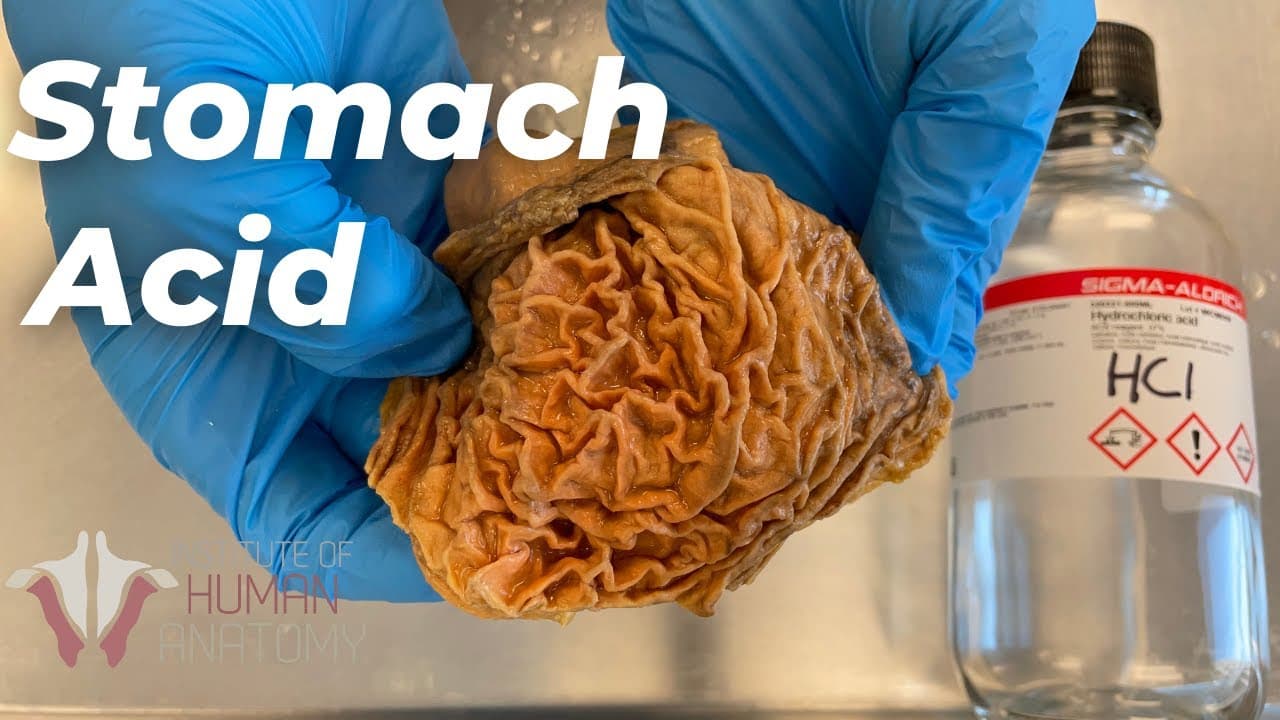
Stomach acid begins very acidic, around pH 0.8, but mixes with stomach contents to form a pH range of about 1 to 3. It denatures proteins, activates pepsinogen to pepsin, and kills many microbes. The stomach protects itself with mucus, while parietal cells secrete the acid, and digestive glands produce other substances. The video contrasts real stomach acid with lab HCl to illustrate concentration differences.
Transcript
And plop! So, this is fully fully concentrated. Let's get a little more in there Welcome to the Anatomy Lab everyone. Today we're going to talk about stomach acid or what we like to call "hydrochloric acid". So why does our body produce this stuff or in other words, what is its function and how powerful is it? You may have heard of chemistry la... Read More
Key Insights
- Stomach acid is produced by parietal cells in the stomach lining and is essential for initial protein breakdown and microbial defense.
- Gastric glands contain parietal and chief cells, where chief cells secrete pepsinogen that becomes pepsin in acidic conditions.
- The acidity initially can be as low as 0.8, but in the stomach it ranges roughly from 1 to 3 depending on secretion and food intake.
- Gastric rugae are folds that allow the stomach to expand when eating large meals.
- A mucus layer protects the stomach lining from its own acid, preventing self-digestion.
- When acid escapes the stomach or contacts non stomach tissues, it can cause damage, illustrating the need for protective mechanisms.
- Lab demonstrations compare concentrated lab HCl to diluted stomach acid to show concentration and safety differences.
- The video emphasizes that not all hydrochloric acid behaves the same, highlighting the importance of context when discussing acidity.
Install to Summarize YouTube Videos and Get Transcripts
Explore YouTube Video Summarizer or Get YouTube Transcript Extractor
Questions & Answers
Q: What produces hydrochloric acid in the stomach and why is it important?
Hydrochloric acid is produced by parietal cells located in the lining of the stomach. It serves multiple critical roles, including denaturing proteins, killing many ingested microbes, and creating the acidic environment needed to activate pepsinogen into pepsin, an enzyme essential for protein digestion. This acid also helps optimize the conditions under which other stomach secretions function, making it a central player in digestion and immune defense.
Q: How acidic can stomach acid be and what factors influence its pH?
Stomach acid can be extremely acidic, with an initial pH around 0.8. The pH then varies typically from about 1 to 3 depending on dilution by stomach contents and the type of food ingested. Eating stimulates acid production, which together with dilution effects determines the final pH. This variability helps balance digestion with protection of the stomach lining.
Q: How does the stomach protect itself from its own acid?
The stomach protects itself with a thick mucus layer, referred to as part of the tunica mucosa, which coats the interior lining. This mucus acts as a barrier preventing acid and digestive enzymes from digesting the stomach wall. The protective mucus works in concert with cellular mechanisms and mucus-secreting cells to minimize self damage during digestion.
Q: What is the role of gastric glands in acid production?
Gastric glands contain multiple cell types, including parietal cells that secrete hydrochloric acid and chief cells that secrete pepsinogen. The acidity activates pepsinogen into pepsin, enabling protein digestion. These glands are integral to creating the stomach’s digestive environment and to initiating the breakdown of food molecules.
Q: Why is lab hydrochloric acid so different from stomach acid in the body?
Lab hydrochloric acid used in demonstrations is highly concentrated, such as a 12 molar solution, which is far stronger than the stomach’s natural acid. In the body, stomach acid is much less concentrated, typically around 0.155 molarity when diluted, and it is produced in a controlled environment with protective mucus and other regulatory factors to prevent tissue damage.
Q: What experiment is used to illustrate the strength of stomach acid in the video?
The video uses a back room lab setup with a fume hood and a highly concentrated hydrochloric acid to dilute it with water, creating a pseudo stomach acid. The demonstration highlights the difference in strength between lab HCl and true stomach acid, emphasizing the safety precautions and scale of dilution needed to approximate physiological conditions.
Q: What happens if stomach acid reaches other parts of the body or if ulcers occur?
If stomach acid escapes the stomach lining or if ulcers develop, the acidic environment can damage surrounding tissues and organs outside the stomach. The video discusses how such exposure is problematic and underscores the importance of protective barriers and controlled acid exposure to prevent injury beyond the stomach. The discussion frames acid safety within anatomical context.
Q: What does the video say about the stomach’s role in early digestion and immunity?
The video explains that stomach acid helps denature proteins, making them easier to digest, and kills many microbes ingested with food, contributing to immune defense. By activating pepsinogen to pepsin, the acid also supports protein breakdown. These functions highlight the stomach’s dual role in digestion and pathogen control.
Summary & Key Takeaways
-
The video explains that the stomach lining protects itself with mucus while acid acts on proteins and microbes.
-
It demonstrates the extreme concentration of lab hydrochloric acid versus natural stomach acid, showing how dilution affects acidity.
-
It outlines the stomach anatomy, including gastric glands and parietal cells, and describes erosion risks if acid contacts other tissues.
Read in Other Languages (beta)
Share This Summary 📚
Summarize YouTube Videos and Get Video Transcripts with 1-Click
Try YouTube Summary with ChatGPT & Claude or YouTube Transcript Generator
Explore More Summaries from Institute of Human Anatomy 📚



Summarize YouTube Videos and Get Video Transcripts with 1-Click
Try YouTube Summary with ChatGPT & Claude or YouTube Transcript Generator