How Does Exercise Change Heart Function and Flow?
TL;DR
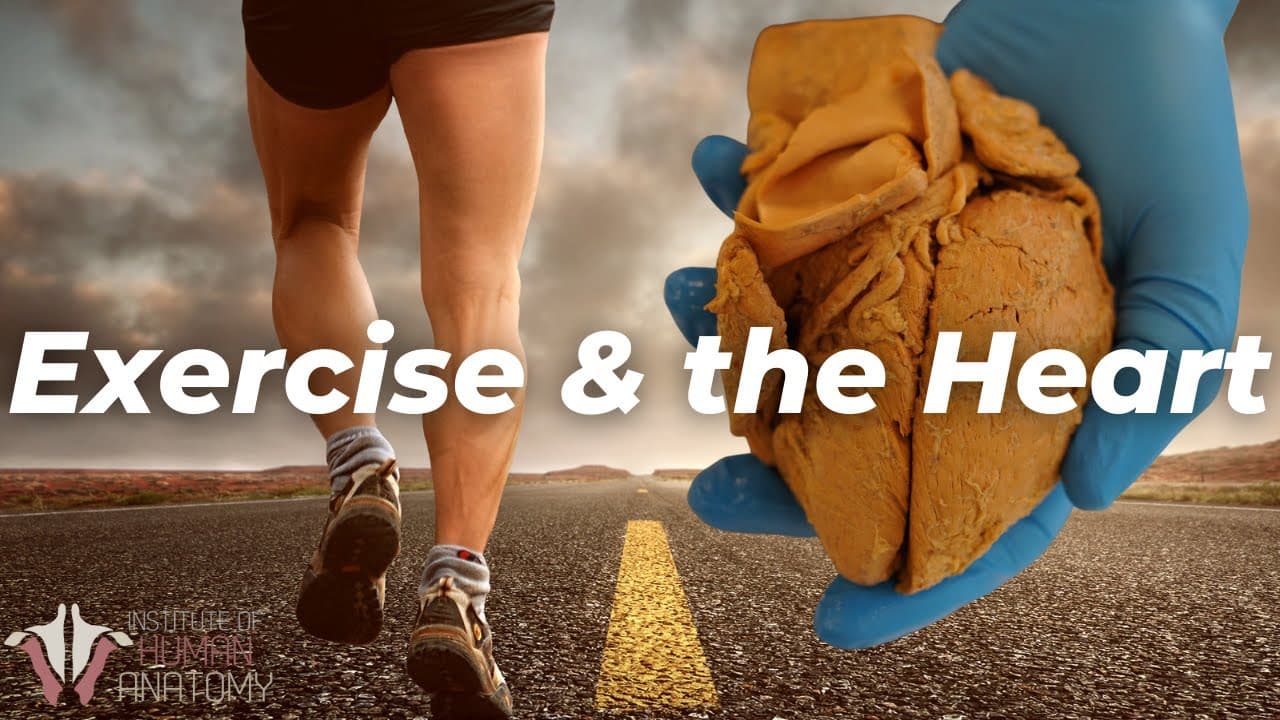
Exercise changes heart function by increasing cardiac output and redirecting more blood to active muscles as their oxygen demand rises. Blood flow through 100 grams of muscle can climb from about 3–4 milliliters per minute at rest to 200 during exercise, while elite marathon runners’ quadriceps can reach 400. Read on to understand how heart rate, stroke volume, blood vessels, and capillaries support this response.
Transcript
Video is sponsored by Athletic Greens. Find the link in the description below. What weighs 8 to 10 ounces, can fit in the palm of your hand and pumps thousands of liters of fluid per day? Well, you probably guessed it, the human heart. This is such an amazing organ. This thing beats about 100,000 times per day which translates to approximately ... Read More
Key Insights
- The heart is a muscular pump that beats about 100,000 times per day, approximately 35 million times per year, and roughly 2.5 billion times during an average lifetime. Exercise places additional demands on this relatively small organ by increasing the circulation required by active tissues.
- The left ventricle is the heart's most powerful chamber because it must pump blood throughout the entire body. Its muscular wall is thicker than the wall of the right ventricle, which only needs to send deoxygenated blood to the lungs.
- The aorta is the largest artery in the human body and is approximately the size of a garden hose. Blood ejected from the left ventricle enters the aorta, whose branches distribute it toward the head, neck, upper limbs, trunk, and lower limbs.
- Capillaries are tiny exchange vessels where oxygen moves from the bloodstream into exercising muscle. At the same time, carbon dioxide and metabolic waste products move from the muscle into the blood, producing deoxygenated blood that drains into venules and progressively larger veins.
- Blood follows a continuous circuit from the body into the right atrium, then the right ventricle and lungs. After releasing carbon dioxide and receiving oxygen in the lungs, it returns to the left atrium, enters the left ventricle, and is pumped back toward the body.
- Blood flow through 100 grams of resting muscle averages about 3 to 4 milliliters per minute. During exercise, flow through the same amount of tissue can rise to 200 milliliters per minute, reflecting the working muscle's dramatically greater oxygen demand.
- Elite marathon runners can experience quadriceps blood flow of up to 400 milliliters per minute for every 100 grams of muscle tissue. This measured value is about twice the exercise example of 200 milliliters and vastly greater than the average resting flow.
- Cardiac output is the amount of blood pumped by the heart in one minute. It is determined by heart rate, the number of beats per minute, and stroke volume, the amount of blood ejected with each beat, and both factors increase during exercise.
Install to Summarize YouTube Videos and Get Transcripts
Explore YouTube Video Summarizer or Get YouTube Transcript Extractor
Questions & Answers
Q: How does exercise change heart function and blood flow?
Exercise increases cardiac output by raising both heart rate and stroke volume. Peripheral arterioles constrict and many venous walls contract forcefully, helping the cardiovascular system supply more blood and oxygen to active muscles.
Q: What is cardiac output during exercise?
Cardiac output is the amount of blood the heart pumps in one minute. It depends on heart rate, the number of beats per minute, and stroke volume, the amount ejected with each beat; both increase during exercise.
Q: How much does muscle blood flow increase during exercise?
Blood flow through 100 grams of resting muscle averages about 3–4 milliliters per minute. It can rise to 200 milliliters per minute during exercise, and measurements in elite marathon runners’ quadriceps have reached 400 milliliters per minute.
Q: Why does exercising muscle need more blood?
Working muscle has a dramatically greater demand for oxygen. Increased blood flow delivers that oxygen while carrying carbon dioxide and metabolic waste products away from the tissue.
Q: What happens in muscle capillaries during exercise?
Capillaries act as tiny exchange vessels between the bloodstream and muscle tissue. Oxygen diffuses from the blood into the muscle, while carbon dioxide and metabolic waste products move from the muscle into the blood.
Q: Why is the left ventricle more muscular than the right ventricle?
The left ventricle must generate enough force to pump blood throughout the entire body, so it has a thicker muscular wall. The right ventricle only needs to send deoxygenated blood to the lungs and therefore has a thinner wall.
Q: What route does blood follow through the heart and lungs?
Deoxygenated blood from the body enters the right atrium, passes into the right ventricle, and travels to the lungs. After releasing carbon dioxide and receiving oxygen, it returns through the left atrium to the left ventricle, which pumps it into the aorta and toward the body.
Q: What three circulatory adjustments support exercise?
The three adjustments described are increased cardiac output, vasoconstriction of peripheral arterioles, and forceful contraction of many venous walls. Together, they help meet the substantially greater blood and oxygen requirements of active muscle.
Summary & Key Takeaways
-
The heart pumps blood through the left ventricle and aorta to arteries supplying tissues throughout the body. In exercising muscle, capillaries deliver oxygen and collect carbon dioxide and metabolic waste. Deoxygenated blood then returns through veins to the right side of the heart before traveling to the lungs.
-
Working muscles require dramatically more oxygen and blood during exercise. Average flow through 100 grams of resting muscle is about 3 to 4 milliliters per minute, but it can rise to 200 milliliters during exercise. Measurements in the quadriceps of elite marathon runners have reached 400 milliliters per minute.
-
The body uses three circulatory adjustments to meet exercise demands: increased cardiac output, vasoconstriction of peripheral arterioles, and forceful contraction of many venous walls. Cardiac output is the blood pumped each minute and depends on heart rate and stroke volume, both of which increase during exercise.
Read in Other Languages (beta)
Share This Summary 📚
Summarize YouTube Videos and Get Video Transcripts with 1-Click
Try YouTube Summary with ChatGPT & Claude or YouTube Transcript Generator
Explore More Summaries from Institute of Human Anatomy 📚




Summarize YouTube Videos and Get Video Transcripts with 1-Click
Try YouTube Summary with ChatGPT & Claude or YouTube Transcript Generator