How Does Exercise Affect Bone Health?
TL;DR
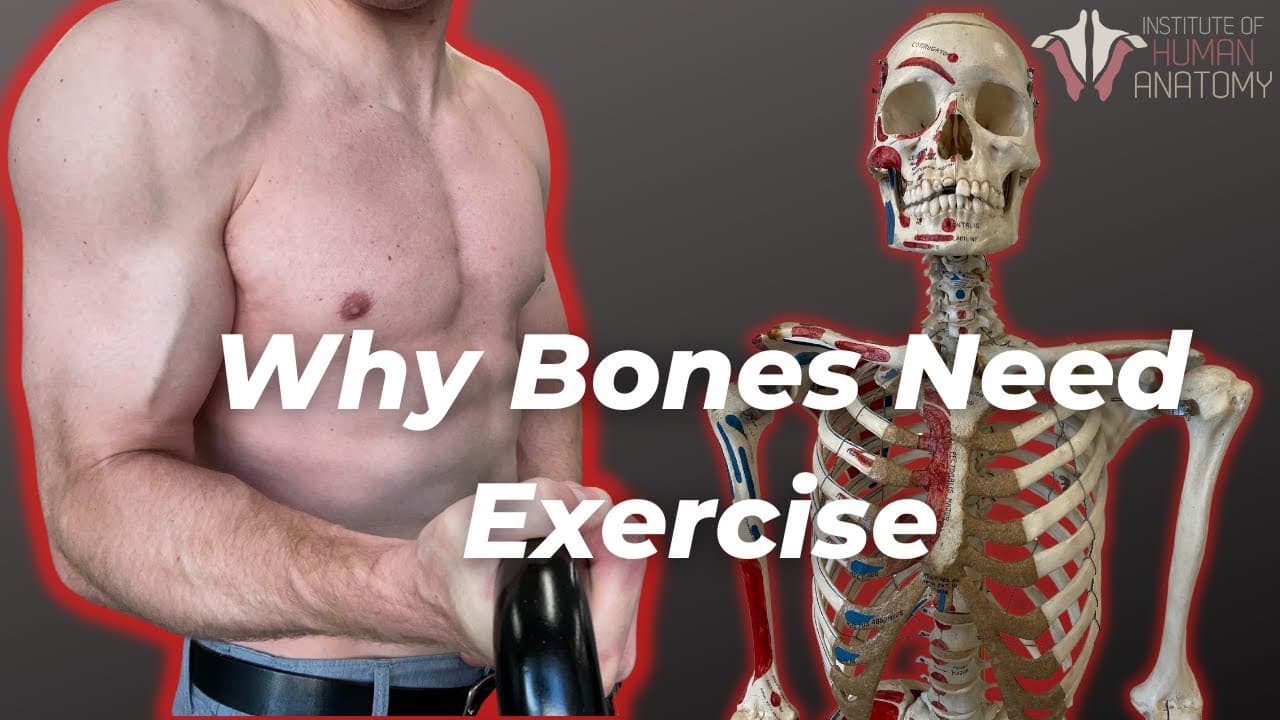
Exercise significantly impacts bone health by enhancing density and structure. Physical activities that apply compressive and tensile forces stimulate bone tissue adaptation, leading to stronger bones. Consistent engagement in various exercises is essential for maintaining optimal bone density.
Transcript
bone is some of the most amazing living and dynamic tissue in the human body but when you exercise and your body adapts to that exercise bone probably isn't the first thing that comes to mind often when we think of exercise we think of it affecting things like muscle fat and even things like the heart and cardiovascular system so in today's video w... Read More
Key Insights
- 💪 Exercise plays a vital role in maintaining and increasing bone density.
- 🌟 Bone tissue is constantly changing and adapting to the stress placed upon it, whether it be from exercise or lack thereof.
- ♀️ Activities and exercises that push and pull on the bones, providing both compressive and tensile forces, help stimulate bone growth and maintain bone architecture.
- 🦴 Bone tissue is made up of compact bone and spongy bone, with trabeculae (little beams) in the spongy bone oriented in the lines of stress to support the bone's structure.
- 🍗 The inorganic substance in bone tissue is hydroxyapatite, made up of calcium and phosphate, which gives bone its compressive strength. The organic substance, collagen, provides bone with its tensile strength.
- ⏰ Consistency in exercise is key for stimulating and maintaining bone density. Different exercise choices can stimulate bones in multiple ways, but the main focus is on general principles.
- 🦴 Exercises like running, walking, jumping, weightlifting, and resistance training can all provide the necessary compressive and tensile forces to stimulate bone growth.
- ♀️ It is not necessary to only run to stimulate bone growth, as other activities like cycling and various strength-training exercises can create similar forces on the bones. The key is to find a combination of activities that work for you and provide consistent stimulation.
Install to Summarize YouTube Videos and Get Transcripts
Explore YouTube Video Summarizer or Get YouTube Transcript Extractor
Questions & Answers
Q: How does exercise impact bone density?
Exercise stimulates the bone tissue to adapt and modify, leading to an increase in bone density. This is because bones are constantly changing and can modify their shape and architecture in response to exercise.
Q: What are the two types of bone tissue?
The two types of bone tissue are compact bone tissue and spongy bone tissue. Compact bone is the dense outer portion of all bones, while spongy bone is the inner part that looks like a sponge, consisting of trabeculae.
Q: What substances make up bone tissue?
Bone tissue is made up of two substances: hydroxyapatite, which is an inorganic substance that gives bone its compressive strength, and collagen, an organic substance that gives bone its tensile strength.
Q: How does exercise stimulate bone tissue?
Exercise stimulates bone tissue by exposing it to compressive and tensile forces. These forces cause the bone tissue to adapt and modify, leading to an increase in bone density and maintaining bone architecture.
Q: Are certain exercises more effective for increasing bone density?
Exercises that put both pushing (compressive) and pulling (tensile) forces on bones are effective for increasing bone density. Examples include activities like walking, running, jumping, and resistance training exercises like biceps curls or squats.
Q: Does running have a significant impact on bone density?
Yes, running can have a significant impact on bone density, especially in the lower limbs. However, other exercises that stimulate bones with compressive and tensile forces, such as resistance training, can also be effective in maintaining and increasing bone density.
Q: How does consistency play a role in maintaining bone density?
Consistently stimulating the bone tissue through exercise is crucial for maintaining and increasing bone density. Without consistency, the bone tissue may not adapt and modify to the same extent, potentially leading to a decrease in bone density over time.
Summary & Key Takeaways
-
Bone tissue is constantly changing and adapting to the stress placed upon it, making exercise essential for maintaining and increasing bone density.
-
Bones are made up of compact bone tissue on the outside and spongy bone tissue on the inside, with trabeculae (little beams) aligning in the direction of stress.
-
Activities and exercises that push and pull on bones, exposing them to compressive and tensile forces, help increase bone density and maintain bone architecture.
Read in Other Languages (beta)
Share This Summary 📚
Summarize YouTube Videos and Get Video Transcripts with 1-Click
Try YouTube Summary with ChatGPT & Claude or YouTube Transcript Generator
Explore More Summaries from Institute of Human Anatomy 📚





Summarize YouTube Videos and Get Video Transcripts with 1-Click
Try YouTube Summary with ChatGPT & Claude or YouTube Transcript Generator