How Does the Body Digest and Absorb Protein?
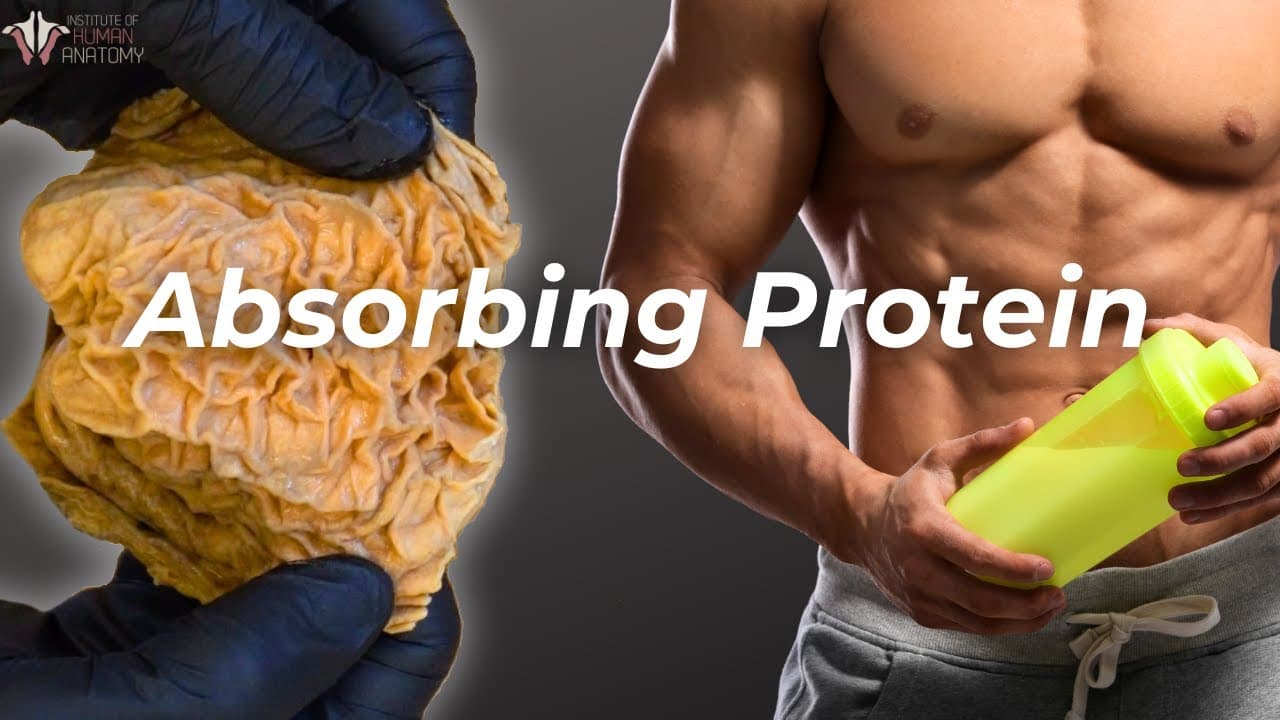
TL;DR
The body digests protein through chewing, stomach acid, pepsin, and pancreatic enzymes, then absorbs the resulting amino acids, dipeptides, and tripeptides through the small intestine. Complete proteins and large polypeptides cannot be absorbed directly. The small intestine’s length of more than 20 feet, circular folds, and microvilli provide substantial time and surface area for absorption. Read on to follow each step from mouth to bloodstream.
Transcript
one of my favorite things to show students is how we get this protein all the way to something like this a skeletal muscle that we may want to strengthen and enlarge and I actually don't think we give our digestive system enough credit for all the steps that are necessary to break down the protein absorb it into the bloodstream and get it to the ac... Read More
Key Insights
- Digestion is the process of breaking food into smaller molecules, while absorption is the movement of those molecules into the bloodstream. Different portions of the digestive tract emphasize one process over the other, although limited absorption can occur in regions mainly responsible for digestion.
- Protein digestion begins in the oral cavity through mechanical chewing and chemical activity from saliva and salivary enzymes. A protein shake requires little chewing, but solid protein sources such as chicken or steak undergo more mechanical digestion before being swallowed and moved through the esophagus.
- The stomach digests protein through both churning and chemical secretions. Its tunica mucosa contains gastric rugae that allow expansion, mucus-secreting cells that protect the lining, parietal cells that produce hydrochloric acid, and chief cells that release the inactive substance pepsinogen.
- Hydrochloric acid supports protein digestion by denaturing ingested proteins and converting pepsinogen into active pepsin. Pepsin then breaks proteins down further, while the stomach churns and mixes food with gastric juices to produce a mixture called chyme.
- The pyloric sphincter regulates the movement of stomach contents into the small intestine. Transit time depends on the amount and type of food consumed, with fatty foods taking longer and a simple protein powder, especially alone or with simple carbohydrates, moving through initial digestion more quickly.
- The duodenum is the first of the small intestine’s three segments, followed by the jejunum and ileum. It receives bile, pancreatic bicarbonate, and pancreatic enzymes through the common bile duct, with the pancreatic enzymes continuing the chemical digestion of protein.
- Amino acids are the building blocks that join to form peptides, while many linked amino acids create polypeptides that can fold into complete proteins. Full proteins and polypeptides cannot be absorbed directly, so digestion must first reduce them to much smaller components.
- The small intestine is the primary area of nutrient absorption and can exceed 20 feet in length. Its length provides more time for absorption, while circular folds in the tunica mucosa and microvilli increase the surface area available for absorbing digested nutrients.
Install to Summarize YouTube Videos and Get Transcripts
Explore YouTube Video Summarizer or Get YouTube Transcript Extractor
Questions & Answers
Q: How does the body digest and absorb protein?
Protein digestion starts in the mouth with chewing and saliva, continues in the stomach through churning, hydrochloric acid, and pepsin, and proceeds in the duodenum with pancreatic enzymes. Once protein has been reduced to individual amino acids, dipeptides, or tripeptides, the small intestine can absorb these smaller components into the bloodstream.
Q: What is the difference between protein digestion and absorption?
Digestion is the mechanical and chemical breakdown of protein into smaller molecules. Absorption occurs when sufficiently small molecules move into the bloodstream, primarily through the small intestine.
Q: How does protein digestion begin in the mouth?
Chewing mechanically divides solid protein foods into smaller pieces, while saliva and salivary enzymes contribute to chemical digestion. A protein shake requires little chewing, whereas foods such as chicken or steak undergo more mechanical digestion before being swallowed and moved through the esophagus.
Q: How does the stomach digest dietary protein?
The stomach mechanically digests protein by churning and mixing food with gastric juices. Hydrochloric acid denatures proteins and activates pepsin, which breaks them down further; the resulting mixture is called chyme.
Q: What roles do parietal cells, chief cells, and pepsin play in protein digestion?
Parietal cells secrete hydrochloric acid, which denatures ingested proteins and converts pepsinogen into active pepsin. Chief cells release pepsinogen, and the activated pepsin then helps break proteins down.
Q: What controls how quickly protein leaves the stomach?
The pyloric sphincter regulates the movement of stomach contents into the small intestine, while transit time depends on the amount and type of food consumed. Fatty foods generally take longer, whereas a simple protein powder taken alone or with simple carbohydrates can pass through initial digestion more quickly.
Q: Can the small intestine absorb complete proteins?
The small intestine cannot directly absorb complete proteins or large polypeptides. Digestion must first reduce them to individual amino acids, dipeptides, or tripeptides that are small enough for absorption.
Q: Why is the small intestine effective at absorbing digested protein?
The small intestine is the primary area of nutrient absorption and can exceed 20 feet in length, providing time and distance for absorption. Circular folds in its tunica mucosa and microvilli further increase the available surface area.
Summary & Key Takeaways
-
Protein digestion begins in the mouth through chewing, saliva, and salivary enzymes. After swallowing, food travels through the esophagus into the stomach. Protein shakes require little mechanical digestion, while protein-containing foods such as chicken or steak require more chewing before they enter the remaining stages of the digestive process.
-
The stomach continues protein digestion mechanically by churning food and chemically through hydrochloric acid and pepsin. Parietal cells release acid, while chief cells secrete pepsinogen, which acid converts into active pepsin. The resulting mixture, called chyme, passes through the pyloric sphincter toward the first segment of the small intestine.
-
In the duodenum, pancreatic bicarbonate helps neutralize acidic material from the stomach, while pancreatic enzymes continue breaking down protein. Full proteins and polypeptides cannot be absorbed directly. Digestion must reduce them to individual amino acids, dipeptides, or tripeptides, which can then be absorbed through the extensive surface of the small intestine.
Read in Other Languages (beta)
Share This Summary 📚
Summarize YouTube Videos and Get Video Transcripts with 1-Click
Try YouTube Summary with ChatGPT & Claude or YouTube Transcript Generator
Explore More Summaries from Institute of Human Anatomy 📚
Summarize YouTube Videos and Get Video Transcripts with 1-Click
Try YouTube Summary with ChatGPT & Claude or YouTube Transcript Generator