What to Expect from Knee Replacement Surgery
TL;DR
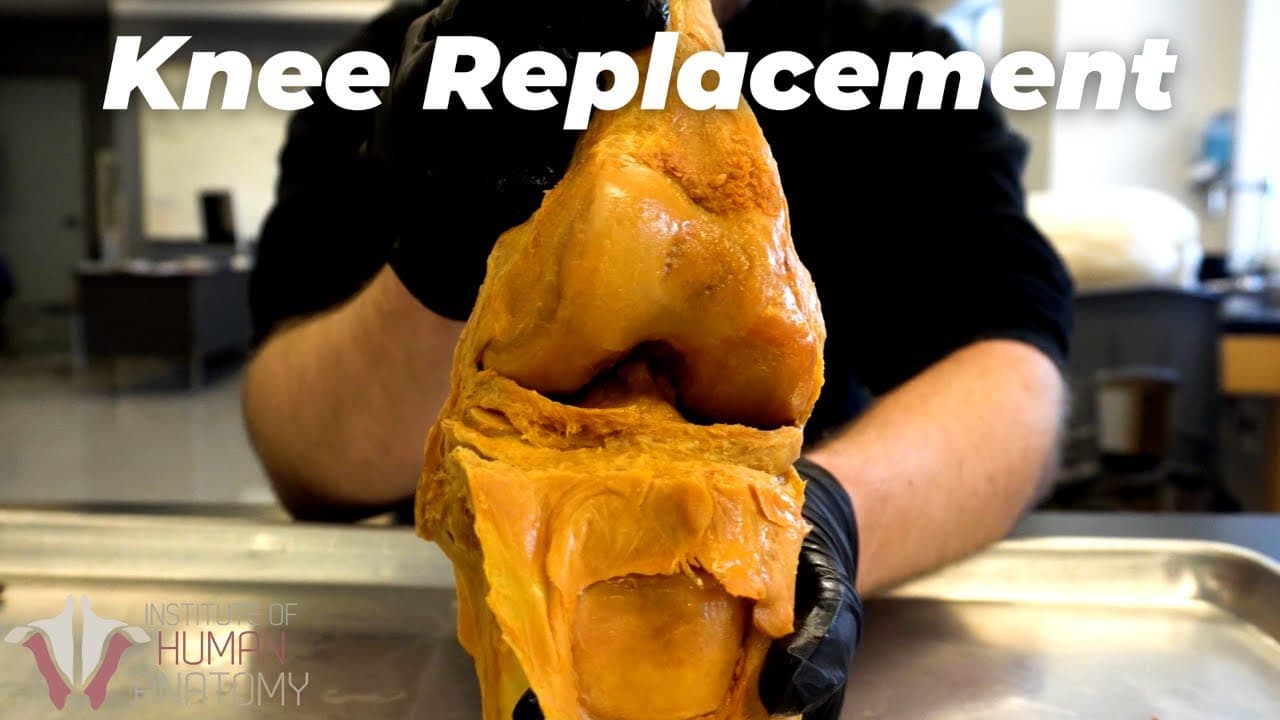
Knee replacement surgery, or arthroplasty, can be partial or total based on the knee's damage. Key factors for eligibility include age and knee health, often influenced by arthritis. The procedure requires surgical precision, either manual or robotic, followed by a strict rehabilitation program to ensure successful recovery and mobility.
Transcript
in today's video with the help of this real human knee we're going to see how knee replacement surgeries are performed and what the patient can expect once it's all said and done it's going to be an interesting one let's do this now the proper name for a knee replacement surgery is a knee arthroplasty and there are two different types of knee arthr... Read More
Key Insights
- 🤔 Knee replacement surgeries, or knee arthroplasties, can be either partial or total, depending on the extent of damage and surface area being replaced.
- 😷 Age and the level of knee damage are primary factors in determining eligibility for knee arthroplasty.
- 🦴 Osteoarthritis, inflammatory arthritis (such as gout or rheumatoid arthritis), and traumatic knee injuries are common causes of knee damage and may require arthroplasty.
- 📊 Pre-operative medical imaging, such as MRI or CT scans, is necessary to plan and determine the size of the prosthesis.
- 🔍 Manual arthroplasty involves the surgeon using their expertise to guide the procedure, while robotic-assisted arthroplasty utilizes sensors and technology for precision and efficiency.
- 🌡️ Robotic-assisted arthroplasty may reduce short-term recovery times and pain compared to manual arthroplasty.
- 🔧 During the surgery, damaged tissue, including meniscus and ACL, may be removed and replaced with prosthetic materials.
- ️ Proper rehabilitation post-surgery, including physical therapy, is crucial to ensure proper scar formation and range of motion in the knee joint.
Install to Summarize YouTube Videos and Get Transcripts
Explore YouTube Video Summarizer or Get YouTube Transcript Extractor
Questions & Answers
Q: What are the two types of knee arthroplasty, and what is the difference between them?
The two types of knee arthroplasty are partial and total. In a partial knee arthroplasty, only specific parts of the knee joint are replaced, such as the condyles of the femur. In a total knee arthroplasty, all articular surfaces of the knee joint, including the femur, tibia, and patella, are replaced and resurfaced.
Q: What factors determine eligibility for knee arthroplasty?
Eligibility for knee arthroplasty is typically based on age and the extent of damage in the knee joint. The surgery is more common in individuals aged 60 or older due to the extensive nature of the procedure and the limited lifespan of the prostheses. However, eligibility can vary depending on the surgical team's recommendations and the patient's specific circumstances.
Q: What are the potential complications associated with knee replacement surgery?
Common complications include improper placement of prostheses, loosening of the prostheses over time, and post-surgical pain. Additionally, there is a risk of cutting ligaments or blood vessels during the procedure, as well as the formation of excessive scar tissue if proper rehabilitation is not followed.
Q: What is the importance of physical therapy in the recovery process?
Physical therapy is crucial for proper recovery after knee replacement surgery. It helps prevent the formation of excessive scar tissue and ensures proper range of motion. Patients undergo a multi-week physical therapy regimen that includes exercises to improve mobility, strength, and flexibility. Without proper rehabilitation, the knee may become locked in a restricted position.
Summary & Key Takeaways
-
Knee replacement surgery, also known as knee arthroplasty, can be partial or total, depending on the extent of damage to the knee joint's articular surfaces.
-
Eligibility for knee arthroplasty is typically determined by age and the amount of damage accumulated in the knee joint due to conditions like osteoarthritis or inflammatory arthritis.
-
The surgery involves pre-operative medical imaging, making incisions, resurfacing the damaged tissue, attaching prostheses made of titanium alloy, and conducting physical therapy for recovery.
Read in Other Languages (beta)
Share This Summary 📚
Summarize YouTube Videos and Get Video Transcripts with 1-Click
Try YouTube Summary with ChatGPT & Claude or YouTube Transcript Generator
Explore More Summaries from Institute of Human Anatomy 📚




Summarize YouTube Videos and Get Video Transcripts with 1-Click
Try YouTube Summary with ChatGPT & Claude or YouTube Transcript Generator