How Did Self-Taught Geniuses Read These 12 Books to Build Their Minds?
TL;DR
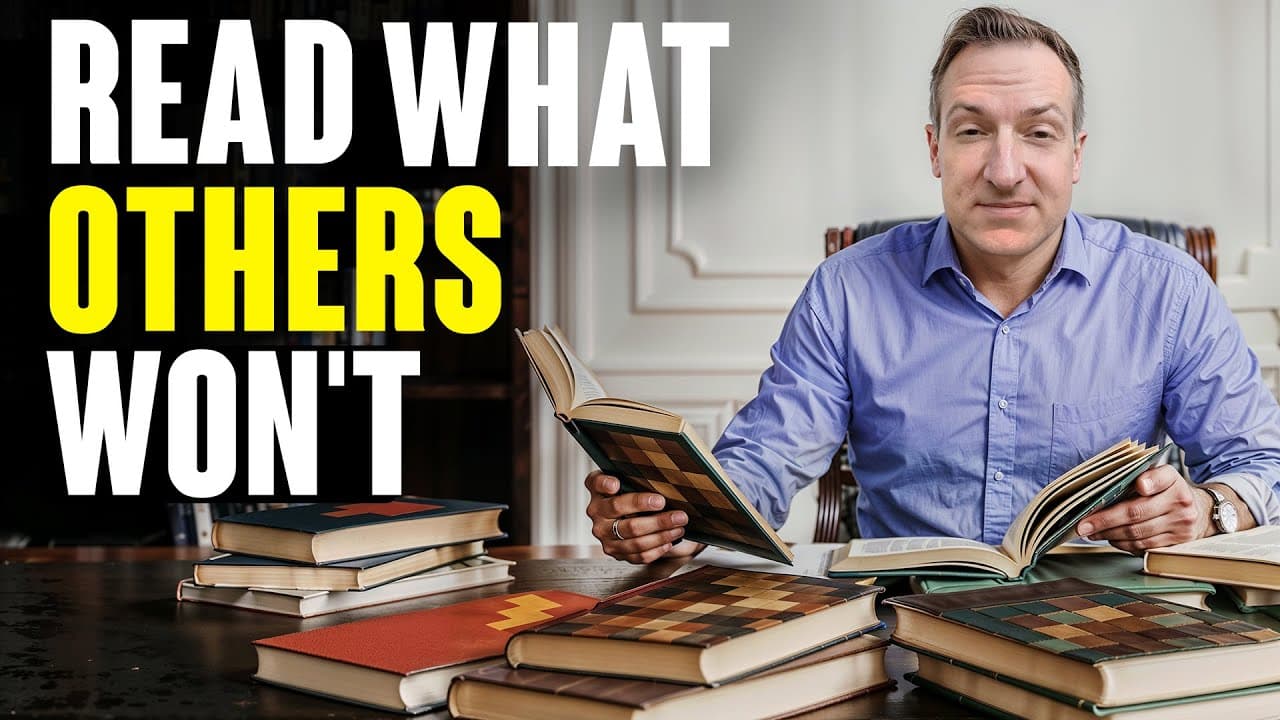
Self-taught geniuses built their minds by reading deliberately: mastering foundational texts, studying outside their fields, reconstructing excellent work, and explaining difficult ideas plainly. The 12 books connected to six thinkers, including Leonardo da Vinci, Benjamin Franklin, Nelson Mandela, Nikola Tesla, Richard Feynman, and Frida Kahlo, became tools for developing skill, character, empathy, skepticism, and creativity. Read on for practical ways to apply their methods.
Transcript
Most people think a genius comes from talent or genetics. But spend enough time studying the lives of great thinkers and you'll notice something striking. The people we often call self-taught geniuses didn't simply read more books than everyone else. They read differently. In this video, I'm not only going to share 12 books that shaped six extraord... Read More
Key Insights
- Foundational texts are most valuable when their core principles become second nature. Leonardo da Vinci used the geometric relationships associated with Euclid's Elements across painting, engineering, anatomy, proportion, flying-machine sketches, and fortification designs, showing how one deeply understood framework can support many kinds of work.
- Cross-disciplinary reading is a source of new perspectives. Leonardo treated Vitruvius's On Architecture as more than a building manual, using its ideas about bodily proportion, cosmic geometry, balance, harmony, and design to recognize hidden structures across art and the surrounding world.
- Reconstruction turns admiration into practical ability. Benjamin Franklin reportedly outlined essays from The Spectator, concealed the originals, recreated them from memory, and compared both versions, creating a repeated cycle of imitation, reconstruction, comparison, and correction that strengthened his writing.
- Biography can be studied as cause-and-effect evidence about character. Franklin read Plutarch's Lives to examine why people rise or fall, which qualities they cultivate, which weaknesses they neglect, and how internal traits eventually influence external outcomes.
- Strategic empathy develops by treating fictional characters and social conditions as case studies. Mandela returned to War and Peace and referenced The Grapes of Wrath to consider leadership under pressure, defeat, resilience, oppression, dignity, poverty, injustice, class, and systems that outlast individuals.
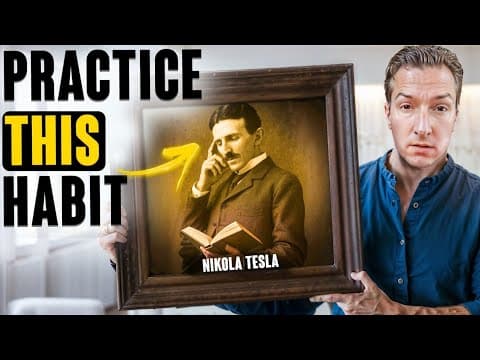
- Literature can support technical creativity and disciplined skepticism. Tesla drew imaginative fuel from Goethe's Faust, while Voltaire's Candide challenged inherited explanations, comfortable narratives, dogma, and blind optimism, reinforcing the habit of questioning authorities and testing ideas.
- Reading above your current level stretches your intellectual capacity. Richard Feynman repeatedly confronted Paul Dirac's difficult Principles of Quantum Mechanics before he could understand it, returning to advanced ideas over time rather than waiting until he felt fully prepared.
- Plain-language explanation is a test of understanding. Feynman's Six Easy Pieces demonstrates the practice of stripping complex ideas to their essence and rebuilding them clearly. If an explanation remains inaccessible, the learner should return to the material and refine their understanding.
Install to Summarize YouTube Videos and Get Transcripts
Explore YouTube Video Summarizer or Get YouTube Transcript Extractor
Questions & Answers
Q: How can I read books like a self-taught genius?
Read with a specific intellectual purpose instead of merely accumulating titles. Master a foundational text, explore works outside your field, reconstruct excellent work from memory, study biographies through cause and effect, and treat fictional characters as case studies. Test your understanding by explaining difficult ideas in plain language.
Q: Why should I reread one foundational book?
A foundational book supplies principles that support many later ideas and applications. Leonardo da Vinci used the geometric relationships in Euclid's Elements when thinking about painting, bridges, anatomy, proportions, flying machines, and fortifications. The lesson is to reread one foundational text until its principles become second nature.
Q: How does reading outside your field improve thinking?
Reading outside your field introduces frameworks that your usual materials may not provide. Leonardo treated Vitruvius's On Architecture as a lens for balance, harmony, bodily proportion, and design rather than merely as a building manual. This kind of cross-pollination can reveal hidden structures and inspire breakthroughs.
Q: How did Benjamin Franklin practice writing with The Spectator?
Franklin studied the structure of essays from The Spectator, outlined them, hid the originals, and recreated them from memory. He then compared his versions with the originals and studied every difference. This cycle of imitation, reconstruction, and comparison turned admiration into practical writing ability.
Q: How did Benjamin Franklin use Plutarch's Lives to develop his character?
Franklin treated Plutarch's Lives as case studies in ambition, power, failure, and integrity rather than as heroic myths. He examined why people rose or fell, which qualities they cultivated, and which weaknesses they ignored. Readers can apply the method by asking which habits built or destroyed each person.
Q: How can fiction teach leadership and strategic empathy?
Nelson Mandela returned to War and Peace and referenced The Grapes of Wrath to examine leadership, defeat, resilience, oppression, dignity, poverty, injustice, and class. He treated characters and social conditions as case studies rather than reading only for comfort. The practical method is to identify one structural insight and ask how it applies to your field or life.
Q: Why should learners read books above their current level?
Reading above your current level forces you to wrestle with ideas you cannot yet process comfortably. Richard Feynman confronted Paul Dirac's Principles of Quantum Mechanics before he could fully understand it and returned to its difficult concepts over time. Sustained rereading allows advanced ideas to become increasingly accessible.
Q: How can plain-language explanation test your understanding?
Explain an idea simply while preserving its essential meaning. Feynman's Six Easy Pieces models how to strip difficult concepts down and rebuild them clearly enough for others to follow. If your explanation remains inaccessible, return to the material and refine your understanding.
Summary & Key Takeaways
-
The central argument is that exceptional self-education depends less on reading many books than on reading deliberately. Leonardo da Vinci used Euclid and Vitruvius to recognize foundational relationships and hidden structures. His example supports mastering a core text, revisiting it repeatedly, and importing useful ideas from disciplines outside your own.
-
Benjamin Franklin reportedly trained his writing by outlining essays from The Spectator, hiding the originals, reconstructing them from memory, and comparing the results. He also approached Plutarch's Lives as evidence about ambition, integrity, failure, and character. Together, these methods transformed admired works and historical lives into practical exercises for improvement.
-
Mandela used fiction to examine leadership, oppression, resilience, and social systems. Tesla drew creative and skeptical habits from literature and philosophy. Feynman wrestled with difficult physics before he was ready, then pursued plain explanations. Kahlo used psychoanalysis and Marxist writings to challenge perception and interpret suffering, identity, illness, and labor.
Read in Other Languages (beta)
Share This Summary 📚
Summarize YouTube Videos and Get Video Transcripts with 1-Click
Try YouTube Summary with ChatGPT & Claude or YouTube Transcript Generator
Explore More Summaries from Stephen Petro 📚
Summarize YouTube Videos and Get Video Transcripts with 1-Click
Try YouTube Summary with ChatGPT & Claude or YouTube Transcript Generator