How to Build Wealth With Daily Micro Habits
TL;DR
Build wealth by scheduling priorities, reviewing important metrics daily, reducing trivial decisions, protecting sleep, and creating more than you consume. Consistent experimentation, weekly financial learning, and delayed purchasing can improve business performance and preserve attention, while batching shallow work and deep work reduces the mental cost of switching between unrelated tasks.
Transcript
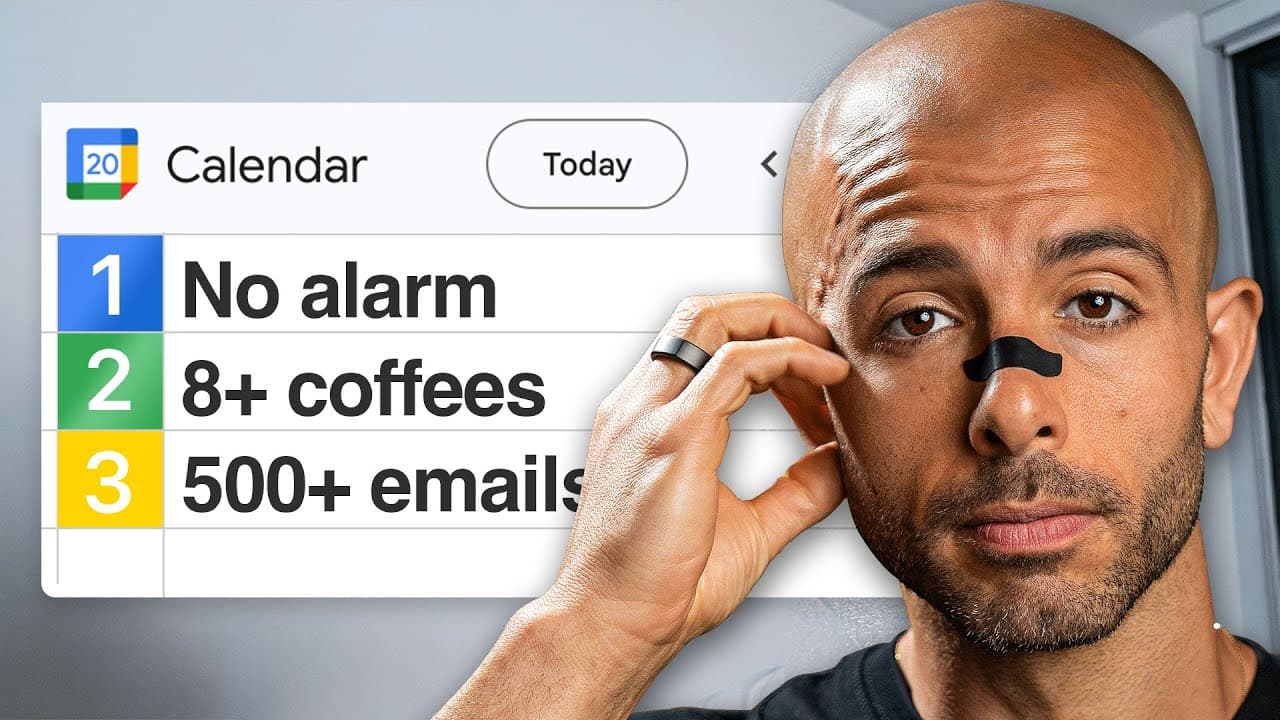
Check out my calendar. This setup has made me over $200 million. Is it right for everybody? Maybe not. Does it allow me to get done more in a day than most people do in a week? Yes. Success doesn't come from one big move. It comes from lots of little tiny micro habits that you repeat so frequently that they rewire your brain. Here are the ones that... Read More
Key Insights
- • Calendar batching is a method for protecting attention by grouping similar work. Mondays and Fridays are assigned to meetings and shallow tasks, while Tuesdays, Wednesdays, and Thursdays are reserved for creative production, promotion writing, incentive design, and strategic thinking.
- • Daily measurement is a mechanism for keeping priorities visible. Reviewing bank accounts, advertising dashboards, lead volume, return on advertising spend, or fitness measurements makes deviations harder to ignore and encourages action before a problem grows.
- • Repeated exposure to goals is used to resist settling for average outcomes. Vision boards and goal recordings that play automatically in the car provide frequent reminders of the desired future and reconnect daily effort with its underlying purpose.
- • Decision simplification preserves mental capacity for consequential business problems. Wearing similar clothes, following a household menu, packing a gym bag beforehand, and keeping keys in a consistent location remove recurring choices and reduce friction from ordinary routines.
- • Recovery is treated as a foundation for productive energy. The speaker prioritizes a fixed bedtime over a forced early wake time, tracks sleep with an Oura Ring, and targets a combined three hours of REM and deep sleep each night.
- • Creating more than consuming limits the attention lost to social media. The recommended approach is to measure screen time, enter platforms only to publish necessary material, and leave quickly instead of allowing recommendation algorithms to turn a brief check into hours of consumption.
- • Continuous split testing is presented as a high-value profit activity. The speaker keeps 10 to 20 tests active and reports that earlier experiments raised conversion rates by 50, 100, or 200 percent, making experimentation a standing business rule.
- • Delayed purchasing reduces unnecessary consumption and emotional debt. The speaker waits at least four weeks, and sometimes two months, before buying even a $100 or $500 item, then requires getting rid of an existing possession when bringing something new into his life.
Install to Summarize YouTube Videos and Get Transcripts
Explore YouTube Video Summarizer or Get YouTube Transcript Extractor
Questions & Answers
Q: How should a calendar be organized for deep work?
Organize the week by batching work with similar cognitive demands. The described schedule places meetings, human resources discussions, management check-ins, and final interviews on Mondays and Fridays. Tuesdays, Wednesdays, and Thursdays are protected for deep work such as scripting content, writing promotions, designing incentive systems, and considering the next moves required to advance the company.
Q: Why should important business metrics be checked daily?
Daily reviews keep the most important outcomes visible and make it difficult to drift far from a goal without noticing. The speaker checks bank accounts, advertising dashboards, incoming lead volume, and return on advertising spend each morning. The same principle can apply to fitness measurements: what is measured consistently is more likely to be actively managed.
Q: How can goals stay visible during an ordinary routine?
Goals can remain prominent through repeated visual and audio reminders. The speaker uses vision boards and keeps recorded goals on a phone so they play automatically when entering the car. These reminders are intended to reinforce a clear picture of the future, reconnect repetitive work with its purpose, and counter the pull toward accepting average surroundings as the default.
Q: How can decision fatigue be reduced in daily life?
Decision fatigue can be reduced by standardizing frequent choices that do not contribute directly to important goals. Examples include wearing black T-shirts, using a predetermined household menu, packing a gym bag the night before, and leaving keys in the same place. Removing these minor decisions preserves mental capacity for business choices that could affect revenue and progress.
Q: Why does the speaker prioritize bedtime over wake time?
The speaker found that setting a consistent sleep time supported recovery better than forcing an early wake time regardless of the previous night. Sleep tracking with an Oura Ring indicated that 80 percent of his deep sleep occurred before midnight. He therefore became stricter about bedtime so he could recover properly and bring more energy to the following day.
Q: What recovery habits are recommended for sustained energy?
The recovery routine includes protecting bedtime, tracking sleep, taking magnesium glycinate in the evening, using good shoes and a good mattress, and walking after every meal. The speaker also recommends turning suitable Zoom calls into walking meetings and using outdoor walks to talk through ideas with ChatGPT before returning to the office with raw material for focused work.
Q: How can a business use split testing to improve profit?
A business can make split testing a continuous rule rather than an occasional project. The speaker keeps 10 to 20 tests running at any time and compares their effects on conversion rates and advertising economics. He reports prior increases of 50, 100, and 200 percent, and argues that frequent experiments can substantially improve profit margins when lead generation and traffic spending are significant.
Q: How can delayed purchasing help control consumption?
Delayed purchasing creates time to distinguish a genuine need from a temporary desire. Before buying something, the speaker waits at least four weeks and may deliberate for two months, even when an item costs only $100 or $500. He says every purchase carries emotional debt and also follows a rule that something existing must be removed when something new is acquired.
Summary & Key Takeaways
-
A calendar can become an external operating system for work. The described schedule reserves Mondays and Fridays for meetings, interviews, and other shallow responsibilities, while Tuesdays through Thursdays are protected for scripts, promotions, incentive systems, strategic thinking, and other deep work that could move the business forward.
-
Daily measurement keeps important goals visible. The routine begins by checking bank balances, advertising dashboards, lead volume, return on advertising spend, or relevant fitness measurements. Vision boards and recorded goals reinforce the desired future, while standardized clothing, meals, locations, and preparation reduce friction and preserve attention for consequential decisions.
-
Sustainable performance depends on recovery, controlled consumption, and continuous improvement. The habits include setting a consistent bedtime, tracking sleep, walking after meals, limiting social media, producing more content than is consumed, maintaining active split tests, studying ways to make or save money, and delaying discretionary purchases for at least four weeks.
Read in Other Languages (beta)
Share This Summary 📚
Summarize YouTube Videos and Get Video Transcripts with 1-Click
Try YouTube Summary with ChatGPT & Claude or YouTube Transcript Generator
Explore More Summaries from Sabri Suby 📚






Summarize YouTube Videos and Get Video Transcripts with 1-Click
Try YouTube Summary with ChatGPT & Claude or YouTube Transcript Generator