How to craft high converting landing pages for leads
TL;DR
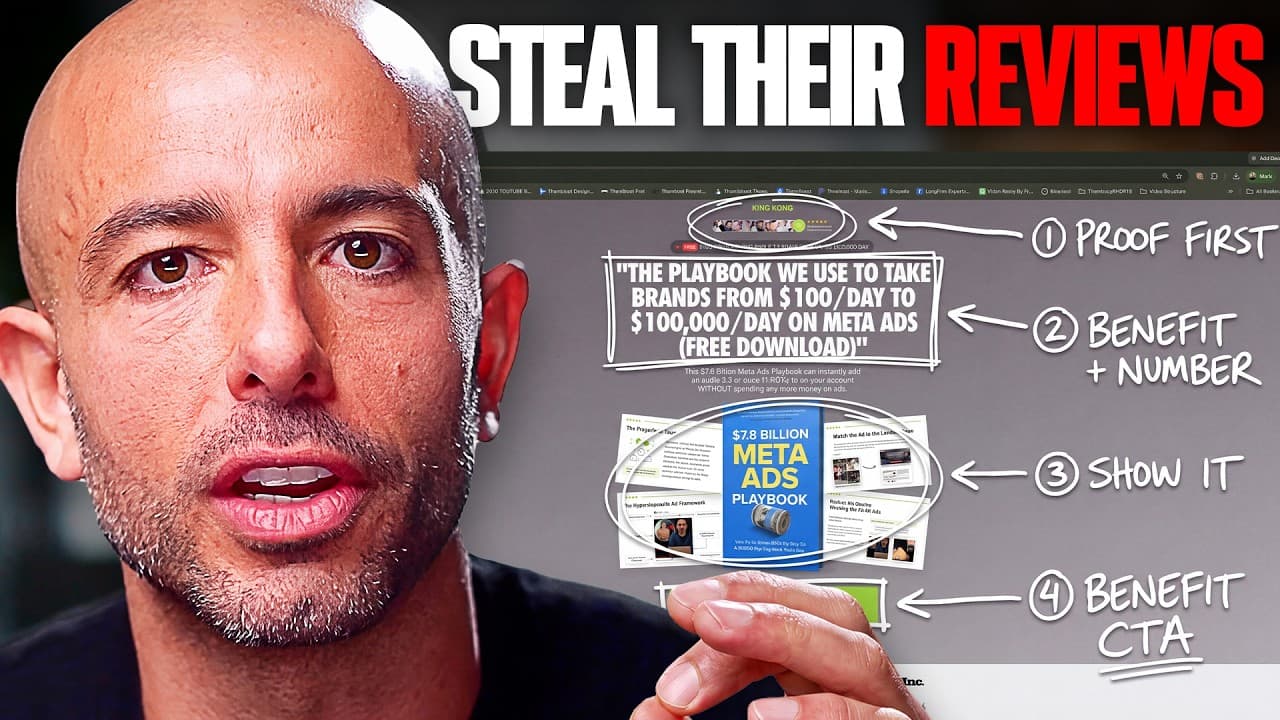
The first step is to gather authentic market pain points from reviews and forums so your page speaks the exact language of prospects. Use the halo strategy to categorize pains, fears, hopes, and dreams, then validate angles with quick Meta ads tests before building. Tailor pages to the prospect’s awareness level to maximize cold to warm traffic performance.
Transcript
Today I'm going to be sharing with you the most comprehensive landing page training that I have ever released. It holds all the hacks that you need to go from blank page to converting cold strangers into booked calls on demand. I've built over 2,000 landing pages in a,000 different niches and have generated over 20 million leads. And I'm about to h... Read More
Key Insights
- Pains, fears, hopes, and dreams should be mined from real customer reviews and online chatter to inform copy.
- The halo strategy categorizes market sentiment into structured buckets for precise messaging.
- Exact verbatim language from prospects is preferred over interpretations to avoid misalignment.
- Dry testing on Meta allows rapid validation of 10 angles before building a page.
- Typically 1 to 3 winning angles emerge from a broader set of ideas.
- Write landing pages to match the prospect's awareness stage, not just the sale.
- Cold traffic requires different messaging than high intent search or social traffic.
- Validation through quick ads reduces wasted time and resources before full development.
Install to Summarize YouTube Videos and Get Transcripts
Explore YouTube Video Summarizer or Get YouTube Transcript Extractor
Questions & Answers
Q: What is the first step to crafting a killer landing page according to the video?
The first step is to scrape and capture reviews and online chatter about the market to understand the pains, fears, hopes, and dreams of your prospects. You should collect authentic language directly from customers and use it as the foundation for headlines and sections on your page. This avoids guessing and aligns your messaging with real customer sentiment.
Q: How should you organize the market insights you collect?
Organize insights using the halo strategy, which categorizes pains, fears, hopes, and dreams into distinct sections. Then extract the exact verbs and phrases used by customers to label these categories. This structured approach ensures that every element of the landing page reflects the prospects language and concerns.
Q: What is the purpose of dry testing in this approach?
Dry testing is used to validate multiple angles quickly before building the actual landing page. You create several angle-specific ads, each with a unique headline and body copy, run them on Meta, and observe which angles yield higher click-through rates and lower costs per booked call. This speeds up discovery of winning messaging.
Q: Why is it important to tailor the landing page to different traffic types?
Different traffic sources have different intent levels. High intent search traffic behaves very differently from cold social traffic, so the same landing page will perform poorly if it is not adapted to the audience. Align the messaging with the users stage in the awareness journey to improve conversion across traffic types.
Q: What is the role of the five stages of awareness in this method?
The five stages of awareness help you tailor messaging from completely unaware to fully ready to buy. By meeting prospects where they are, you can craft pages that warm up cold audiences and gradually move them toward conversion, rather than assuming one message fits all stages.
Q: How many winning angles are typically found, and what should you do with the rest?
Typically one to three winning angles emerge from testing ten angles. You should turn off the remaining angles and continue validating the winning subset to ensure you have a clear, repeatable winner before committing to full production.
Q: What is the suggested sequencing after identifying winning angles?
After identifying winning angles, you should validate them further by running them as ads first and then, if they perform consistently, translate the best performing angles into dedicated landing pages. This minimizes risk, speeds up data collection, and ensures the final page is built on proven concepts.
Q: What is the overarching goal of this landing page strategy?
The goal is to move from a blank page to a highly converting asset by using real market data, precise language, and validated angles. This approach aims to scale lead generation by matching message to audience while reducing wasted development time and ensuring a measurable return on ad spend.
Summary & Key Takeaways
-
A landing page strategy focuses on speaking to prospects in their own words by mining reviews and conversations, then organizing insights with a halo framework to create targeted copy. Validation happens through rapid Meta ad tests to identify winning angles before full development, reducing wasted effort. The approach emphasizes meeting prospects where they are in their awareness journey to scale effectively.
-
The method separates message from mechanics by first collecting verbatim market language and a structured catalog of pains, fears, hopes, and industry terms, then using that data to guide headline and body copy decisions. It also highlights the importance of cold to warm traffic alignment, ensuring pages resonate across different intent levels.
-
Finally, the playbook champions speed and data, recommending dry testing, multiple angles, and a staged rollout to ensure that only proven concepts advance to full landing page production, thus accelerating lead generation growth.
Read in Other Languages (beta)
Share This Summary 📚
Summarize YouTube Videos and Get Video Transcripts with 1-Click
Try YouTube Summary with ChatGPT & Claude or YouTube Transcript Generator
Explore More Summaries from Sabri Suby 📚

Summarize YouTube Videos and Get Video Transcripts with 1-Click
Try YouTube Summary with ChatGPT & Claude or YouTube Transcript Generator