How to Build More Profitable Google Ads Campaigns
TL;DR
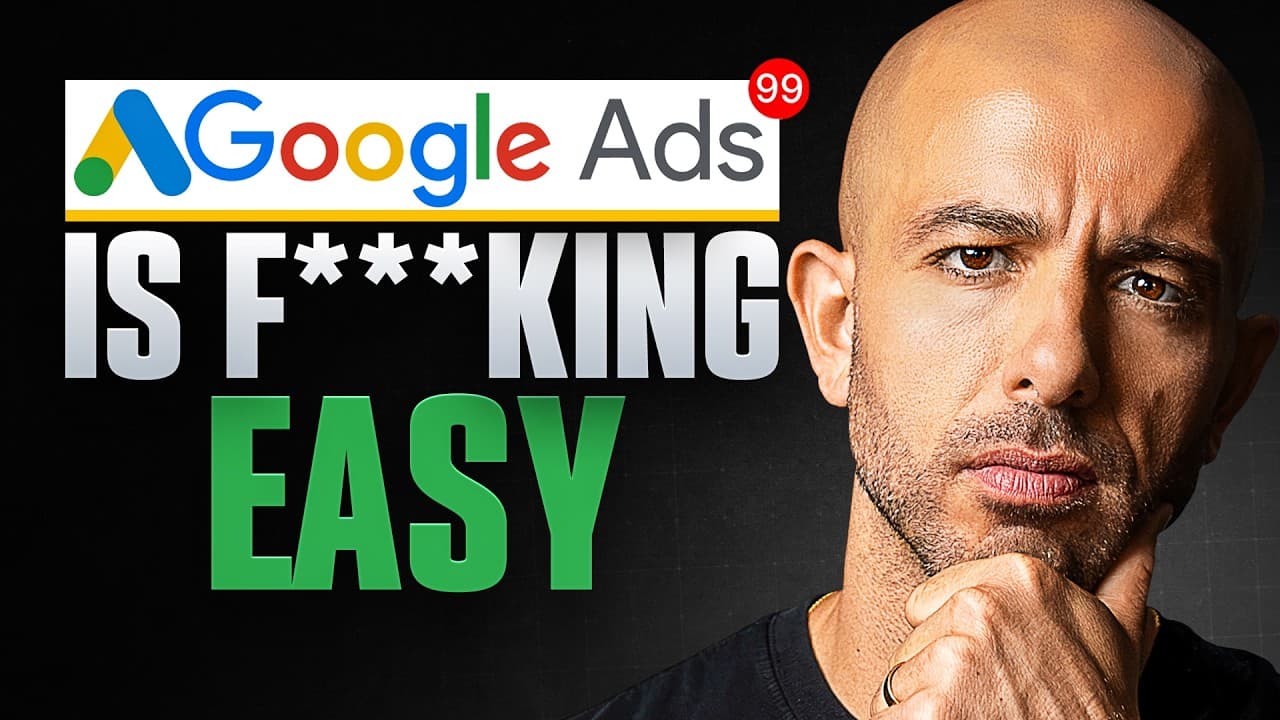
Focus most of your Google Ads budget on a handful of high-intent keywords that generate the majority of leads or return on ad spend. Export keyword-level performance data to identify these “coliseum keywords,” then create ads that promise useful information, trigger curiosity, and sell the click instead of trying to complete the sale.
Transcript
I have spent over $122 million on Google ads to generate my clients over $10.2 billion in sales in over a thousand different niches. And these are the six Google ad hacks that I wish I knew sooner. Starting with hack number one. When it comes to Google Ads, most people do it all wrong. They set up their Google Ads campaign. They go into Google Keyw... Read More
Key Insights
- The fractal 80/20 principle is presented as a method for finding disproportionate campaign value: 20% of keywords may produce 80% of results, while approximately 4% may account for 64% of leads, sales, or return on ad spend.
- Coliseum keywords are the small number of search terms that drive most campaign growth. The presenter recommends exporting keyword-level spend and performance data, adding metrics such as cost per lead or return on ad spend, and identifying which terms generate most results.
- Transactional keywords are valuable because their wording indicates that the searcher may be looking to purchase a specific service. Search volume and cost per click should not be evaluated alone, since a more expensive, specific query can contain stronger buyer intent.
- The campaign objective is to make the most money from the monthly budget, not merely to purchase the largest amount of traffic. Budget allocation should therefore favor demonstrated profitability and high transaction potential, even when the strongest keywords carry higher click costs.
- A Google search ad is meant to sell the click rather than complete the sale. Its copy should include the relevant keyword when appropriate, promise useful information, communicate a meaningful benefit, and create enough intrigue for the searcher to visit the landing page.
- The Halo strategy builds advertising messages from existing customer conversations. Researching forums, Quora, Reddit, books, hopes, fears, pains, and dreams helps advertisers use emotionally relevant language instead of guessing what prospective buyers want to hear.
- Headline development is an expansive and selective process. The presenter recommends writing as many headlines as possible, narrowing them to the best 20, and ensuring that the resulting copy addresses the questions and concerns behind the user’s search.
- The knife-to-the-neck approach treats each advertising decision as if the available $2,000 must produce a profitable campaign. It requires advertisers to scrutinize every keyword and consider the nature of each click instead of paying broadly to discover which irrelevant terms fail.
Install to Summarize YouTube Videos and Get Transcripts
Explore YouTube Video Summarizer or Get YouTube Transcript Extractor
Questions & Answers
Q: How do you find the most profitable Google Ads keywords?
Export all keyword-level advertising spend from Google Ads and include available performance columns, such as cost per lead or return on ad spend. Analyze which terms produce 80% of the results, then narrow the list further to the four or five keywords that may generate roughly 64%. These unusually productive terms are described as “coliseum keywords” and should receive close attention when allocating budget.
Q: What are coliseum keywords in Google Ads?
Coliseum keywords are the small handful of search terms that generate a disproportionate share of campaign results. They are the keywords around which a business can potentially build much of its advertising performance. The presenter’s insurance example found that the term “life insurance” drove 64% of results, making strong performance on that single term essential to maintaining sales and lead volume.
Q: Why should Google Ads focus on transactional keywords?
Transactional keywords contain language suggesting that the searcher may be ready to purchase a particular service. The presenter contrasts the broad term “accountant” with “bookkeeping accountant New York City.” The broader query may attract more volume and cheaper clicks, but the longer, more specific query signals stronger buyer intent. Campaign decisions should therefore consider the probable purpose behind each search, not only volume or cost per click.
Q: Should advertisers choose keywords based on low cost per click?
Advertisers should not select keywords solely because they have high search volume or a low cost per click. A cheaper click can come from a broad query with little purchase intent, while a more expensive click may come from someone actively seeking a specific service. The recommended standard is whether the searcher appears likely to buy and whether the keyword produces leads, sales, or return on ad spend.
Q: How should a Google search ad sell the click?
A Google search ad should promise the information the user wants, present a substantial benefit, and create curiosity about what appears after the click. It can include the target keyword, but it should not rely on repeating that keyword with a generic description. Because the purchase does not happen inside the ad itself, the immediate objective is earning attention and motivating the searcher to visit the destination.
Q: What is the Halo strategy for writing Google Ads?
The Halo strategy begins with a coliseum keyword and research into the market’s existing conversations. The advertiser examines forums, Quora, Reddit, books, and similar sources to record prospective customers’ hopes, fears, pains, and dreams. That material informs emotionally relevant ad copy. The goal is to enter a conversation already occurring in the buyer’s mind instead of inventing messages from an empty page.
Q: How can advertisers write stronger Google Ads headlines?
Advertisers can begin by producing as many headline ideas as possible and then reducing the collection to the best 20. Each headline should reflect the psychology and unanswered questions behind the search. In the divorce-lawyer example, the suggested headlines promise checklists or information about cheating and hidden money, topics selected after examining common concerns and the characteristics of people searching for divorce lawyers.
Q: What is the knife-to-the-neck Google Ads approach?
The knife-to-the-neck approach assumes the advertiser has a final $2,000 and the campaign must become profitable. Under that constraint, every keyword is scrutinized for the nature and likely value of its clicks. The approach contrasts with casting a broad net, purchasing large amounts of data, and later removing unprofitable terms, which can consume significant money on clicks that were unlikely to work from the beginning.
Summary & Key Takeaways
-
The central keyword strategy applies the fractal 80/20 principle to campaign performance. According to the presenter, 20% of keywords generate 80% of results, while 4% can generate 64%. Advertisers should identify these unusually productive “coliseum keywords” and prioritize profitability and purchase intent rather than traffic volume or inexpensive clicks.
-
Effective search ads should sell the click rather than attempt to sell the complete product or service. The recommended Halo strategy researches forums, Quora, Reddit, books, and other market conversations to document buyers’ hopes, fears, pains, and dreams. Those findings become the raw material for specific, emotionally relevant, curiosity-driven headlines.
-
Campaign development should begin with careful scrutiny of every proposed keyword, especially when the available budget is limited. The presenter contrasts this disciplined “knife to the neck” approach with casting a broad net and purchasing large amounts of performance data. Broad experimentation can waste money on clicks that were unlikely to become profitable.
Read in Other Languages (beta)
Share This Summary 📚
Summarize YouTube Videos and Get Video Transcripts with 1-Click
Try YouTube Summary with ChatGPT & Claude or YouTube Transcript Generator
Explore More Summaries from Sabri Suby 📚

Summarize YouTube Videos and Get Video Transcripts with 1-Click
Try YouTube Summary with ChatGPT & Claude or YouTube Transcript Generator