How to Grow a Business Through Sales and Hiring
TL;DR
Business growth starts with solving the customer’s specific problem, communicating the outcome clearly, and knowing how the product will be sold before developing it. Sustainable scale also requires accepting risk, hiring people who may initially perform below the founder’s level, building a repeatable sales process, and creating a specific offer that shifts risk away from the buyer.
Transcript
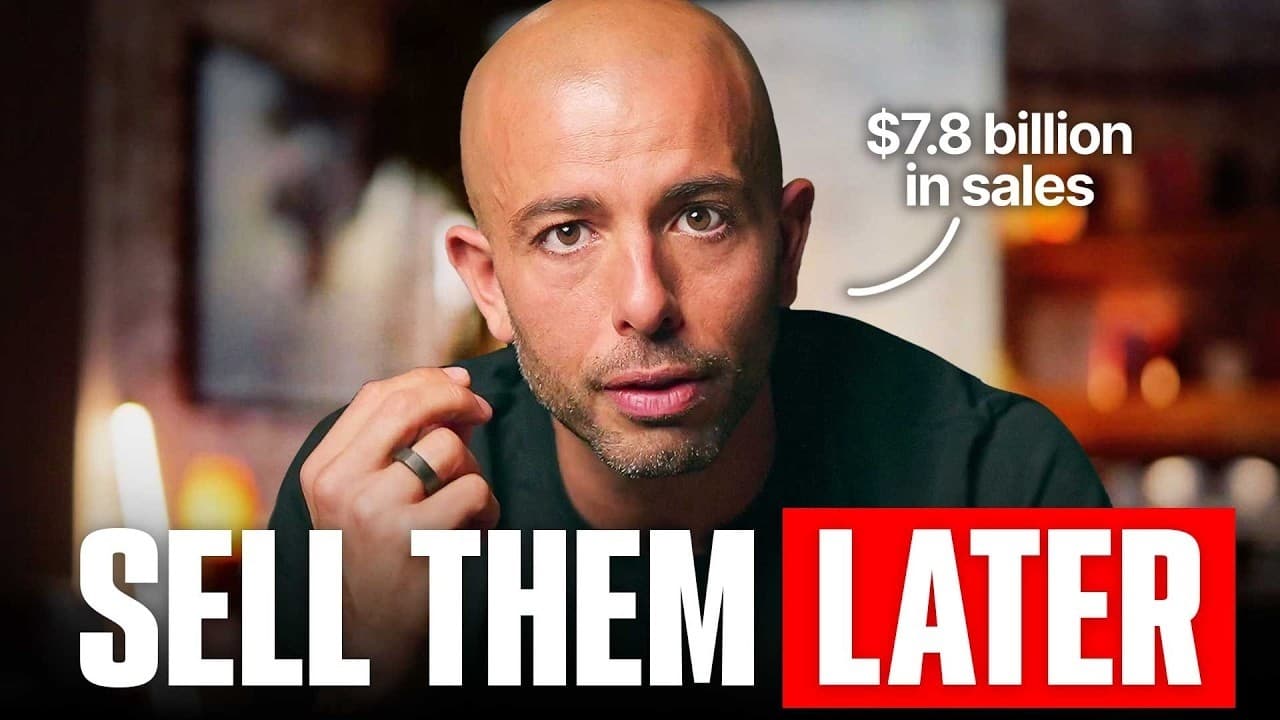
No one cares about you, your company, or how hard you've worked. People only care about themselves and their outcome. And once you accept it, you can start printing money. But most people never accept it. And then they build something that no one ever asks for. And they waste years of their life working on the wrong things. And by the end of this v... Read More
Key Insights
- Customers care primarily about their own outcomes, so a sales message should immediately connect the product or service to the buyer’s exact situation. Describing the company’s history, effort, or intentions is less persuasive than showing the practical value the customer will receive.
- The market rewards problem solving rather than effort or emotion. A founder can work hard for years and still fail if the business builds something customers never requested or cannot connect to a meaningful result in their lives.
- Business success is described as 20% mechanics and 80% mindset. Persistence, tolerance for risk, and delayed gratification help founders continue through dishonesty, lost deals, financial pressure, and the difficult transition from working alone to supporting a team.
- A company without a team remains largely a job for its owner. Founders who refuse to delegate because nobody matches their efficiency can become trapped working 80, 100, or 120 hours each week without building an organization that operates beyond them.
- Hiring someone who performs a role at 50% of the founder’s ability can still create substantial leverage. One account manager allowed the founder to reclaim 100 hours per month, which could then be invested in recruiting salespeople and creating a unified sales process.
- Sales and distribution determine whether strong products reach enough customers to finance further improvement. The best-known product can defeat a technically better product because greater revenue enables a company to recruit stronger talent, serve clients more effectively, and improve what it sells.
- A product’s sales strategy should be understood before development begins. Product obsession without a distribution plan leaves the founder searching for customers afterward, while execution-focused founders design the positioning, presentation, and route to market alongside the offering itself.
- An irresistible offer combines a highly specific outcome, reduced buyer risk, and a distinctive hero mechanism. A strong promise may feel uncomfortable for the seller, but it can increase conversions and potentially reduce customer acquisition cost to one-third of its previous level.
Install to Summarize YouTube Videos and Get Transcripts
Explore YouTube Video Summarizer or Get YouTube Transcript Extractor
Questions & Answers
Q: How should a business communicate value to customers?
A business should focus its message on the customer’s desired outcome and exact situation. The founder’s effort, company history, and personal attachment to the product are not the main reasons people buy. The transcript illustrates this with a sales pitch that improved after it replaced broad company and environmental claims with a direct promise to buy empty cartridges and wire the customer $500.
Q: Why does solving customer problems matter more than working hard?
The market transacts according to value and does not reward a founder simply for caring deeply or working for a long time. Hard work directed toward something nobody requested can waste years. The useful test is whether the product solves a recognized problem and whether the sales message clearly shows customers how the solution will affect their own lives or work.
Q: Why is mindset important when growing a business?
Business is presented as 20% mechanics and 80% mindset because founders must withstand risk, setbacks, dishonest behavior, and delayed rewards. The transcript argues that many large businesses exist because their founders did not quit. A founder’s tolerance for uncertainty and willingness to keep investing effort can determine whether the company survives difficult stages of growth.
Q: When should a founder hire a team?
A founder should hire when performing every function personally prevents the business from growing, even if the available employee cannot initially match the founder’s quality or speed. The transition may require the founder to keep working intensely while paying and training new people. Without delegation, the owner may have a demanding job rather than a scalable business.
Q: Can hiring someone less capable than the founder still help?
Hiring someone who can perform a role at 50% of the founder’s level can still be valuable because capacity multiplies across a team. The transcript contrasts one person working at 100% with 10 people working at 50%. Delegating account management reclaimed 100 hours per month, giving the founder time to recruit salespeople, standardize sales, and pursue growth.
Q: Why are sales and distribution essential to business growth?
Sales and distribution turn goods and services into revenue. A company that sells more effectively can generate the cash needed to hire talented people, improve client service, and develop better products. The transcript argues that the best-known product often wins, which means product quality alone is insufficient when potential customers do not understand, encounter, or purchase the offering.
Q: Should a company develop a product before planning how to sell it?
A company should know how it intends to sell an offering before completing its development. Building first and searching for distribution afterward creates avoidable risk. The sales plan should shape how the outcome is described, how the product differs from alternatives, and how it will reach buyers. Execution and distribution therefore belong in product planning from the beginning.
Q: What makes a business offer compelling?
A compelling offer promises a highly specific and measurable outcome, places less risk on the buyer, and identifies a hero mechanism that distinguishes the solution from competing offers. A generic invitation to request a quote is not enough. The promise should be strong enough to make prospects wonder how the company can deliver it, while the business prepares to fulfill that commitment.
Summary & Key Takeaways
-
Customers judge a business by the value it creates for them, not by the founder’s effort, history, or intentions. The central sales lesson is to replace company-focused messaging with a concrete explanation of how the offer improves the buyer’s situation, because markets reward useful problem solving rather than emotional investment.
-
Growing beyond a small owner-operated company requires resilience, delayed gratification, and tolerance for risk. The founder may need to maintain an intense workload while investing in an office, staff, and operating capacity. Dishonesty and setbacks are treated as costs of doing business that must be managed without quitting.
-
A scalable business depends on delegation, distribution, sales, and a compelling offer. Hiring someone who performs a task at 50% of the founder’s level can still release valuable time for growth. The offer should promise a specific outcome, reduce the customer’s risk, and explain its distinctive delivery mechanism.
Read in Other Languages (beta)
Share This Summary 📚
Summarize YouTube Videos and Get Video Transcripts with 1-Click
Try YouTube Summary with ChatGPT & Claude or YouTube Transcript Generator
Explore More Summaries from Sabri Suby 📚

Summarize YouTube Videos and Get Video Transcripts with 1-Click
Try YouTube Summary with ChatGPT & Claude or YouTube Transcript Generator