How to Build a Multi-Agent Newsletter in n8n
TL;DR
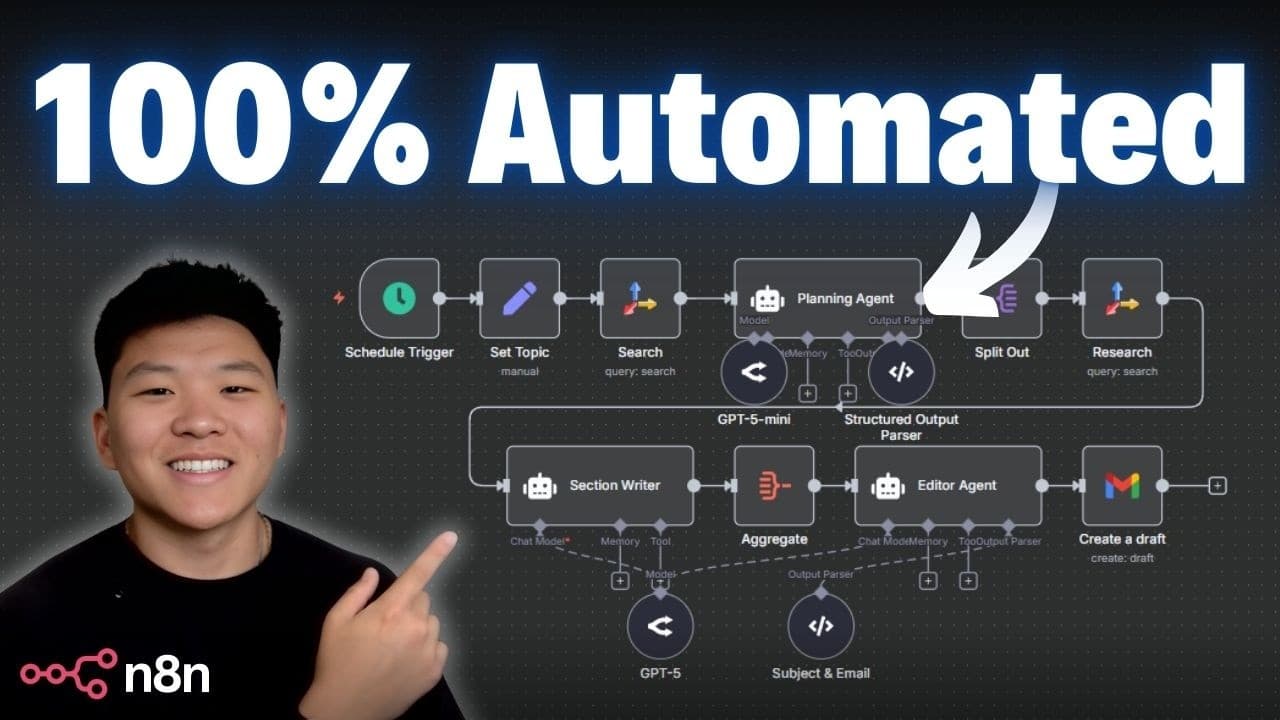
The video shows a live build of an AI powered newsletter system. It uses three AI agents for initial research, topic planning, and writing, plus an editor agent to assemble HTML and ensure flow. A weekly trigger drives the workflow and a Gmail step sends the draft for human approval.
Transcript
Today, we're going to be building this AI system that automates newsletter creation. The idea is that when the system goes off, it'll do some initial research to find good topics for the newsletter. Then, we'll do deeper research on those topics, write some sections, and then the editor agent will take all those sections and style it together in HT... Read More
Key Insights
- Initial research is the first automated step that gathers recent topics.
- The planning agent creates titles and topics from the initial research.
- Three separate topics are researched to generate sections.
- Each topic gets its own writing step to produce distinct sections.
- An aggregate step combines sections into a cohesive draft.
- An editor agent formats HTML and ensures logical flow.
- The final draft is sent via Gmail for human approval.
- The workflow is designed to be weekly and easily adjustable.
- More videos from this channel:
- More from this channel: Nate Herk | AI Automation
Install to Summarize YouTube Videos and Get Transcripts
Explore YouTube Video Summarizer or Get YouTube Transcript Extractor
Questions & Answers
Q: How to set up a weekly trigger for the newsletter in n8n
The video shows configuring a schedule trigger and setting the interval to weekly with a specific day and time, such as Sunday at midnight. After activating the workflow, the trigger will automatically start the research and drafting steps on the chosen cadence, enabling consistent delivery without manual starts.
Q: What is the role of the initial research step in the newsletter system
Initial research gathers recent content related to the niche, collecting multiple article links and summaries. This step provides the raw material that feeds the AI agents later in the process. Pinning data during this step helps prevent repeated API calls and keeps the gathered information accessible for the rest of the workflow.
Q: How does the planning agent create topics and titles from research
The planning agent analyzes the initial research results and generates a newsletter title and multiple topic ideas. It uses the gathered content as input to outline a coherent structure for the edition, enabling focused sections to be written later by dedicated agents and ensuring relevance to current developments.
Q: Why are there three separate topics and three writing steps
Having three separate topics allows parallel depth in research and writing, producing richer and more diverse sections. Each topic gets its own writing step to create specific content, which then feeds into an aggregation node. This approach improves coverage and keeps sections distinct before the editor assembles them.
Q: What does the editor agent do in the workflow
The editor agent combines the individual sections into a single, HTML formatted draft. It adds an introduction and conclusion, ensures smooth flow, and includes sources. This step produces a polished final draft ready for review, making sure the content is cohesive and ready for distribution.
Q: How is the system delivered to the audience or team
After the editor assembles the draft, the system sends the final version to Gmail as a draft or ready to send. This makes it easy to share with an email list or team, allowing quick human review and approvals before distribution.
Q: What tools form the core tech stack in the video
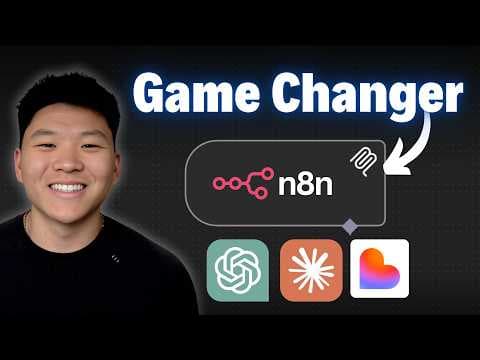
The stack centers on n8n as the workflow orchestrator, Tavi for research, Open Router for AI models, and Gmail for sending the newsletter. These components are combined to create a lean, scalable automation pipeline that handles research, writing, editing, and delivery.
Q: What is the overall goal of the multi agent newsletter system
The goal is to automate the end to end production of a newsletter by using sequential AI agents for each step and an editor for final assembly. The system aims to save time, ensure up to date content, and deliver a complete, ready to review draft on a set cadence.
Summary & Key Takeaways
-
This video demonstrates a no code approach to creating a fully automated newsletter pipeline. It highlights a four stage AI driven flow with initial research, planning, writing, and editing. The final draft is prepared in HTML and pushed to Gmail for review.
-
The workflow uses n8n as the orchestrator with a weekly trigger. It relies on Tavi for research, Open Router for AI models, and a dedicated editor agent for formatting. The result is a repeatable, scalable newsletter production line.
-
The presenter emphasizes building a lean tech stack and explains node wiring and data handling. The end product can be scheduled weekly or more frequently and shared with an email list or team.
Read in Other Languages (beta)
Share This Summary 📚
Summarize YouTube Videos and Get Video Transcripts with 1-Click
Try YouTube Summary with ChatGPT & Claude or YouTube Transcript Generator
Explore More Summaries from Nate Herk | AI Automation 📚

Summarize YouTube Videos and Get Video Transcripts with 1-Click
Try YouTube Summary with ChatGPT & Claude or YouTube Transcript Generator