What Is Weber's Theory on Class?

TL;DR
Weber's theory of class highlights a shift from status-based stratification to class-based stratification in modern capitalist societies. Unlike Marx, who sees class as a historical constant, Weber argues that class is a modern phenomenon emerging with market economies. Class, according to Weber, is defined by one's position in the market, affecting life chances, whereas status is a historical form of stratification.
Transcript
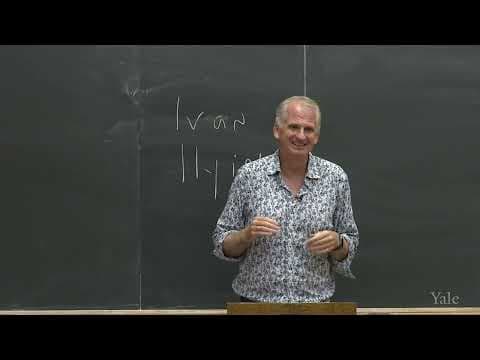
Prof: Good morning. Well I think it is high time that you start thinking about your final paper. Let me just one more time tell you what my expectation is. Right? There are three major blocks in the course. For each of the blocks there is a test. You have done two; one more will be done, last week of classes. I mean, the idea of the paper is ... Read More
Key Insights
- Weber's theory of class defines class as a market situation, contrasting with Marx's property-based class definition.
- Class in Weber's view is a modern phenomenon that emerged with the market economy, unlike Marx's historical view of class struggles.
- Weber identifies three dimensions of social inequality: class, status, and power, but challenges the traditional interpretation of these dimensions.
- Class position, according to Weber, is determined by one's market situation, affecting life chances positively or negatively.
- Status groups are historical and defined by social honor and lifestyle, often acting as barriers to market fluidity.
- Weber distinguishes between class and status, with class being dynamic and conflictual, while status offers stability.
- Weber's concept of social class includes working classes and petit bourgeoisie, emphasizing lifestyle and cultural identity.
- Power in Weber's framework is a dependent variable, emerging from class or status privileges, rather than an independent dimension.
Install to Summarize YouTube Videos and Get Transcripts
Explore YouTube Video Summarizer or Get YouTube Transcript Extractor
Questions & Answers
Q: How does Weber's class theory differ from Marx's?
Weber's theory differs from Marx's by defining class as a modern phenomenon linked to market situations, whereas Marx views class as a historical constant based on property relationships. Weber emphasizes the role of market position in determining life chances, contrasting with Marx's focus on property ownership and class struggles throughout history.
Q: What are the three dimensions of social inequality according to Weber?
According to Weber, the three dimensions of social inequality are class, status, and power. Class is determined by one's market situation, status is based on social honor and lifestyle, and power emerges from class or status privileges. Weber challenges traditional interpretations by viewing power as a dependent variable rather than an independent dimension.
Q: What is the significance of status groups in Weber's theory?
Status groups in Weber's theory are historical and based on social honor and lifestyle. They act as barriers to market fluidity, offering stability in contrast to the dynamic nature of class. Status groups maintain privileges through lifestyle and social honor, influencing social stratification even in modern class-based societies.
Q: How does Weber define class position?
Weber defines class position as determined by one's market situation, affecting life chances positively or negatively. Class is a modern phenomenon emerging with market economies, unlike status, which is based on historical social honor. Class position influences one's opportunities and social mobility within a capitalist society.
Q: What role does power play in Weber's framework?
In Weber's framework, power is a dependent variable that emerges from class or status privileges. Unlike traditional interpretations that view power as an independent dimension, Weber sees it as influenced by one's market position or social honor. This approach emphasizes the interconnectedness of class, status, and power in social stratification.
Q: What are social classes according to Weber?
Social classes, according to Weber, are groups where individual and generational mobility is typical and easy within the class. Examples include the working class and petit bourgeoisie. Social classes emphasize lifestyle, culture, and identity, offering a modern version of status groups within a class-based society.
Q: How does Weber's concept of class challenge traditional interpretations?
Weber's concept of class challenges traditional interpretations by defining class as a market situation rather than property-based. He emphasizes the modern emergence of class with capitalism, contrasting with Marx's historical view. Weber also questions the traditional three-dimensional view of social inequality, seeing power as a dependent variable.
Q: What is the relationship between class and status in Weber's theory?
In Weber's theory, class and status are distinct but interconnected forms of social stratification. Class is a modern phenomenon linked to market situations, while status is historical, based on social honor and lifestyle. Status groups provide stability and can act as barriers to market fluidity, influencing social stratification alongside class.
Summary & Key Takeaways
-
Weber's theory of class emphasizes the shift from status-based to class-based stratification in modern societies. Class is defined by market position, affecting life chances, and is a modern phenomenon emerging with capitalism. This contrasts with Marx's view of class as a historical constant.
-
Class, according to Weber, is determined by one's position in the market, unlike status, which is a historical form of stratification based on social honor and lifestyle. Status groups act as barriers to market fluidity, while class is dynamic and conflictual.
-
Weber's framework includes three dimensions of social inequality: class, status, and power, but he challenges the traditional interpretation of these dimensions. Power is seen as a dependent variable, emerging from class or status privileges.
Read in Other Languages (beta)
Share This Summary 📚
Summarize YouTube Videos and Get Video Transcripts with 1-Click
Try YouTube Summary with ChatGPT & Claude or YouTube Transcript Generator
Explore More Summaries from YaleCourses 📚

Summarize YouTube Videos and Get Video Transcripts with 1-Click
Try YouTube Summary with ChatGPT & Claude or YouTube Transcript Generator