What actually drives addiction and how to beat it without willpower
TL;DR
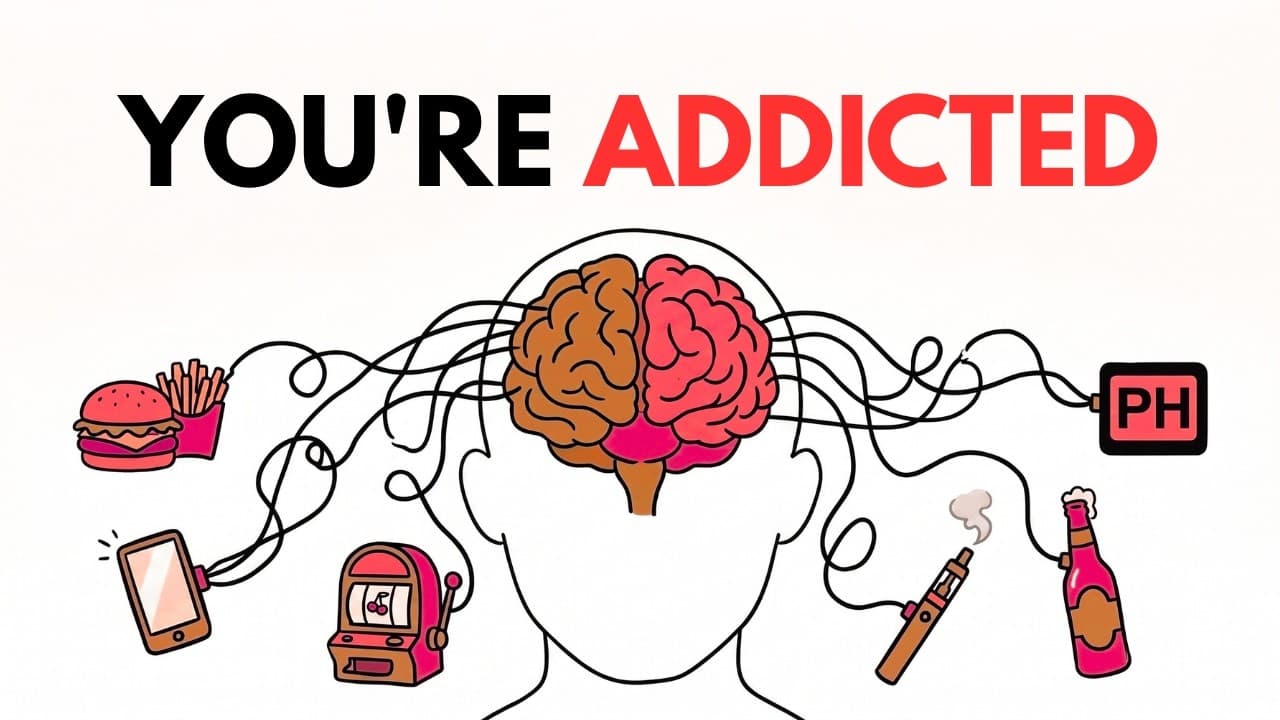
Addiction is driven by wanting more than liking, not by pleasure. The brain has separate systems for pursuit and enjoyment, and repeated behavior strengthens the wanting circuit while the liking circuit stays flat or declines. Changing surroundings and addressing the four deceitful thoughts helps break the loop without relying on willpower, using research grounded strategies.
Transcript
It's 11 at night. You told yourself an hour ago that you were going to sleep. You're lying there in the dark and your hand reaches for the phone before any part of you decides to reach for it. You're not excited. You already know what's on there. You've already seen it and your thumb moves anyway. Same three apps, same order, close them, open them ... Read More
Key Insights
- Wanting and liking are driven by separate brain systems and can diverge over time.
- Incentive sensitization explains why pursuit becomes louder with repeated exposure.
- Cues and environments can trigger the wanting system even after withdrawal.
- Vietnam veteran studies show most people readdict less when cues disappear, highlighting environmental influence.
- Willpower is ineffective against a loop that never tires and never sleeps in the brain.
- Four lies sustain the loop: just this once, I actually enjoy this, I will stop when calm, I already broke it.
- Shame reinforces relapse by creating an emotional state that triggers the bell again.
- Breaking the loop involves changing surroundings and using research backed strategies like mindfulness and craving surfing.
Install to Summarize YouTube Videos and Get Transcripts
Explore YouTube Video Summarizer or Get YouTube Transcript Extractor
Questions & Answers
Q: How does incentive sensitization theory explain addiction, and what part does dopamine play?
Incentive sensitization theory says the brain has separate circuits for wanting and liking, and repeated exposure makes the wanting system more sensitive over time. Dopamine drives pursuit and makes something feel urgent, but it does not deliver the pleasure itself. Over time the wanting increases while liking stays the same or declines, sustaining the addictive loop.
Q: What did the Vietnam heroin studies reveal about addiction and relapse?
The Vietnam veterans study showed that about 5 percent were readdicted within a year and around 12 percent relapsed over three years, meaning most did not remain addicted after returning to civilian life. The key takeaway is that environment and cues disappeared, reducing the wanting aspect for many individuals.
Q: What are the four lies the addicted brain tells, and why are they harmful?
Lie one is just this once, which seems true but reinforces the wiring between ringing and answering. Lie two questions actual pleasure, focusing on anticipation and cost rather than real experience. Lie three claims calm will fix things, but the loop thrives on stress and expands. Lie four says a slip ruins the day, leading to a full relapse due to shame.
Q: Why is willpower not the right tool for breaking the loop, and what replaces it?
Willpower is a fight against a system that never tires, so it fails because the loop continues to operate in the background. The replacement is understanding the learning system, changing routines and surroundings, and using evidence based approaches like mindfulness to reduce craving and craving surfing techniques.
Q: How do environmental cues influence the wanting system after withdrawal?
Cues such as rooms, smells, times of day, and situations can trigger the bell loudly even after withdrawal ends. The brain has learned to associate these cues with the urge to act, so removing or altering the environment reduces the trigger intensity and helps lower the wanting response over time.
Q: What practical steps does the video suggest to start breaking the addiction loop?
The video suggests acknowledging the separation of wanting and liking, identifying cues in your environment, and employing strategies like mindfulness and craving surfing. It also emphasizes honesty about the actual pleasure obtained and addressing lies that justify continued use, thereby reducing the perceived value of the urge.
Q: How does the concept of shame affect relapse, and how can it be countered?
Shame worsens relapse by producing guilt and negative emotions that intensify the urge to cope with the feeling. By recognizing and countering shame with compassionate, nonjudgmental strategies, the urge to relapse can be weakened, and the path to lasting change becomes more attainable.
Q: What is the role of surrounding environment in sustaining or breaking addiction, according to the transcript?
The transcript argues that a large part of addiction is stored in surroundings and schedules. When cues disappear, the wanting tends to fade. Therefore, altering the environment and creating new routines can dramatically reduce cravings, making it easier to move away from the loop without relying solely on willpower.
Summary & Key Takeaways
-
Addiction is explained as a learning system that makes the pursuit of rewards louder while the enjoyment fades, separating wanting from liking.
-
Environmental cues and settings play a large role, as seen in the Vietnam heroin study where removal of cues reduced wanting.
-
Four lies binge in the addicted brain are addressed, including just this once and I actually enjoy this, to help reset the loop without moral judgment.
Read in Other Languages (beta)
Share This Summary 📚
Summarize YouTube Videos and Get Video Transcripts with 1-Click
Try YouTube Summary with ChatGPT & Claude or YouTube Transcript Generator
Explore More Summaries from PsychToons 📚



Summarize YouTube Videos and Get Video Transcripts with 1-Click
Try YouTube Summary with ChatGPT & Claude or YouTube Transcript Generator