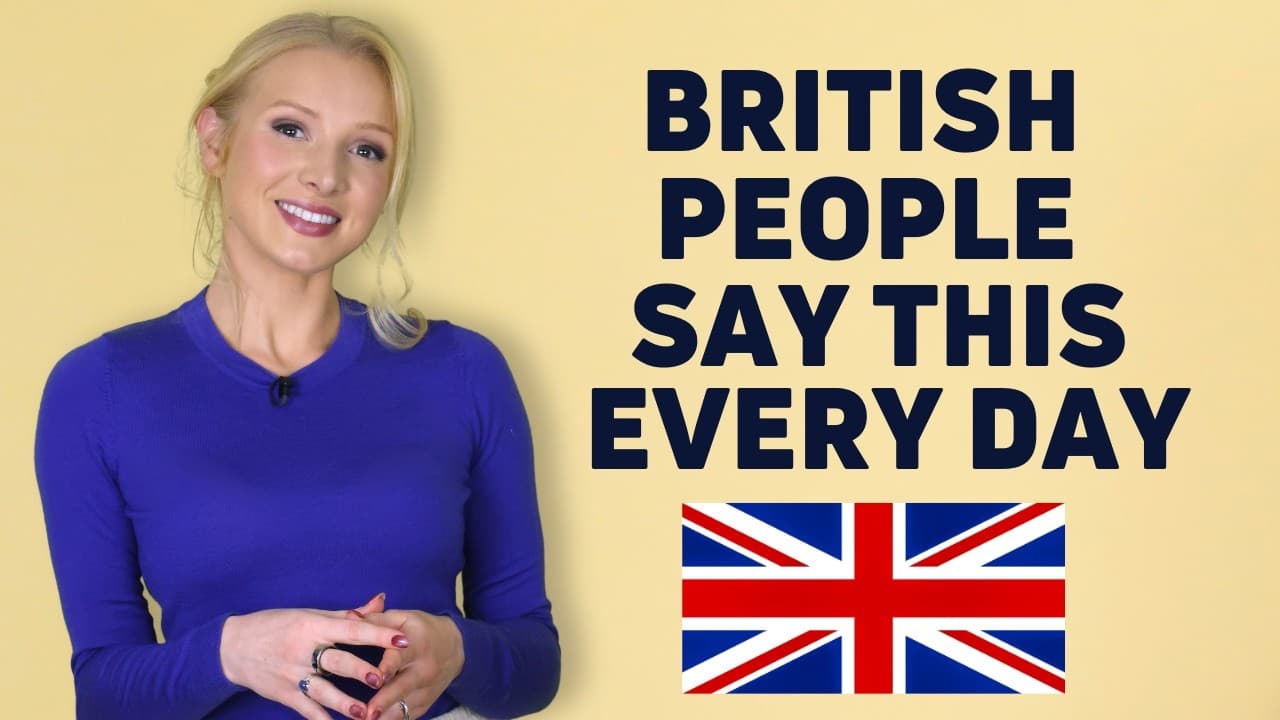
How to Sound British with Polite Indirect English
TL;DR
Sound more British by replacing direct wording with polite requests, indirect questions, hedges, and understatement. Use phrases such as “Could I,” “I was wondering if,” “Would you mind,” and “It might be worth,” while adding softeners like “just,” “a little bit,” “kind of,” and “sort of” to reduce the force of statements.
Transcript
Do you want to sound more British? It's actually pretty easy. Today you are going to learn how to sound like a Brit in just 12 minutes. So, we're focusing on phrases in this lesson, but that is only one part of sounding more British. If you really want to sound British, you also need to perfect the accent. The fastest way to get started on that is ... Read More
Key Insights
- Past forms are commonly used to create distance and politeness in English. Replacing “can” with “could,” or saying “I was wondering if you were free,” makes a request or question feel less immediate and therefore less direct.
- “Could I” is a polite way to request something or ask permission. “May I” is another polite option, while “might” is presented as especially polite and formal, although it is not common in modern English.
- Indirect questions work by placing one question inside an introductory phrase. “May I ask whether you’ve had time to consider my offer?” and “I was wondering if you were free tomorrow” sound gentler than asking the underlying questions directly.
- “Would you mind” follows two useful patterns. It takes an ing verb when requesting someone’s action, as in “Would you mind closing the door?”, and it can take “if I” or “if we” when asking permission.
- Second conditional structures make requests more diplomatic. Phrases such as “I’d appreciate it if you could let me know” and “Would it be okay if I sent the money on Friday?” frame the desired action as a polite possibility.
- Modal verbs soften suggestions and disagreements. “We might want to take the train,” “It may be a good idea,” and “I might be wrong, but” reduce certainty and pressure, even when the speaker probably feels confident.
- Understatement can communicate stronger concern than the literal words suggest. “We might have a bit of an issue” can indicate a significant problem, while “I’m a little bit concerned” may signal that the speaker is extremely worried.
- Vague expressions make requests and impressions less direct. “Kind of” and “sort of” can soften statements such as “We kind of got the impression” or “I was sort of hoping,” especially when combined with modal verbs like “might.”
Install to Summarize YouTube Videos and Get Transcripts
Explore YouTube Video Summarizer or Get YouTube Transcript Extractor
Questions & Answers
Q: How can I make requests sound more British and polite?
Replace direct forms with modal verbs and indirect introductory phrases. “Could I have a flat white, please?” is more polite than using “can,” while “I was just wondering if you could make me a coffee, please” adds several layers of softness. Past wording, “just,” and the modal “could” all make the request feel less forceful.
Q: Why are past forms used in polite English requests?
Past forms create distance between the speaker and the request, which makes the language sound less direct and more polite. Examples include replacing “can” with “could” and asking, “I was wondering if you were free tomorrow.” The past modal can also be layered into the structure, as in “I was wondering if you could help me.”
Q: How do I use “would you mind” correctly?
Use “would you mind” with an ing verb when requesting that another person do something, as in “Would you mind closing the door?” Use “would you mind if I” or “would you mind if we” when politely asking permission to act. It can also follow another softening phrase, such as “I was just wondering if you’d mind helping me carry these boxes.”
Q: How can I make suggestions without sounding too direct?
Use “might” or “may” to present the suggestion as a possibility rather than a command. Instead of saying, “We should take the train,” say, “We might want to take the train.” Other useful patterns include “It may be a good idea to speak to your manager” and “It might be worth leaving by 7 in the morning.”
Q: How can I disagree politely in British English?
Frame the disagreement as uncertain or tentative, even when you believe your position is correct. Useful phrases include “It might not be the best idea,” “I might be wrong, but I thought the deadline was on Thursday,” and “I’m not sure that’s quite right.” These forms address the issue without directly telling another person that they are wrong.
Q: What words can soften a strong statement or concern?
Use “just,” “a bit,” “a bit of,” “a little,” or “a little bit” to reduce the apparent strength of the wording. For example, “Could I just have two minutes of your time?” minimizes the request. Understatements such as “We might have a bit of an issue” or “I’m a little bit concerned” can actually communicate serious difficulty or worry.
Q: How do “seem” and “look like” make English less direct?
“Seem” and “look like” present a conclusion as an appearance rather than an absolute accusation or declaration. Instead of directly saying, “You misunderstood,” say, “There seems to have been a misunderstanding.” Instead of firmly declaring that a project will exceed its budget, say, “It looks like the project is going to go over budget.”
Q: How can I use vague language to sound less direct?
Use expressions such as “kind of” and “sort of” to make an impression, hope, or request sound less definite. Examples include “We kind of got the impression that he might not want to see us” and “I was sort of hoping you might lend me your car.” Combining vague language with “might” adds another layer of indirectness.
Summary & Key Takeaways
-
British English often sounds polite because requests and questions are softened through modal verbs, past forms, and indirect structures. “Could I” is more polite than “Can I,” while “May I” and the more formal “Might I” request permission. Past wording creates distance, making the request feel less direct.
-
Indirect requests can combine several politeness devices. “I was just wondering if you could help me” uses a past introductory phrase, “just,” and the past modal “could.” “Would you mind” takes an ing verb for requests, while “Would you mind if I” politely asks permission to perform an action.
-
Suggestions, disagreements, and concerns can also be softened. “You might want to,” “There seems to have been a misunderstanding,” and “I’m not sure that’s quite right” avoid blunt assertions. Words such as “perhaps,” “just,” “a bit,” “kind of,” and “sort of” make statements tentative, understated, or deliberately vague.
Read in Other Languages (beta)
Share This Summary 📚
Summarize YouTube Videos and Get Video Transcripts with 1-Click
Try YouTube Summary with ChatGPT & Claude or YouTube Transcript Generator
Explore More Summaries from English with Lucy 📚




Summarize YouTube Videos and Get Video Transcripts with 1-Click
Try YouTube Summary with ChatGPT & Claude or YouTube Transcript Generator