How to Answer Business English Questions
TL;DR
Professional English answers should be direct, natural, and supported by relevant details about your role, experience, skills, routines, and goals. Practise common questions for workplace small talk, first days, interviews, and computer literacy, then adapt the sample responses to your own circumstances instead of memorising them word for word.
Transcript
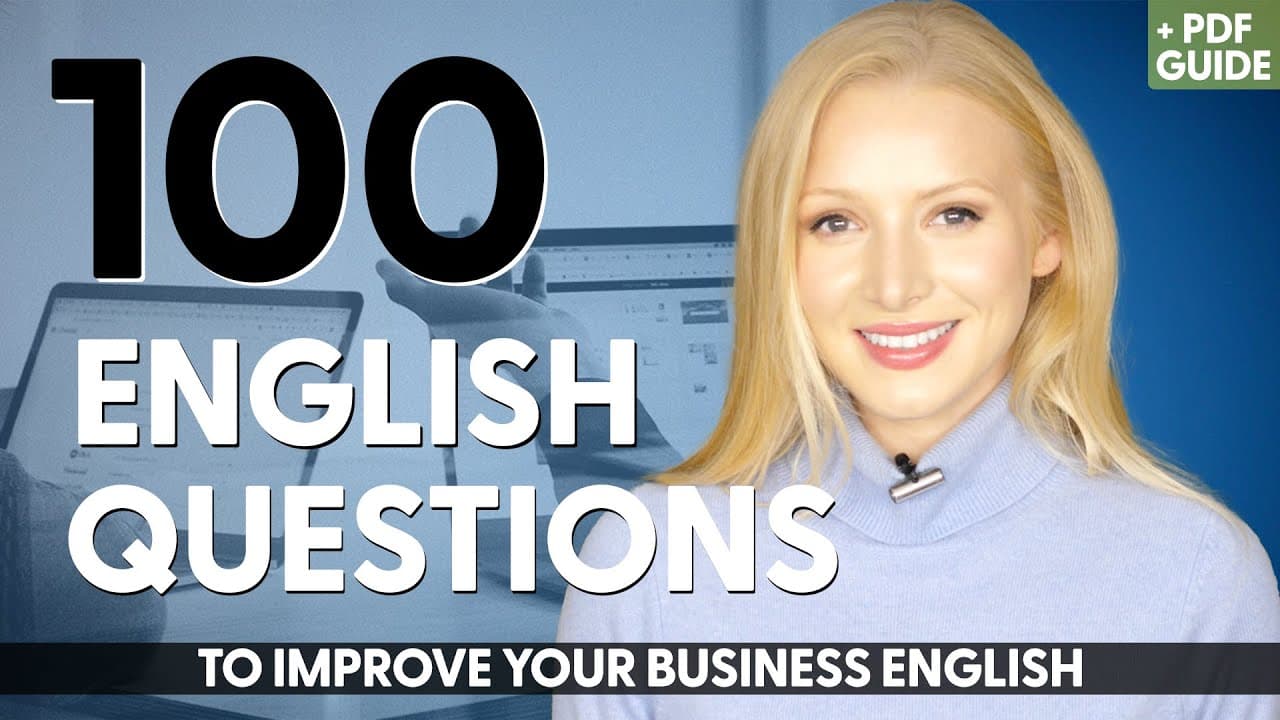
- Hello, lovely students, and welcome back to "English with Lucy." Today's video is perfect for you if you're looking to improve your business English or your professional English. Today, my husband is going to ask me 100 of the most common business English questions. I'm going to give genuine answers so that you can learn real English. As always, ... Read More
Key Insights
- • Professional answers are most effective when they directly address the question and add a relevant detail. Lucy often begins with a clear yes, no, time, role, or preference, then briefly explains her circumstances, such as working from home or running her own business.
- • Workplace small talk is built around ordinary topics such as weekends, lunch, traffic, holidays, family, commuting, and after-work plans. These questions help colleagues discuss daily life naturally without requiring technical business vocabulary or lengthy answers.
- • First-day workplace questions cover training, meetings, management, coworkers, working hours, promotions, raises, travel, overtime, and daily routines. Preparing personal responses to these topics can help learners participate in introductory conversations and describe how their workplace operates.
- • Interview answers should connect personal qualities with the needs of the position. Lucy answers why she should be hired by describing herself as proactive, creative, and enthusiastic, while identifying creativity as her greatest strength and stress as a weakness.
- • Honest qualification answers can include both capabilities and limitations. Lucy confirms that she has a first-class honours degree in marketing communications, worked as an English teacher for three years, and could request references, but says she does not currently have a CV or resume.
- • Computer literacy includes confidence with computers, Microsoft Office, spreadsheets, typing, social media, video editing, and Photoshop. Lucy reports substantial spreadsheet experience, previous management of several social media accounts, experience editing her own videos, and some Photoshop ability.
- • Time management can be described with concrete systems rather than broad claims. Lucy plans her days by placing everything she needs to do in Google Calendar, says she is quite good at time management, and honestly acknowledges that she does not always meet every deadline.
- • Career goals can range from specific professional projects to broad personal aims. Lucy's short-term goal is releasing an intermediate English course, while her long-term goal is living a happy life, demonstrating that answers can distinguish immediate work objectives from wider priorities.
Install to Summarize YouTube Videos and Get Transcripts
Explore YouTube Video Summarizer or Get YouTube Transcript Extractor
Questions & Answers
Q: How should I answer common business English questions professionally?
Start with a direct response, then add one or two details that clarify your experience or circumstances. Lucy frequently answers with a clear fact, such as being a CEO, starting work around 8:30, or working from home, before offering context. The responses sound natural because they are genuine, concise, and specific rather than overly formal or memorised.
Q: What business English questions are useful for workplace small talk?
Useful workplace small-talk questions concern weekends, after-work plans, traffic, holidays, lunch, family, working late, parking, commuting, and finishing times. The lesson includes examples such as asking what someone did at the weekend, whether they have plans, when they are taking time off, and whether they would like to have lunch together.
Q: What questions might colleagues ask on a first day at work?
Colleagues may ask about training, meetings, management support, coworkers, overtime, promotions, pay raises, travel, daily routines, and how long someone has worked for the company. The lesson also covers whether the company is run well and how employees get along with their boss, giving learners practical topics for discussing a new workplace.
Q: How can I answer the interview question about my greatest strength?
Name a genuine strength clearly and keep the answer relevant to professional work. Lucy identifies creativity as her greatest strength and elsewhere supports her professional profile by describing herself as proactive, creative, and enthusiastic. Her approach demonstrates that a useful answer can be concise, provided the selected quality accurately reflects what the applicant can contribute.
Q: How can I discuss a weakness honestly in a job interview?
Choose a real limitation and state it calmly without pretending to be perfect. Lucy says that she sometimes gets stressed, while also acknowledging other areas for improvement, including time management and meeting deadlines. These answers remain professional because they are honest and measured, and they do not erase the strengths and practical abilities described elsewhere in her responses.
Q: How should I answer questions about teamwork and working with others?
Explain both your ability and your working preference honestly. Lucy says she believes she works well with others and can work in a group setting, but she also likes being alone and would prefer not to work in a group. This distinction shows that someone can cooperate successfully while still preferring independent work in certain situations.
Q: What computer skills can I mention in a professional interview?
Relevant skills in the lesson include general computer confidence, Microsoft Office, spreadsheet software, fast typing, social media management, video editing, and Photoshop. Lucy says she is comfortable using computers, has considerable spreadsheet experience, has managed several social media accounts, and began by editing her own videos, while noting that Photoshop is not her strongest skill.
Q: How can I describe my work experience and qualifications in English?
State your degree, previous role, length of service, reason for leaving, and availability of references. Lucy says she earned a first-class honours degree in marketing communications, worked as an English teacher for three years before starting her business, and left through a natural progression. She also says she could ask previous bosses to provide references.
Summary & Key Takeaways
-
The lesson presents common professional questions through a natural interview between Lucy and her husband. Early sections cover employment, job satisfaction, responsibilities, working hours, career history, workplace relationships, commuting, overtime, meetings, training, promotions, pay raises, management support, daily routines, business travel, weekend work, and professional challenges.
-
Workplace small talk includes questions about weekends, after-work plans, traffic, holidays, lunch, families, working late, parking, transport, and finishing times. Lucy answers briefly but adds personal context, such as working from home, planning an upcoming holiday, visiting family at Easter, and usually finishing work around five or six o'clock.
-
Interview and computer-literacy questions address qualifications, references, teamwork, strengths, weaknesses, career goals, availability, software skills, social media, video editing, spreadsheets, planning, deadlines, and asking for help. Lucy models honest answers by acknowledging limitations while highlighting creativity, enthusiasm, computer confidence, marketing education, teaching experience, and practical digital skills.
Read in Other Languages (beta)
Share This Summary 📚
Summarize YouTube Videos and Get Video Transcripts with 1-Click
Try YouTube Summary with ChatGPT & Claude or YouTube Transcript Generator
Explore More Summaries from English with Lucy 📚
Summarize YouTube Videos and Get Video Transcripts with 1-Click
Try YouTube Summary with ChatGPT & Claude or YouTube Transcript Generator