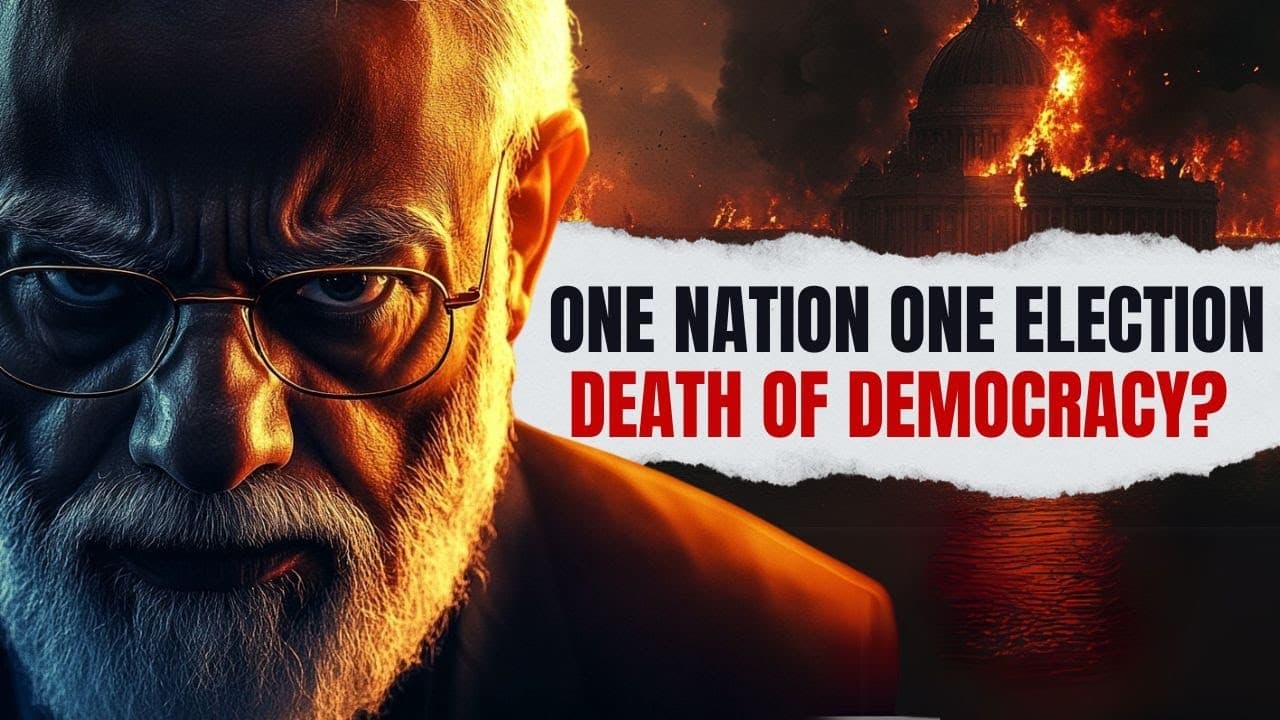
What is One Nation One Election and its impact?
TL;DR
One Nation One Election aims to synchronize Lok Sabha and state elections, reducing governance disruption caused by frequent polls and the model code of conduct. Proponents claim it could boost GDP and reduce costs, while opponents warn about constitutional hurdles and regional voice dilution. The debate centers on feasibility and democratic consequences.
Transcript
on 17th of December 2024 a bill was introduced in the Lok saaba which has now caused a political battle in India One Nation one election this bill is set to be so game-changing so transformative and so controversial that the government calls it the biggest reform in Indian electoral history while the BJP says that it will boost India's GDP by nearl... Read More
Key Insights
- One Nation One Election would synchronize Lok Sabha and state elections every five years.
- Governance disruption is a central argument, due to the model code of conduct pausing policymaking.
- The policy aims to save money by reducing the cost of multiple elections across levels.
- Constitutional and legal hurdles include potential need to rewrite several articles and obtain state consensus.
- Overlapping national and state issues may cause regional voices to be overshadowed by national narratives.
- Opponents point to federal structure and the risk of undermining regional representation.
- Supporters claim the measure could increase government efficiency and investment, and reduce inflation.
- The debate includes feasibility, democratic legitimacy, and practical implementation challenges.
Install to Summarize YouTube Videos and Get Transcripts
Explore YouTube Video Summarizer or Get YouTube Transcript Extractor
Questions & Answers
Q: What is the basic idea behind One Nation One Election and how often would elections occur?
One Nation One Election proposes synchronizing all elections in India so that Lok Sabha and state assembly elections occur at the same time every five years. Currently elections are held at different times across levels, creating governance pauses and repeated campaigns. The idea is to concentrate electoral activity into a single cycle to streamline governance and administration.
Q: What governance problems does the bill aim to address according to proponents?
Proponents argue that the current system causes governance disruption because the model code of conduct pauses policymaking and development projects whenever elections occur. This leads to delayed investments, slowed public services, and repeated political campaigning. Synchronizing elections is said to minimize these pauses and allow continuous governance during the five-year term.
Q: How do supporters quantify the potential economic impact of simultaneous elections?
Supporters cite studies and government papers claiming that simultaneous elections could boost GDP, reduce inflation, and attract investments. They argue that more days of governance and fewer campaign cycles would lead to savings and greater economic activity. The exact figures are part of the government’s published material referenced in the policy discussion.
Q: What constitutional hurdles are highlighted by critics?
Critics point to India's federal structure, noting that synchronizing elections would require changing constitutional articles and possibly dissolving or aligning state assemblies. They argue that such changes would demand broad state consent, potentially involving multiple amendments to articles and substantial political agreement, making smooth implementation difficult.
Q: Why might regional voices be at risk under One Nation One Election?
Critics warn that a single national narrative could overshadow local issues and regional parties, causing provincial concerns to be deprioritized. The risk is that voters might align with national sentiment rather than local realities, reducing the effectiveness of regional representation and diluting diverse state-specific priorities in a unified electoral cycle.
Q: What is a major legal concern regarding how assemblies could be aligned or dissolved?
A major concern is whether and how state assemblies would be dissolved or governed under a synchronized schedule. This could entail drastic constitutional changes or measures like presidential rule, which raises questions about legality, governance legitimacy, and the risk of central overreach into state administration, all of which require careful constitutional navigation.
Q: What arguments do opponents make about democracy and federalism?
Opponents argue that forcing unity in elections could undermine federal principles and the autonomy of states. They emphasize that democracy thrives on diverse regional voices and that a strong central push may marginalize local issues. This concern centers on preserving pluralism, regional competition, and accountability to regional constituencies.
Q: What are the key implementation concerns for One Nation One Election?
Key concerns include coordinating election timing across states with different tenure lengths, rewriting multiple constitutional provisions, obtaining broad state assent, and designing mechanisms to avoid governance gaps. There are also practical worries about security, administration, and logistics during a nationwide electoral phase, as well as ensuring consistent voter information across regions.
Summary & Key Takeaways
-
One Nation One Election proposes synchronizing all elections in India so they occur every five years, aligning national and state polls. This would eliminate the current pattern of elections happening at multiple times and levels throughout a five year term. The idea is to reduce governance disruption and save resources by concentrating electoral activity.
-
Opponents raise constitutional and legal concerns, arguing that major reforms would require changes to multiple articles and broad state consent. They warn that federal dynamics and regional issues could be overwhelmed by a single national narrative, risking democratic balance and regional representation.
-
Supporters argue that simultaneous elections would boost governance, speed up policy implementation, and lower overall costs and inflation while increasing investment. They cite studies claiming more days of government functioning and potential GDP gains as key benefits.
Read in Other Languages (beta)
Share This Summary 📚
Summarize YouTube Videos and Get Video Transcripts with 1-Click
Try YouTube Summary with ChatGPT & Claude or YouTube Transcript Generator
Explore More Summaries from Think School 📚






Summarize YouTube Videos and Get Video Transcripts with 1-Click
Try YouTube Summary with ChatGPT & Claude or YouTube Transcript Generator