What Are the Key Rules for Effective Writing?
TL;DR
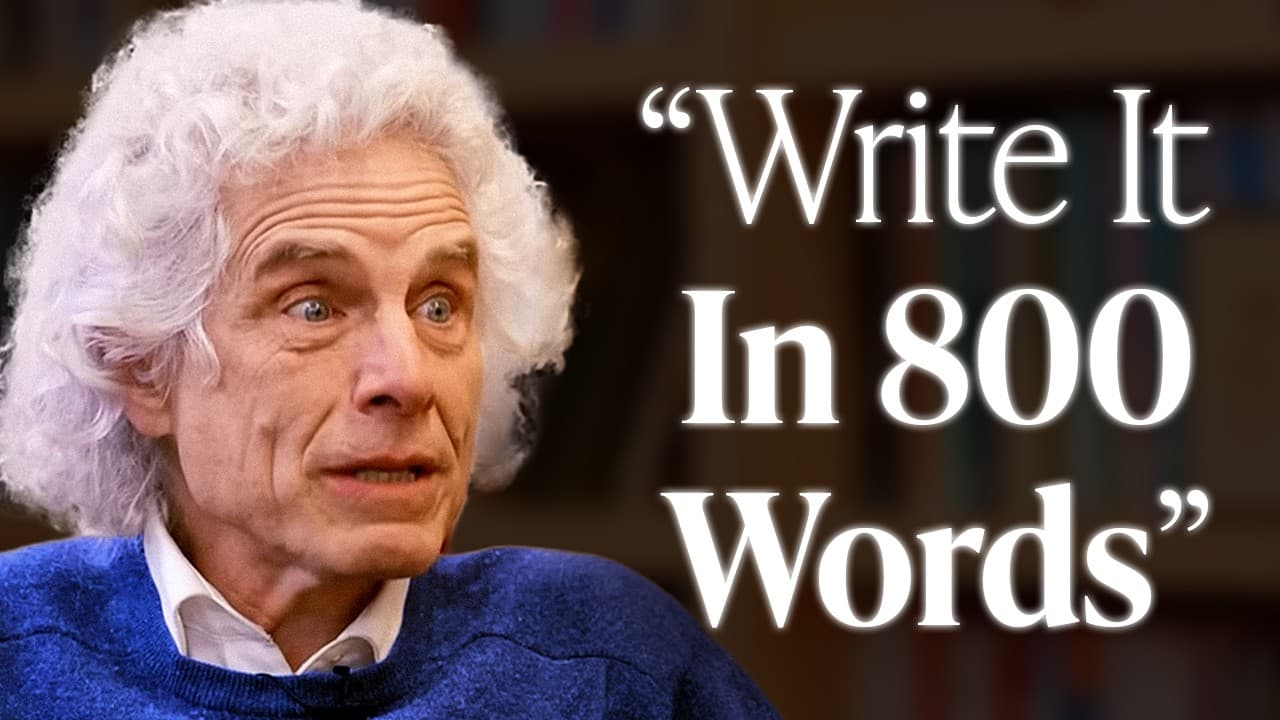
The key to effective writing is understanding your audience and avoiding the 'curse of knowledge,' which leads to unclear communication. Steven Pinker emphasizes using concrete and visual language, providing examples and context, and maintaining brevity to enhance clarity and engagement in writing.
Transcript
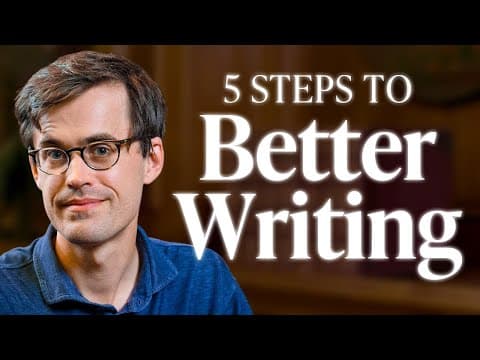
i'm here at Harvard in the office of Steven Pinker and he's written nine books and devoted his life to studying language and cognition and writing and so what we did in this interview is we started off with the really practical stuff we started off with his rules for writing and what makes him unique is that he's been thinking about AI since the 19... Read More
Key Insights
- Steven Pinker identifies the 'curse of knowledge' as a major cause of poor writing, where writers assume their audience knows as much as they do, leading to unclear communication.
- Pinker emphasizes the importance of visual and concrete language in writing, suggesting that writers should help readers form mental images to improve understanding.
- Writing is inherently more challenging than speaking because it lacks immediate feedback from the audience, making it harder to gauge understanding and adjust communication accordingly.
- Generalizations without examples and examples without context are both ineffective; good writing balances context and compression to effectively convey ideas.
- Pinker argues that academic writing is often poor due to its insularity and complexity, which limits accessibility and understanding even among professionals.
- Children's explanations offer fresh perspectives because they lack the jargon and abstractions adults accumulate, forcing them to use more vivid and relatable language.
- Pinker believes humor and brevity are crucial in writing, with concise and well-crafted language enhancing clarity and engagement.
- AI-generated writing tends to be clear but lacks originality and style, often resulting in bland and generic prose. Pinker suggests that AI could potentially be trained to produce more creative outputs.
Install to Summarize YouTube Videos and Get Transcripts
Explore YouTube Video Summarizer or Get YouTube Transcript Extractor
Questions & Answers
Q: What is the 'curse of knowledge' in writing?
The 'curse of knowledge' refers to a writer's inability to consider what their audience does not know, leading to unclear communication. Writers often assume that readers have the same knowledge base, resulting in jargon-filled prose that is difficult for the average reader to understand.
Q: Why is visual language important in writing?
Visual language helps readers form mental images, making the content more relatable and easier to comprehend. By using concrete and descriptive language, writers can convey ideas more effectively, allowing readers to better grasp complex concepts and engage with the material.
Q: How does writing differ from speaking in terms of difficulty?
Writing is more challenging than speaking because it lacks immediate feedback from the audience. In conversation, speakers can adjust their communication based on visual cues and responses, while writers must anticipate readers' understanding and ensure clarity without real-time interaction.
Q: Why are generalizations without examples ineffective?
Generalizations without examples are ineffective because they lack specificity and fail to convey detailed information. Examples provide context and clarity, helping readers understand the broader concept by illustrating it in a tangible way, thus enhancing comprehension and retention.
Q: What makes academic writing often difficult to understand?
Academic writing is often difficult to understand due to its complexity, jargon, and insularity. Professionals tend to write for peers within their field, using specialized language that can be inaccessible to outsiders, which limits broader understanding and engagement with the content.
Q: How do children's explanations provide clarity in language?
Children's explanations provide clarity because they use simple, vivid language without relying on jargon or abstractions. Their fresh perspectives force them to communicate ideas in relatable terms, offering insights that are often more accessible and easier for others to understand.
Q: What role does brevity play in effective writing?
Brevity plays a crucial role in effective writing by ensuring that content is concise and to the point. It reduces cognitive load on readers, making it easier for them to process information quickly. Brevity also enhances clarity, allowing key messages to stand out without unnecessary detail.
Q: How does AI-generated writing typically differ from human writing?
AI-generated writing is typically clear and well-structured, but it often lacks originality and style, resulting in bland and generic prose. While AI can produce coherent text, it struggles to replicate the creativity and nuance found in human writing, which can limit its engagement with readers.
Summary & Key Takeaways
-
Steven Pinker discusses the 'curse of knowledge' in writing, where writers fail to consider the audience's perspective, leading to unclear communication. He advises using visual and concrete language to help readers form mental images, enhancing understanding.
-
Writing is more challenging than speaking due to the lack of immediate feedback, making it difficult to assess audience comprehension. Pinker emphasizes the need for examples with context and brevity to improve writing quality and effectiveness.
-
Pinker critiques academic writing for its complexity and inaccessibility, suggesting that children's explanations offer fresh perspectives. He also discusses AI's potential in writing, noting its clarity but lack of originality, and the importance of humor and brevity in prose.
Read in Other Languages (beta)
Share This Summary 📚
Summarize YouTube Videos and Get Video Transcripts with 1-Click
Try YouTube Summary with ChatGPT & Claude or YouTube Transcript Generator
Explore More Summaries from David Perell 📚

Summarize YouTube Videos and Get Video Transcripts with 1-Click
Try YouTube Summary with ChatGPT & Claude or YouTube Transcript Generator