How to boost happiness with science-based habits
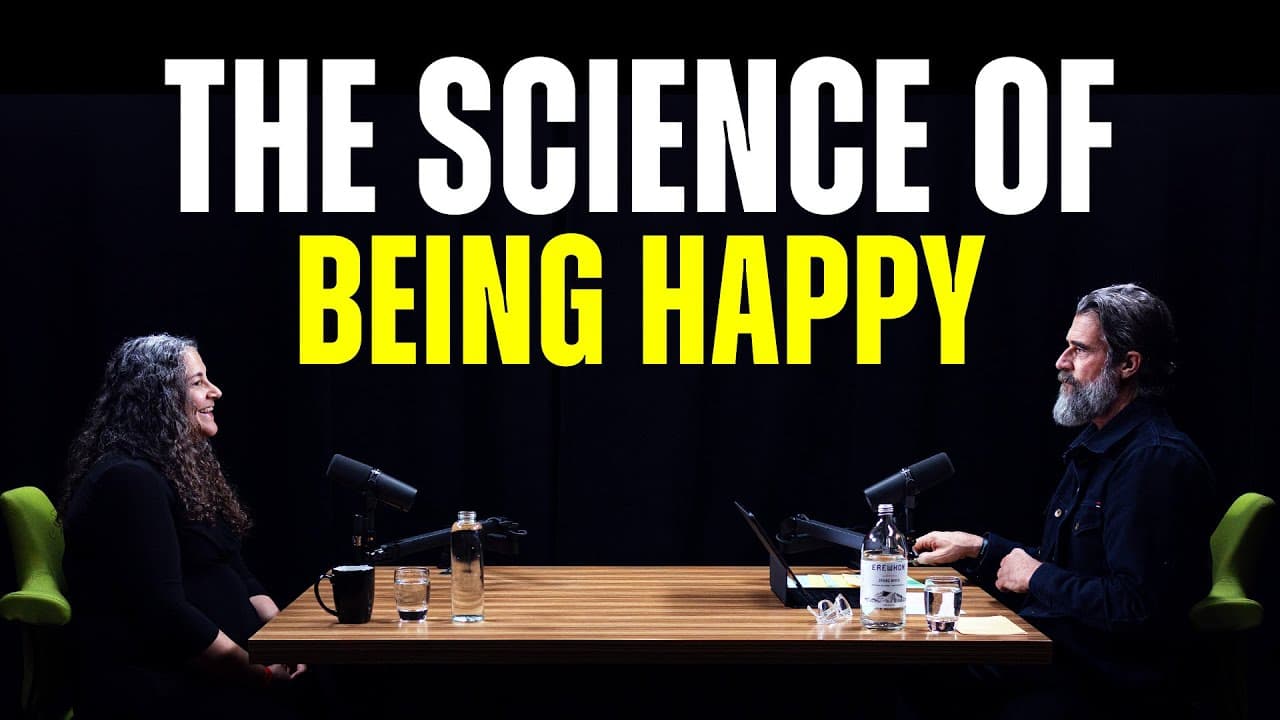
TL;DR
Happiness relies on two parts: being happy in your life, meaning you experience more positive emotions than negatives, and being happy with your life, meaning you feel your life is going well. The second half emphasizes turning knowledge into action through habits, social support, and realistic goals to close the gap between knowing and doing.
Transcript
We as a species have always been obsessed with happiness. The culture apparatus that we surround ourselves with is telling us all the wrong things to do, right? Go for money, go for status, just buy something, change your circumstances, you'll feel happier. And what we know is like those are wrong. We go after those things at the expense of social ... Read More
Key Insights
- Happiness comprises two parts: how you experience life moment by moment and how you judge its trajectory overall.
- The ratio of positive to negative emotions is critical to being happy in life, alongside experiences like contentment and joy.
- Happiness with life depends on perceived meaning, purpose, and overall life satisfaction.
- Social connections and rest are emphasized as key contributors to well being over material pursuits.
- The course focuses on turning happiness knowledge into actionable habits to overcome the knowledge-action gap.
- The G I Joe fallacy captures the danger of knowing without applying that knowledge through routines and support.
- Self regulation and habit formation are core to sustaining happiness practices beyond initial motivation.
- The speaker’s experience with campus mental health crisis motivates a practical, evidence-based approach to well being.
- More videos from this channel:
- More from this channel: Rich Roll
Install to Summarize YouTube Videos and Get Transcripts
Explore YouTube Video Summarizer or Get YouTube Transcript Extractor
Questions & Answers
Q: What is the basic definition of happiness used in the talk?
Happiness is defined as two related states: being happy in your life, which means experiencing a good ratio of positive emotions to negative ones, and being happy with your life, which means feeling that your life is going well in terms of meaning, purpose, and overall satisfaction. The goal is to improve both affective and cognitive aspects of happiness.
Q: Why did the speaker start focusing on happiness at Yale?
The speaker started focusing on happiness after observing a mental health crisis among students at Yale, including high rates of anxiety and depression, despite being at a prestigious university. This crisis highlighted the need for practical, science-based strategies that could help students build resilience and well being beyond traditional lectures.
Q: What gap does the happiness course aim to close?
The course aims to close the gap between knowing about happiness strategies and actually applying them in daily life. It emphasizes formulating real habits, obtaining social support, and creating a sustainable routine so that people can act on what they learn rather than just understanding it conceptually.
Q: What does the speaker say about social comparisons and happiness?
The talk suggests that society overemphasizes money, status, and material change as routes to happiness, but these often come at the expense of social connection and rest. Prioritizing relationships and meaningful activities is presented as more aligned with lasting well being than pursuing status.
Q: What role does habit formation play in happiness?
Habit formation is central because there is a persistent gap between knowing what to do and actually doing it. The course focuses on turning knowledge into durable routines, supported by social structures, to ensure that happiness strategies become regular practices rather than one-off actions.
Q: What is the GI Joe fallacy mentioned in the talk?
The GI Joe fallacy refers to the idea that merely knowing something is enough to change behavior. The speaker argues that knowledge alone does not lead to action without social support, accountability, and concrete habits, which are necessary to translate insight into behavior.
Q: What kinds of strategies does the course emphasize beyond information?
Beyond information, the course emphasizes implementing strategies through habits, consistency, and social support. It focuses on how to practice and sustain these strategies in daily life, making sure that people can actually apply what they learn to improve happiness over time.
Q: What broader issue does the talk connect to happiness at a societal level?
The talk connects happiness to broader societal trends such as the mental health crisis among students, the overemphasis on material success, and the need for preventative mental health approaches that prioritize social connectivity, rest, and purposeful activity as foundations for well being.
Summary & Key Takeaways
-
A practical view of happiness defines it as both day to day positive emotion and overall life satisfaction, emphasizing a balance rather than elimination of negative feelings.
-
The core message is that social connection, rest, and meaning are more protective of happiness than chasing money or status.
-
A central theme is translating knowledge about well being into habits and real-life routines for lasting change.
Read in Other Languages (beta)
Share This Summary 📚
Summarize YouTube Videos and Get Video Transcripts with 1-Click
Try YouTube Summary with ChatGPT & Claude or YouTube Transcript Generator
Explore More Summaries from Rich Roll 📚






Summarize YouTube Videos and Get Video Transcripts with 1-Click
Try YouTube Summary with ChatGPT & Claude or YouTube Transcript Generator