Why Is Life Better Without Social Media?
TL;DR
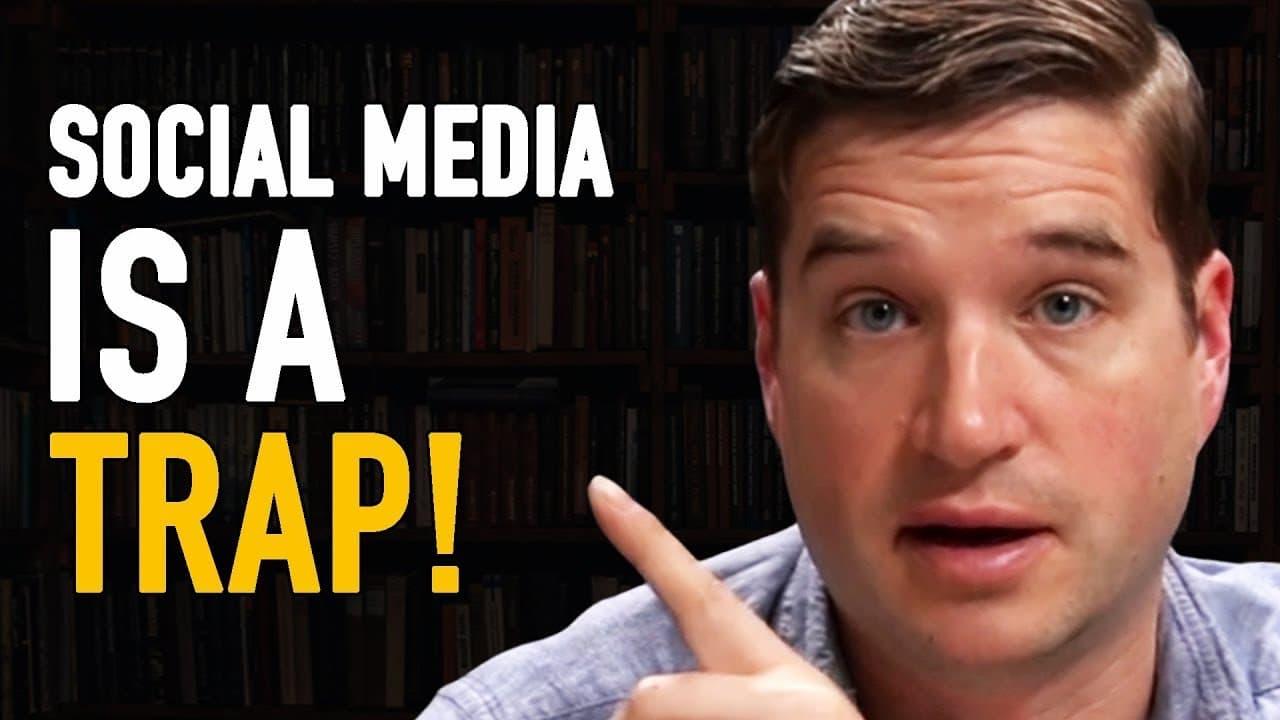
Living without social media creates room for solitude, higher-quality leisure, lower anxiety, greater privacy, and a more realistic sense of personal importance. Without an endlessly available feed, boredom can encourage reflection, reading, exercise, hobbies, walks, and community participation, while attention shifts from algorithmically optimized content toward everyday surroundings and trusted relationships.
Transcript
hi i'm cal newport of the things i am known for perhaps the most prominent is the fact that i have never had a social media account no facebook no twitter no instagram no tick tock no snapchat now as someone who writes about technology and impact for culture this has been a really big advantage for me it gives me distance from the culture i'm writi... Read More
Key Insights
- Boredom is a useful condition because it leaves room for solitude, reflection, and personal development. When social media is always available, even a slight feeling of boredom can trigger automatic scrolling and prevent people from spending meaningful time alone with their thoughts.
- Solitude is where people can place their experiences into a coherent framework, consider what is going well, recognize worries, and refine their identities. Removing highly distracting applications allows ordinary waiting and quiet moments to become opportunities for this internal processing.
- Higher-quality leisure becomes more likely when social media is unavailable as a default distraction. Boredom can push people toward reading, exercise, hobbies, walking, clubs, organizations, family activities, and community participation instead of repeatedly returning to an immediately accessible feed.
- Attention shapes a person's experienced world because the mind constructs an emotional understanding from the information it consumes. Frequent exposure to combative online discourse can therefore produce a perception dominated by conflict, outrage, punishment, villains, and relentless social strife.
- Curated social feeds can increase anxiety by presenting other people as consistently happy, fit, and engaged in more interesting activities. This selective portrayal creates a social world in which viewers may feel inferior, even when they avoid explicitly political or combative platforms.
- Privacy is easier to preserve without the pressure to post reactions, opinions, conversations, and updates throughout the day. Continual participation can gradually reveal more than intended to a large, unfamiliar audience whose knowledge and motives are difficult to assess.
- Close-knit relationships are presented as better suited to human social needs than exposure to thousands of unfamiliar observers. Trusted communities know a person's strengths and weaknesses within reciprocal bonds, while a large amorphous audience lacks the same loyalty, sacrifice, and mutual protection.
- Engagement metrics can inflate self-importance by creating the impression that a vast audience cares about every statement. Newport's suggested test is to stop posting for 30 days without announcing the absence, then observe whether anyone notices or asks about it.
Install to Summarize YouTube Videos and Get Transcripts
Explore YouTube Video Summarizer or Get YouTube Transcript Extractor
Questions & Answers
Q: What are the main benefits of living without social media?
Living without social media offers four central benefits in Newport's account: more productive boredom, lower anxiety, greater privacy, and a reduced sense of self-importance. These effects can create more opportunities for solitude, reflection, exercise, reading, hobbies, walks, family life, and community involvement while reducing exposure to combative discourse, curated comparisons, constant public reactions, and manipulative engagement metrics.
Q: Why is boredom beneficial when social media is unavailable?
Boredom can serve as an internal push toward productive or meaningful activity. Without social media providing an immediate escape, a person may choose to read, exercise, begin a hobby, take a walk, or join a club or organization. Newport compares boredom's unpleasant pressure to other useful human instincts, arguing that easy phone-based distraction short-circuits its ability to improve leisure and encourage constructive action.
Q: How does quitting social media create more solitude?
Quitting social media removes a highly compelling default distraction from quiet or idle moments. Instead of immediately scrolling, a person is left alone with thoughts about experiences, worries, priorities, and the surrounding world. Newport describes this solitude as critical for fitting life events into a coherent framework, evaluating what is going well, and making progress in identity and self-definition.
Q: Why can social media increase anxiety?
Social media can increase anxiety because attention influences the emotional world the mind constructs. Combative platforms expose users to outrage, conflict, condemnation, and perceived villains, making life seem filled with unbearable strife. Curated platforms create a different problem by displaying people as happy, fit, and constantly engaged in interesting activities, which can leave viewers feeling inferior and dissatisfied.
Q: How does avoiding social media change a person's view of the world?
Avoiding social media shifts attention away from unnatural, highly curated, and algorithmically optimized streams of information. A person's experienced world can instead be shaped by friends, people nearby, books, radio, walks, and direct observations of daily life. Newport argues that this slower and calmer information environment is better calibrated to the human mind and produces less anxiety than continuous online outrage or comparison.
Q: How does social media affect personal privacy?
Social media pressures active users to generate content repeatedly, including opinions, reactions, conversations, and updates. Over time, those posts can reveal more personal information than someone wants a large, mostly unknown audience to possess. Newport distinguishes controlled public work, such as a planned article, interview, or prepared video, from constant back-and-forth posting, which makes boundaries harder to maintain and can feel deeply unsettling.
Q: Why can social media create an inflated sense of importance?
Social platforms attach visible numbers, likes, hearts, shares, and reposts to personal statements, creating the impression that a large audience is closely awaiting each contribution. Newport argues that these signals can inflate the ego, encourage rigid attachment to strange ideas, and intensify hostility toward opposing groups. Intermittent bursts of attention further reinforce continued posting, even when the perceived influence is largely an illusion.
Q: What is the 30-day social media test described by Cal Newport?
The test is to stop using social media for 30 days without announcing the departure. The crucial condition is silence because telling followers would draw attention to the experiment and distort the result. After the month, observe whether anyone noticed, asked about the absence, or appeared to miss the posts. Newport says this can expose the gap between engagement metrics and genuine personal influence.
Summary & Key Takeaways
-
Removing social media restores boredom and solitude, giving people opportunities to process experiences, examine concerns, and develop a clearer sense of identity. Boredom also encourages higher-quality leisure because the absence of infinite scrolling can push someone toward reading, exercise, hobbies, walks, clubs, family activities, and productive involvement in the community.
-
Social media shapes emotional perceptions of reality through combative exchanges and curated personal portrayals. Outrage-heavy platforms can make the world seem frightening, while polished images can make users feel inferior. Avoiding these feeds redirects attention toward friends, books, radio, local surroundings, and daily experiences that feel calmer and more sustainable.
-
Constant posting can reveal more personal information than someone intends and create an unsettling relationship with a large, unfamiliar audience. Engagement metrics also produce an inflated impression that many people are awaiting each new opinion. Stepping away protects privacy and helps replace platform-generated self-importance with a more realistic perspective.
Read in Other Languages (beta)
Share This Summary 📚
Summarize YouTube Videos and Get Video Transcripts with 1-Click
Try YouTube Summary with ChatGPT & Claude or YouTube Transcript Generator
Explore More Summaries from Cal Newport 📚


Summarize YouTube Videos and Get Video Transcripts with 1-Click
Try YouTube Summary with ChatGPT & Claude or YouTube Transcript Generator