How to Build Habits That Make Big Goals Stick
TL;DR
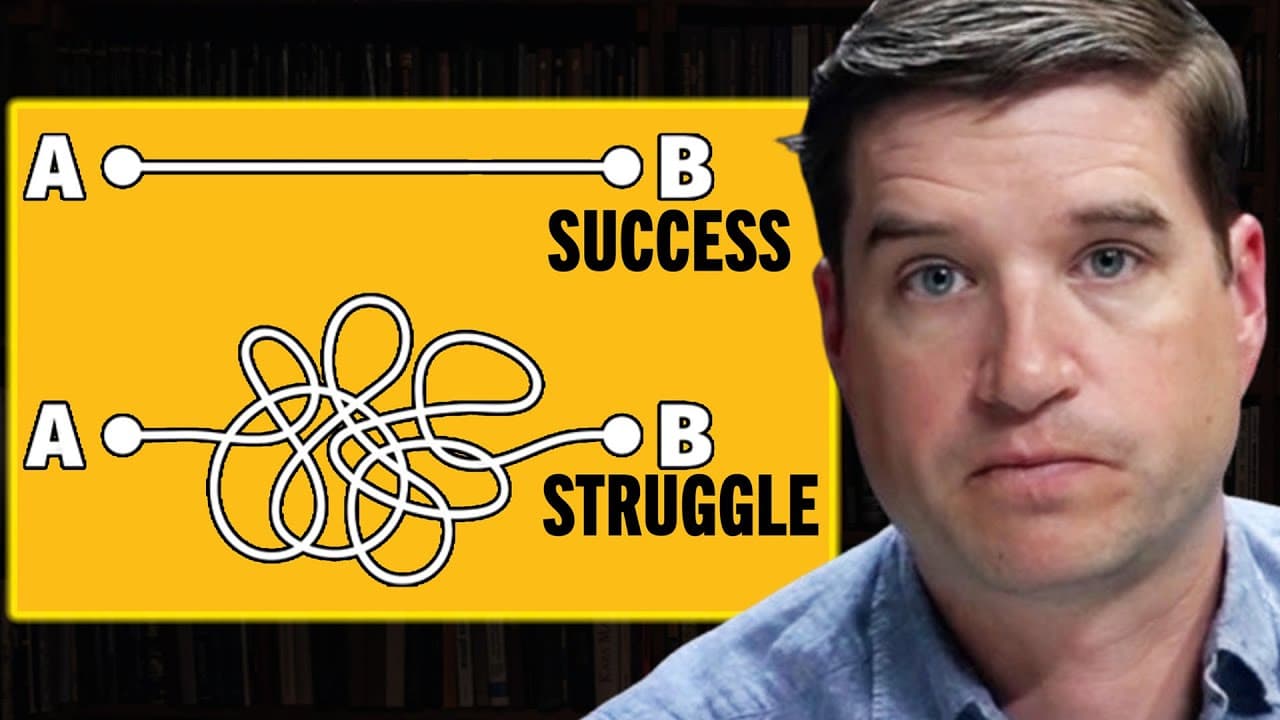
Strengthen your routines, schedule control, discipline, and confidence before pursuing an ambitious life change. Big goals function like software, so they fail when the personal hardware beneath them cannot support consistent execution. Start by proving that you can advance important, nonurgent work even when it is difficult and nobody is forcing you to act.
Transcript
so here's a common problem you're tired of being listless or distracted just by screens in your life and you come up with some plan for regaining some intention and some depth some idea to make your life much more focused and you go flying out of the gate with the new plan your guns blazing but then things just sort of Peter out and before you know... Read More
Key Insights
- Ambitious plans often fail because enthusiasm is applied to a visible goal before the supporting habits, routines, and discipline are strong enough to sustain it. When that initial energy fades, familiar patterns of distraction can quickly return.
- The hardware-software distinction separates a machine's underlying capabilities from the instructions it executes. Babbage's proposed Analytical Engine and Lovelace's mathematical program illustrate how one general machine could be directed to perform different operations through separately supplied instructions.
- Computer hardware determines which software can run successfully. The Atari 2600's architecture was designed around Pong, so developers had to stretch and subvert its constraints when creating games that appeared different from Pong.
- Personal goals are like software because they specify the visible outcomes a person wants, such as becoming highly skilled, starting a podcast, moving somewhere new, or creating a life with greater focus and depth.
- Personal hardware is the collection of background habits, routines, schedule control, discipline, and perceived ability that supports long-term action. Weakness in these foundations limits which ambitious plans can be executed consistently.
- The key to lasting intentional change is upgrading personal hardware before concentrating on dramatic possibilities. The basic systems of daily life must function reliably enough to support the more exciting direction a person wants to pursue.
- Discipline is an identity built around the belief that important progress can be made even when a task is difficult, nonurgent, and not enforced by another person. Strengthening that identity increases the actions available for pursuing future goals.
- A dramatic change is not automatically capable of redeeming an undisciplined daily life. Buying equipment, quitting a job, moving, or announcing a new project does not by itself create the routines and internal capacity required for sustained execution.
Install to Summarize YouTube Videos and Get Transcripts
Explore YouTube Video Summarizer or Get YouTube Transcript Extractor
Questions & Answers
Q: Why do ambitious plans lose momentum after a strong start?
Ambitious plans can lose momentum because the person focuses on the exciting outcome without strengthening the daily systems needed to support it. Initial enthusiasm may produce rapid action, but weak routines, limited control over time, inconsistent discipline, and low confidence in self-directed work remain. When the burst of energy fades, familiar distractions and old habits regain control.
Q: What does personal hardware mean in life design?
Personal hardware means the underlying capabilities that allow a plan to run. It includes background habits and routines, control over time and scheduling, an internal sense of discipline, and confidence that important work can be completed without urgency or external pressure. These foundations determine whether an ambitious goal can be executed consistently instead of merely imagined or briefly attempted.
Q: How are personal goals similar to computer software?
Personal goals resemble software because they describe the visible result a person wants to produce, while depending on less visible supporting capabilities. Plans to develop expertise, start a podcast, move somewhere new, or escape distraction all require reliable personal hardware. If habits, discipline, and schedule control cannot support those instructions, the plan may fail regardless of how appealing it sounds.
Q: Why does the Atari 2600 illustrate the limits of personal goals?
The Atari 2600 illustrates that an appealing program remains constrained by the machinery running it. Its hardware was essentially designed to play Pong, so developers had to trick and stretch that architecture to create other games. In the same way, a sophisticated life plan cannot perform freely when a person's routines and discipline provide only a narrow foundation for action.
Q: How should someone prepare before pursuing a major life change?
Someone preparing for a major life change should first strengthen the ordinary systems that govern daily action. That means improving routines, gaining more control over the schedule, practicing discipline, and building evidence that difficult but important tasks can be completed without immediate pressure. Once those foundations function reliably, an ambitious plan has a stronger platform from which to operate.
Q: What role does discipline play in achieving long-term goals?
Discipline expands the range of actions a person can reliably execute. It involves believing, based on practice, that progress is possible on work that matters even when the work is difficult, nonurgent, and not required by another person. In the computer metaphor, stronger discipline adds more available instructions to the personal processor, making more ambitious plans realistically executable.
Q: How can someone build confidence in completing nonurgent work?
Confidence in nonurgent work is built by developing the identity of a disciplined person who can make progress without external enforcement. The process centers on repeatedly acting on important tasks even when they are difficult and no immediate consequence demands completion. These experiences support the belief that future plans can be carried out through deliberate action rather than urgency alone.
Q: Why are dramatic changes insufficient for creating a deeper life?
Dramatic changes are insufficient when they are treated as substitutes for reliable personal foundations. Quitting a job, moving, purchasing equipment, or launching a visible project may feel transformative, but none automatically supplies discipline, effective routines, schedule control, or confidence. Without those capabilities, the new goal is sophisticated software placed on hardware that still cannot execute it consistently.
Summary & Key Takeaways
-
Ambitious plans often begin with enthusiasm but fade until old patterns, such as consuming multiple screens at once, return. The underlying problem is not necessarily the goal itself. A person may be trying to introduce greater focus and depth without first building the routines, discipline, and schedule control required to sustain the change.
-
Charles Babbage's Analytical Engine and Ada Lovelace's program illustrate the separation between hardware and software. The later stored-program idea likewise treated instructions as something placed into a computer separately from its machinery. This history supplies the central metaphor: impressive programs remain constrained by the capabilities of the hardware on which they must operate.
-
Personal hardware consists of background habits, routines, control over time, discipline, and belief in one's ability to complete important but nonurgent work. These foundations should be strengthened before dramatic goals receive most of the attention. Repeatedly executing difficult, self-directed actions expands the range of ambitious plans a person can realistically sustain.
Read in Other Languages (beta)
Share This Summary 📚
Summarize YouTube Videos and Get Video Transcripts with 1-Click
Try YouTube Summary with ChatGPT & Claude or YouTube Transcript Generator
Explore More Summaries from Cal Newport 📚

Summarize YouTube Videos and Get Video Transcripts with 1-Click
Try YouTube Summary with ChatGPT & Claude or YouTube Transcript Generator