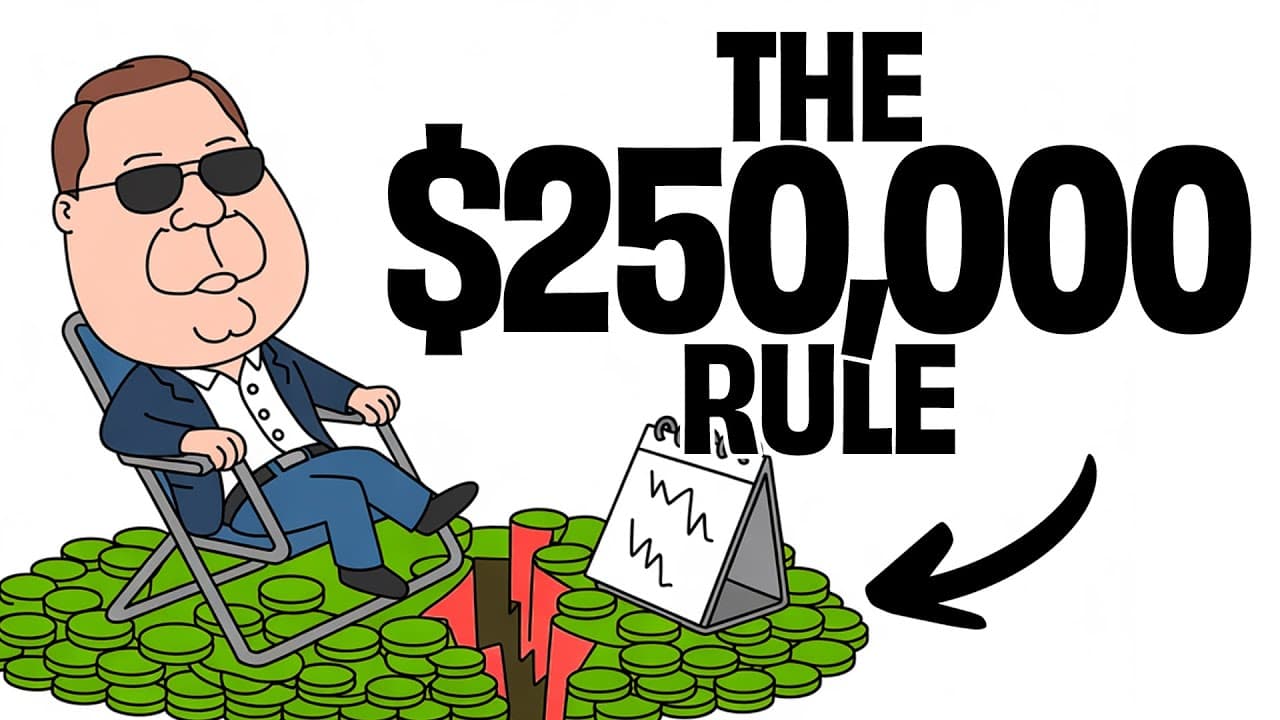
How to avoid wealth traps after hitting 250k invested
TL;DR
Hitting 250k changes psychology, making losses feel real and gains seem like enough. The risk is overconfidence, illusion of arrival, and the comparison trap, which can lead to risky bets and poor decisions. Stay disciplined, continue proven strategies, and resist flashy shortcuts.
Transcript
Some people grind for years to build wealth only to stall outright when they're closer to success than ever before. Not because they stop earning, not because the market turns against them, but because they hit a psychological shift they never saw coming. A shift that changes how they think, how they spend, how they invest without them even noticin... Read More
Key Insights
- The moment you reach 250k in investments, the psychology of money shifts dramatically, turning progress into a risky temptation. You must recognize this shift to prevent costly mistakes that can erase years of gains.
- The illusion of arrival is a cognitive trap where portfolio gains feel like enough wealth, prompting celebrations and impulsive spending that undermines long term wealth accumulation.
- Overconfidence grows with account size due to the Dunning Kruger effect, encouraging risky bets like stock picking or aggressive real estate plays that can wipe out years of progress.
- The perception that you can afford to lose money at this level is misleading because the real cost is often multi year compounding erosion rather than a single loss.
- The comparison trap accelerates risky behavior when you see others with larger portfolios, leading to chasing higher returns and abandoning conservative plans.
- A key danger is leveraging portfolios or taking on debt to invest, which can convert temporary setbacks into permanent damage when markets move against you.
- Sticking to the boring, proven approach that got you to 250k is essential; flashy new strategies often fail at this wealth level because they require different risk management.
- The core strategy is to avoid unnecessary complexity, not to ignore opportunity, and to maintain steady saving and investing discipline through the 250k threshold.
- More videos from this channel:
- More from this channel: Nick Invests
Install to Summarize YouTube Videos and Get Transcripts
Explore YouTube Video Summarizer or Get YouTube Transcript Extractor
Questions & Answers
Q: What is the main risk after reaching 250k invested that the video warns about?
The main risk is a psychological trap where progress feels real and wealth seems within reach, leading to overconfidence and impulsive decisions. This illusion of arrival can make people celebrate gains and spend more, which undermines long term wealth growth and increases the chance of significant future losses.
Q: How does the illusion of arrival affect investment decisions at 250k?
The illusion of arrival makes investors feel wealthier than they actually are, causing them to misjudge risk and rewards. They may upgrade lifestyle, take on unnecessary expenses, or shift from disciplined investing to seeking quick gains, which can derail compounding and harm future returns.
Q: What is the Dunning Kruger effect in this context?
In this context, the Dunning Kruger effect describes how investors with rising balances become overconfident, believing they understand the market better. This leads them to abandon cautious strategies for high risk bets like stock picking or meme assets, risking large losses that erase years of gains.
Q: Why is the 250k level dangerous for taking on debt to invest?
Because leveraging or taking on debt to invest at this balance point increases potential losses. A market downturn or poor decision can wipe out a substantial portion of wealth, and debt magnifies the impact, making it harder to recover and threatening long term financial security.
Q: What is the comparison trap and how does it manifest after 250k?
The comparison trap happens when you measure progress against others with bigger portfolios, causing you to chase higher risk or unsound opportunities. This mindset can prompt aggressive bets to catch up, undermining steadier, proven strategies that support sustainable growth.
Q: What does the video suggest you should do instead of changing your approach at 250k?
The video suggests continuing the same boring, proven approach that got you to 250k, avoiding flashy changes. Maintain consistent saving and investing, resist expensive diversions, and refrain from overtrading or trying complex schemes that require more risk management than you currently have.
Q: How does the risk of real world losses compare to fake gains at 250k?
Real world losses at this level can be devastating because they are large enough to offset years of progress, whereas gains are often unrealized or temporary. The key is to avoid letting perceived daily gains dictate spending and risk decisions since those gains may disappear quickly.
Q: What role does discipline play in navigating the 250k milestone?
Discipline is essential to avoid the traps described. It means sticking to a proven investing plan, not chasing new but risky opportunities, avoiding debt for investments, and maintaining a long term perspective. Discipline protects compounding and supports sustainable wealth growth.
Summary & Key Takeaways
-
You reach a quarter million in investments and the feel of wealth can be deceptive, triggering the illusion of arrival. This can push you toward premature celebrations and risky spending. Staying grounded helps protect long term growth and avoids costly mistakes.
-
The video highlights three main traps at 250k: illusion of arrival, overconfidence from the Dunning Kruger effect, and the comparison trap. Each trap tempts you to abandon steady investing for higher risk bets. Recognizing them is the first defense against costly errors.
-
A practical message is to keep doing what got you to 250k in the first place. Avoid new complex strategies, resist debt for investing, and maintain consistent saving and investing habits to preserve and grow wealth over time.
Read in Other Languages (beta)
Share This Summary 📚
Summarize YouTube Videos and Get Video Transcripts with 1-Click
Try YouTube Summary with ChatGPT & Claude or YouTube Transcript Generator
Explore More Summaries from Nick Invests 📚





Summarize YouTube Videos and Get Video Transcripts with 1-Click
Try YouTube Summary with ChatGPT & Claude or YouTube Transcript Generator