How to Allocate Your Paycheck to Build Wealth
TL;DR
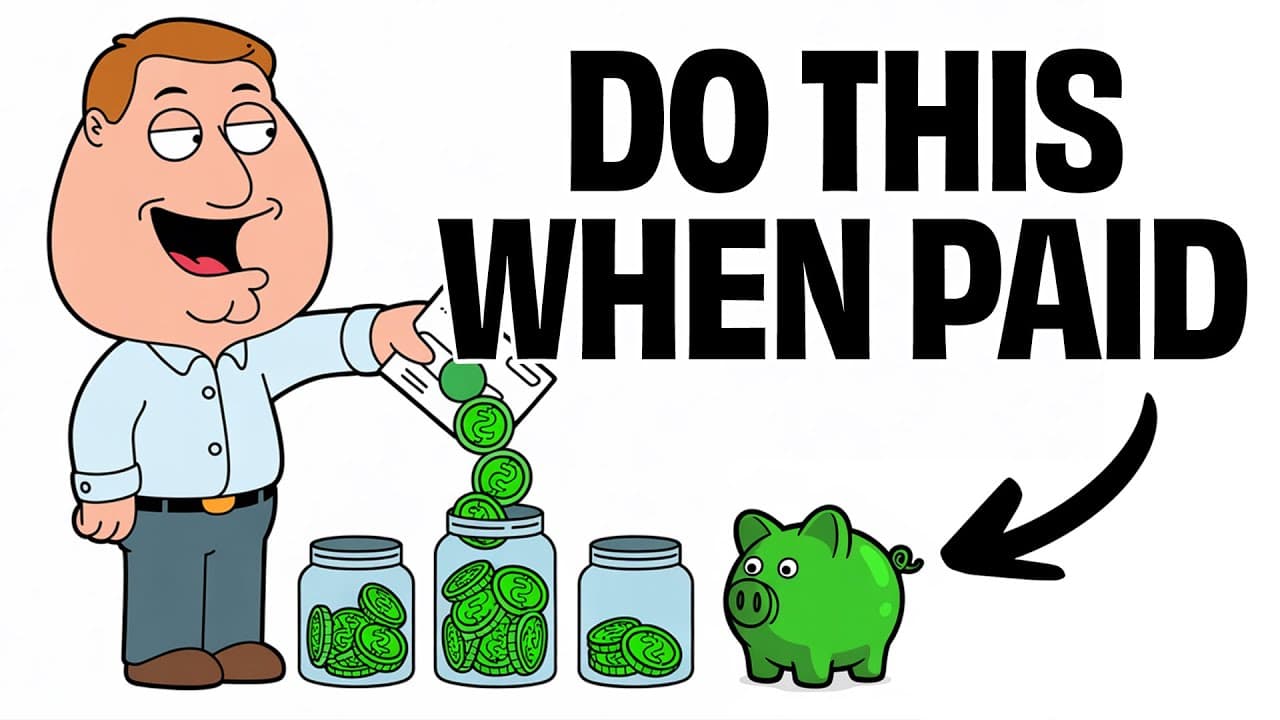
Assign each paycheck before spending it: cover minimum debt payments and necessities, build an emergency fund, contribute automatically to retirement, eliminate high-interest debt, and fund a Roth IRA. Keeping necessities below 50% of gross income and saving before discretionary spending can reduce financial stress while creating a repeatable path toward long-term wealth.
Transcript
Have you ever wondered why some people seem to effortlessly build wealth while you're stuck watching your bank account balance hover dangerously close to zero every month? Maybe you're earning decent money, but somehow it just vanishes into thin air, leaving you scratching your head and wondering where it all went. Well, today I'm going to show you... Read More
Key Insights
- A paycheck allocation plan is a system that assigns every dollar a purpose before it arrives. Saving whatever remains at month-end often fails because unplanned money is easily absorbed by immediate purchases, while automatic priorities make spending the amount left over the default behavior.
- Minimum debt payments are the first required destination because they protect the foundation of the financial plan. Student loans, car loans, credit cards, personal loans, and other reported debts must remain current before money is directed toward discretionary purchases or additional financial goals.
- Necessities are limited to housing, transportation, food, utilities, and healthcare in the proposed framework. Streaming subscriptions, daily coffee purchases, and unused gym memberships may be enjoyable, but classifying them as essential can hide overspending and restrict the money available for wealth building.
- The recommended ceiling for necessities is 50% of gross income. Exceeding that level can create persistent financial stress and reduce saving capacity, while choices such as sharing housing, driving an older car, or moving to a less expensive area can lower essential costs.
- An emergency fund is financial protection against unexpected costs such as car repairs, medical bills, or failed work equipment. The initial target is $1,000, followed by three to six months of living expenses in a separate high-yield savings account.
- Retirement contributions are most powerful when they begin early and happen automatically. The suggested contribution is 6–12% of each paycheck, and workers with employer matching should contribute at least enough to receive the full match rather than leave part of their compensation unused.
- High-interest debt is debt charging more than 15% interest and should be eliminated quickly. The avalanche method targets the highest rate first to reduce total interest, while the snowball method targets the smallest balance first to create motivating, visible progress.
- A Roth IRA uses after-tax contributions and allows the invested money to grow tax-free, according to the transcript. It is presented as another destination for building future wealth after immediate obligations, emergency savings, retirement contributions, and high-interest debt receive attention.
Install to Summarize YouTube Videos and Get Transcripts
Explore YouTube Video Summarizer or Get YouTube Transcript Extractor
Questions & Answers
Q: How should I allocate my paycheck to build wealth?
Allocate the paycheck before spending it. First cover every minimum debt payment, then pay for genuine necessities such as housing, transportation, food, utilities, and healthcare. Next build an emergency fund, make automatic retirement contributions, eliminate debt charging more than 15% interest, and contribute to a Roth IRA. Discretionary spending should come from what remains after these priorities.
Q: What expenses count as financial necessities?
Necessities in this framework include housing, transportation, food, utilities, and healthcare. Streaming services, routine coffee shop visits, and an unused gym membership do not qualify, even if they feel familiar or desirable. The goal is not to prohibit enjoyable spending, but to separate survival and functional needs from discretionary choices so each paycheck can be allocated accurately.
Q: How much income should go toward necessities?
Necessities should remain below 50% of gross income under the proposed rule. Spending more than half of gross income on basic costs can increase financial stress and limit the ability to save or invest. Reducing that share may require uncomfortable choices, including getting a roommate, keeping an older car, or living in a less expensive area.
Q: How much should I save in an emergency fund?
Start by saving $1,000 in an emergency fund, then work toward holding three to six months of living expenses. The money should remain in a separate high-yield savings account that is accessible during a genuine emergency but less convenient for everyday spending. Vacations do not qualify as emergencies, regardless of how desirable they may feel.
Q: Why should retirement contributions start early?
Starting early gives retirement money more time to compound, while delaying can sacrifice substantial future growth. The transcript illustrates this by stating that someone investing $50 monthly from age 25 can finish with more than someone investing $100 monthly from age 35. Automatic contributions also remove recurring emotional decisions that can disrupt consistent retirement saving.
Q: How much of each paycheck should go to retirement?
The suggested retirement contribution is 6–12% of every paycheck, preferably transferred automatically before the money becomes available for spending. If an employer offers matching contributions, contribute at least enough to receive the full match. The match is described as part of employee compensation, so failing to claim it means leaving available compensation unused.
Q: Should I use the debt avalanche or debt snowball method?
Use the debt avalanche if minimizing total interest is the strongest motivation. It directs extra money toward the debt with the highest interest rate while maintaining minimum payments elsewhere. Use the debt snowball if quick wins improve persistence, because it targets the smallest balance first. The best choice is the method you can follow consistently without creating new debt.
Q: When should high-interest debt become a priority?
Debt charging more than 15% interest should be attacked after minimum payments, necessities, emergency savings, and retirement contributions are addressed in the stated sequence. Credit cards, some personal loans, and payday loans may fall into this category. Continue making minimum payments on every account, direct extra money according to the chosen repayment method, and stop adding new balances.
Summary & Key Takeaways
-
The recommended system replaces unplanned spending with predetermined assignments for every paycheck. Minimum debt payments come first because missed payments can damage credit and increase future borrowing costs. Essential housing, transportation, food, utilities, and healthcare follow, while subscriptions, coffee purchases, and unused memberships remain discretionary rather than necessities.
-
An emergency fund is the next protective layer, beginning with a $1,000 target and eventually reaching three to six months of living expenses. Keeping it in a separate high-yield savings account makes genuine emergencies manageable without relying on new debt, skipping important payments, or borrowing from family and friends.
-
Long-term wealth building combines automatic retirement contributions, aggressive repayment of debt above 15% interest, and Roth IRA funding. Employer matching should be captured in full, while either the avalanche or snowball method can organize debt repayment. The preferred method is whichever approach the borrower can consistently follow.
Read in Other Languages (beta)
Share This Summary 📚
Summarize YouTube Videos and Get Video Transcripts with 1-Click
Try YouTube Summary with ChatGPT & Claude or YouTube Transcript Generator
Explore More Summaries from Nick Invests 📚


Summarize YouTube Videos and Get Video Transcripts with 1-Click
Try YouTube Summary with ChatGPT & Claude or YouTube Transcript Generator