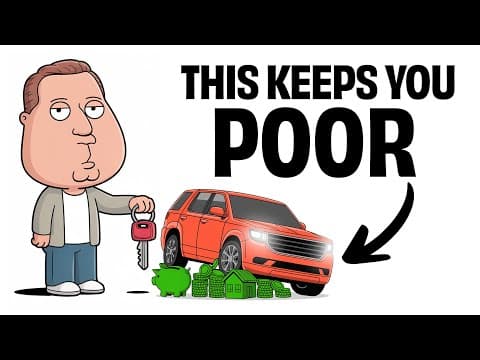
How Commuting Costs You $15,000 Annually

TL;DR
Commuting can cost individuals over $15,000 annually due to direct expenses like fuel and maintenance, and hidden costs such as time lost and stress. By analyzing these factors, individuals can make informed decisions about job locations, remote work, and alternative transportation to save money and improve work-life balance.
Transcript
Picture this scenario. You're sitting in bumperto-bumper traffic at 7:30 in the morning, clutching your coffee like it's the last source of hope on Earth, watching your gas gauge slowly creep toward empty while some guy in a BMW cuts you off for the third time this week. You're thinking about how you're going to be late again. um how your boss is g... Read More
Key Insights
- Commuting can cost over $15,000 annually due to direct and hidden expenses.
- Car expenses for commuting include payments, insurance, gas, and maintenance.
- Time spent commuting is unpaid labor, reducing effective hourly wages.
- Exhaustion from commuting leads to increased spending on convenience items.
- Opportunity cost of commuting includes lost time for skill development.
- Commuting expenses increase yearly, often outpacing salary growth.
- Parking costs add significant expenses to commuting budgets.
- Remote work and alternative transportation can reduce commuting costs.
Install to Summarize YouTube Videos and Get Transcripts
Explore YouTube Video Summarizer or Get YouTube Transcript Extractor
Questions & Answers
Q: How does commuting affect your finances?
Commuting affects finances by incurring direct costs such as car payments, insurance, gas, and maintenance, as well as hidden costs like time lost and stress. These factors reduce effective hourly wages and can lead to increased spending on convenience items due to exhaustion from commuting.
Q: What are the hidden costs of commuting?
Hidden costs of commuting include the unpaid labor of time spent traveling, increased spending on convenience items due to exhaustion, opportunity costs from lost time for skill development, and parking fees. These factors collectively reduce effective hourly wages and impact overall financial health.
Q: Why is commuting considered unpaid labor?
Commuting is considered unpaid labor because the time spent traveling to and from work is not compensated by employers. This time, often amounting to hundreds of hours annually, effectively reduces an individual's hourly wage and limits opportunities for personal growth and skill development.
Q: How can remote work reduce commuting costs?
Remote work reduces commuting costs by eliminating the need for daily travel, thereby saving money on gas, vehicle maintenance, and parking. It also frees up time previously spent commuting, allowing individuals to invest in personal development or leisure activities, enhancing work-life balance.
Q: What is the opportunity cost of commuting?
The opportunity cost of commuting is the lost potential to use travel time for productive activities like learning new skills, working on side projects, or engaging in physical exercise. These activities could improve financial situations by increasing earning potential or enhancing personal well-being.
Q: How does commuting impact mental health?
Commuting impacts mental health by increasing stress levels due to traffic, time constraints, and the repetitive nature of daily travel. This stress can lead to decision fatigue, resulting in poor financial choices and a decrease in overall life satisfaction and well-being.
Q: What strategies can reduce the financial impact of commuting?
Strategies to reduce the financial impact of commuting include negotiating remote work options, using alternative transportation, carpooling, and optimizing commute time for personal development through audiobooks or online courses. These approaches can save money and improve work-life balance.
Q: Why is salary maximization not always financially beneficial?
Salary maximization is not always financially beneficial because higher-paying jobs often come with increased commuting costs and time commitments. These hidden expenses can significantly reduce effective hourly wages, making lower-salary jobs with minimal commuting more financially advantageous.
Summary & Key Takeaways
-
Commuting can cost individuals over $15,000 annually. This includes direct costs like car payments, insurance, gas, and maintenance, as well as hidden costs such as time lost and stress. These expenses significantly reduce effective hourly wages, making high salaries less valuable than they appear on paper.
-
Exhaustion from commuting often leads to increased spending on convenience items like takeout, further impacting finances. Additionally, the opportunity cost of commuting includes lost time that could be used for skill development or side projects, which could increase earning potential.
-
Commuting expenses tend to increase annually, often outpacing salary growth. To mitigate these costs, individuals should consider remote work options or alternative transportation methods. This approach not only saves money but also improves work-life balance and overall well-being.
Read in Other Languages (beta)
Share This Summary 📚
Summarize YouTube Videos and Get Video Transcripts with 1-Click
Try YouTube Summary with ChatGPT & Claude or YouTube Transcript Generator
Explore More Summaries from Nick Invests 📚





Summarize YouTube Videos and Get Video Transcripts with 1-Click
Try YouTube Summary with ChatGPT & Claude or YouTube Transcript Generator