How to Build Wealth While Earning $40,000 a Year
TL;DR
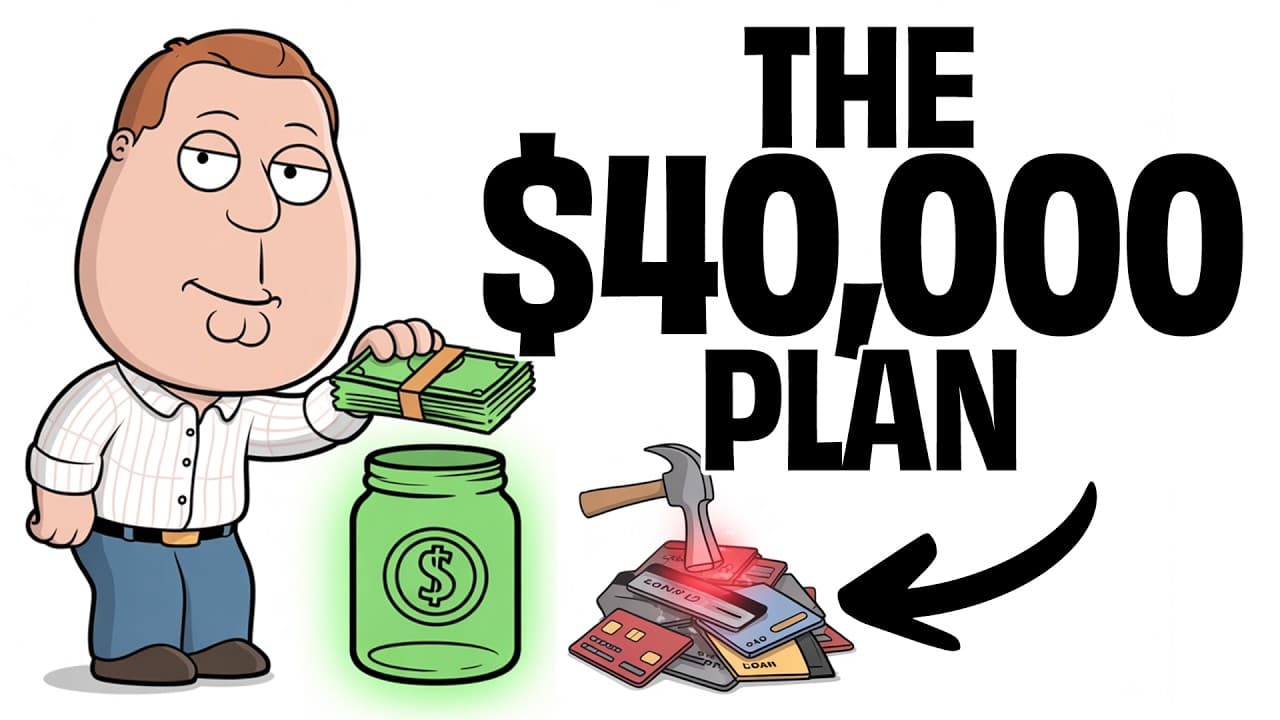
Eliminate high-interest consumer debt first, save three months of expenses, and then invest additional savings through a Roth IRA. Control major costs such as food and transportation, contribute consistently even if you cannot reach the annual limit, and develop marketable skills that can raise your income beyond the constraints of a $40,000 salary.
Transcript
making $40,000 a year and wondering if you're doomed to ramen noodles and handme-down furniture for the rest of your life. Well, here's something that might shock you. Some of the wealthiest people I know started with salaries that would make a fast food manager laugh. The difference wasn't their starting point. It was what they did with every doll... Read More
Key Insights
- A modest salary is a starting resource, not the sole determinant of wealth. The transcript contrasts someone earning $40,000 who lives on $35,000 and invests the difference with someone earning $80,000 who spends $85,000, showing why financial behavior matters alongside income.
- High-interest consumer debt is an immediate obstacle to wealth building. A cited example of $3,000 in credit card debt at 20% interest, repaid through minimum payments, could take more than 30 years and cost over $10,000 in total payments.
- The proposed debt-repayment target is 7% to 10% of gross income. On a $40,000 annual salary, that equals roughly $300 per month dedicated to eliminating credit cards, buy now, pay later balances, and personal loans used for unnecessary purchases.
- Food spending can create room for debt repayment without requiring higher income. The transcript states that an average household spends over $600 monthly on groceries and dining out, and suggests that meal planning and cooking at home could reduce that amount by 25%, freeing about $150.
- Transportation choices can determine whether a modest income produces savings. An average car payment above $700 per month is described as incompatible with a $40,000 salary, while a reliable used vehicle costing half as much could release hundreds of dollars for debt repayment and investing.
- An emergency fund should equal three months of expenses under the proposed strategy. If monthly expenses are $2,000, the target is $6,000, providing protection against unexpected costs and enough financial breathing room to negotiate raises, change jobs, or begin a side business.
- A Roth IRA can convert consistent after-tax contributions into tax-free retirement growth. The transcript cites an annual contribution limit of $7,000 and notes that original contributions, unlike investment growth, can be withdrawn at any time without penalties or tax consequences.
- Income growth becomes necessary after expenses have been optimized. The recommended approach is to monetize existing or quickly developed skills, target work paying at least $20 to $30 per hour, and pursue services with potential to grow beyond a simple exchange of hours for dollars.
Install to Summarize YouTube Videos and Get Transcripts
Explore YouTube Video Summarizer or Get YouTube Transcript Extractor
Questions & Answers
Q: How can someone build wealth on a $40,000 salary?
Building wealth on a $40,000 salary requires spending less than you earn, eliminating high-interest consumer debt, saving three months of expenses, and investing additional savings consistently. The transcript estimates monthly take-home pay at about $2,700 and emphasizes strategic allocation. After establishing those foundations, increasing income through marketable, higher-paying skills can accelerate progress beyond what spending cuts alone can achieve.
Q: Which debt should be paid off first when income is limited?
High-interest consumer debt should be treated as the first financial emergency. The examples include credit cards, buy now, pay later arrangements, and personal loans for unnecessary purchases. The suggested target is 7% to 10% of gross income, or roughly $300 per month on a $40,000 salary. Removing these payments prevents interest from continually consuming money that could otherwise support savings and investments.
Q: Why is making minimum credit card payments so costly?
Minimum payments can keep a high-interest balance active for decades, causing the borrower to repay far more than the original debt. The transcript gives an example of a $3,000 credit card balance at 20% interest that could take more than 30 years to clear and cost over $10,000 in total. Interest payments also create no equity and generate no investment returns.
Q: How can food spending be reduced to free money for debt repayment?
Meal planning, cooking at home, and avoiding convenience food, restaurant meals, and impulse grocery purchases can reduce food spending. Using the transcript's example, cutting a household food budget of over $600 per month by 25% would free approximately $150 monthly. That money can then be redirected toward the suggested debt-elimination target instead of disappearing through recurring discretionary purchases.
Q: How much should an emergency fund contain on a modest salary?
The proposed emergency fund equals exactly three months of normal expenses. For someone spending $2,000 each month, that means a target of $6,000. The fund covers unexpected costs and creates enough breathing room to negotiate harder for a raise, move to a better-paying job, or start a side business. Additional savings can then be directed toward investments that seek greater returns.
Q: Why is a Roth IRA useful for someone earning $40,000?
A Roth IRA accepts after-tax contributions and allows the account's growth to be withdrawn tax-free in retirement under the strategy described. The transcript says someone earning $40,000 is likely in the 12% tax bracket and cites a $7,000 annual contribution limit. It also states that original contributions can be withdrawn at any time without penalties or tax consequences, although investment growth is treated differently.
Q: Can smaller Roth IRA contributions still build substantial wealth?
Smaller contributions can still become substantial when they begin early and compound for decades. The transcript estimates that contributing $3,000 annually from age 25 through age 65, assuming 8% returns, would produce more than $800,000 tax-free. This example supports contributing what is affordable even when the full $7,000 annual amount, approximately $580 per month, is beyond the current budget.
Q: What kind of side hustle is recommended for increasing income?
The recommended side hustle monetizes an existing skill or one that can be developed relatively quickly, pays at least $20 to $30 per hour, and has room to grow beyond trading time directly for money. Examples include guitar lessons at $30 per hour, tutoring high school mathematics at $25 per hour, and basic web design or social media management at $50 to $75 per hour after building clients.
Summary & Key Takeaways
-
A $40,000 salary can support wealth building when spending stays below income and every dollar has a defined purpose. With estimated take-home pay of about $2,700 per month, the proposed strategy prioritizes disciplined spending, consumer-debt elimination, a limited emergency reserve, consistent investing, and deliberate efforts to earn more money.
-
High-interest consumer debt is treated as an emergency because interest payments consume money without building equity or producing returns. The suggested response is to direct 7% to 10% of gross income, roughly $300 monthly, toward repayment while reducing flexible expenses such as restaurant meals, convenience food, impulse groceries, and costly vehicle payments.
-
After eliminating high-interest debt, the strategy calls for saving three months of expenses and investing subsequent savings through a Roth IRA. Contributions of $3,000 annually are presented as meaningful even when the $7,000 annual limit is unattainable. Long-term progress also requires developing skills that command higher hourly earnings.
Read in Other Languages (beta)
Share This Summary 📚
Summarize YouTube Videos and Get Video Transcripts with 1-Click
Try YouTube Summary with ChatGPT & Claude or YouTube Transcript Generator
Explore More Summaries from Nick Invests 📚



Summarize YouTube Videos and Get Video Transcripts with 1-Click
Try YouTube Summary with ChatGPT & Claude or YouTube Transcript Generator