What Is the Right Way to Use Claude Agent Skills
TL;DR
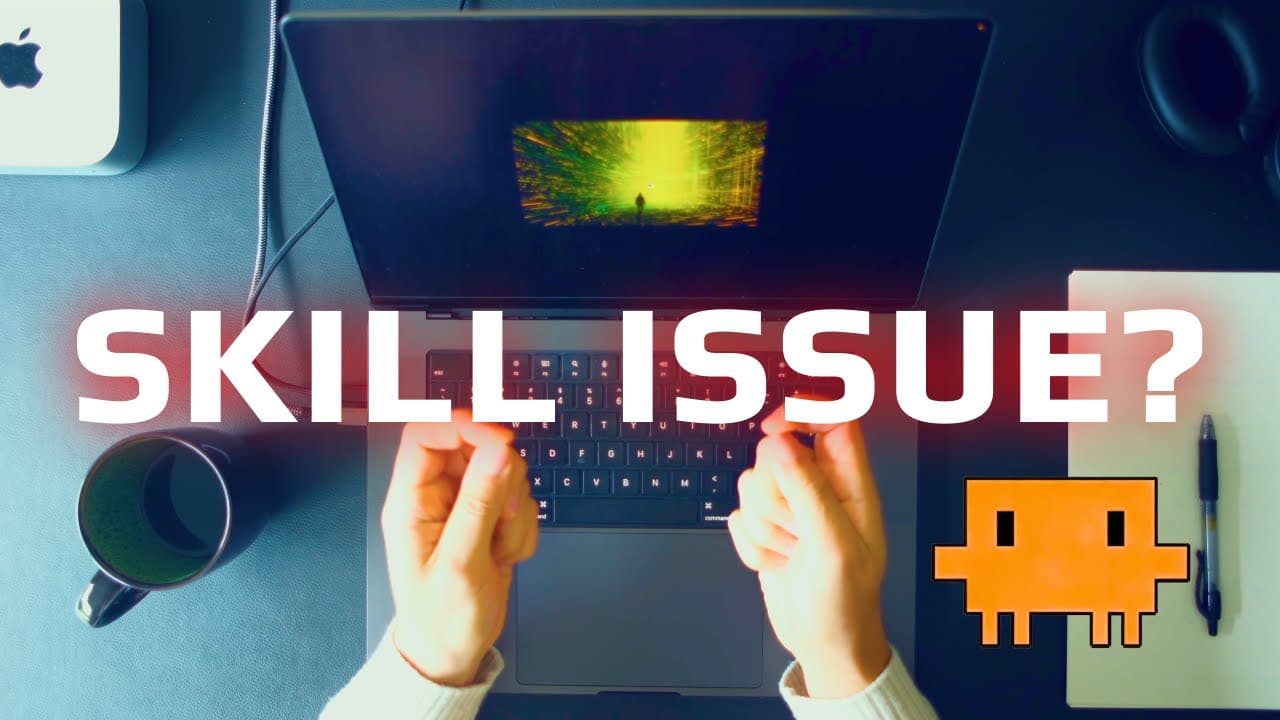
Agent skills, sub agents, and slash commands each have distinct roles. The video argues that skills should not replace other features and shows how to compose them for efficient engineering work while preserving context and parallelism. It emphasizes practical guidance over theory and demonstrates a live git worktree approach.
Transcript
For the past week, I've been working through agent skill issues. Now you have agent skills, sub agents, custom slash commands, output styles, plugins, hooks, memory files, and MCP servers. What is this all for? I've been using Cloud Code since it was first available in February. Since its release, I've generated more code than in my previous 15 yea... Read More
Key Insights
- Skills are triggered by agents and are designed for automatic behavior, making them suitable for repetitive or autonomous tasks.
- Sub agents provide isolated contexts and enable parallel workflows, which helps manage large projects without bloating the context window.
- Slash commands are manual triggers that are best for one-off tasks or user-initiated actions rather than continuous automation.
- MCP servers are specialized for external integrations and can bundle multiple services for the agent to use.
- Modularity is a core differentiator for skills, offering a dedicated structure for repeatable solutions and easier reuse.
- Composition matters: skills can use prompts, other skills, MCP servers, and sub agents, enabling flexible architectures.
- The video argues against converting all slash commands to skills, advocating a thoughtful, compositional approach instead.
- Parallelization is a key factor in deciding when to use sub agents to isolate context and enable concurrent work.
- More videos from this channel:
- More from this channel: IndyDevDan
Install to Summarize YouTube Videos and Get Transcripts
Explore YouTube Video Summarizer or Get YouTube Transcript Extractor
Questions & Answers
Q: What is the recommended way to think about using skills versus other features?
The recommended approach is to view skills as one part of a broader compositional system, not a replacement for MCP servers, sub agents, or slash commands. Use skills for automatic, directed behavior, but reserve sub agents for parallelized isolated workflows and slash commands for simple one-off tasks. This balanced view helps prevent scope creep and keeps code maintainable.
Q: When should you use an MCP server instead of a skill?
Use an MCP server when you need external integrations and you want to bundle multiple services for your agent to access. This enables structured external data sources and cohesive service access without duplicating logic across features. It is about connecting external capabilities rather than automating internal agent behavior.
Q: Why are sub agents valuable for parallel workflows?
Sub agents are valuable because they isolate and protect the context window, enabling parallel development without blowing up the main agent context. They are ideal for workflows that can run independently, such as large-scale tasks that can be broken into parallel units, while preserving the ability to merge results later.
Q: What is a key difference between skills and slash commands according to the video?
The key difference is triggering and modularity. Skills are triggered by agents and offer a modular, reusable structure with a dedicated directory, while slash commands are manual triggers that can be simpler to implement for one-off tasks. Both can be composed, but their primary roles differ.
Q: How should you handle a task like automatically extracting text from PDFs?
Such a task is best treated as a skill if it involves automatic behavior that can be triggered by the agent. The skill would encapsulate the logic to extract text and data, be reusable across contexts, and be invoked when needed, reducing manual intervention and improving consistency.
Q: What is the recommended approach to avoid converting all slash commands to skills?
Avoid converting everything to skills by recognizing that each feature has a distinct role. Slash commands remain useful for simple, manual tasks, while skills serve automated workflows. The right approach uses each capability where it fits best, preserving clarity and maintainability.
Q: How does modularity influence the use of Claude Code features?
Modularity provides a structured way to build repeatable solutions. Skills have a dedicated directory structure that supports modular, composable units. This enables easier sharing, testing, and reuse across projects, while keeping the overall architecture clean and navigable.
Q: What is the overall message about composing agent capabilities?
The overall message is that effective agent design relies on careful composition of skills, sub agents, MCP servers, and slash commands. Each has a purpose, and the best practice is to combine them thoughtfully to achieve scalable, maintainable automation rather than replacing one with another.
Summary & Key Takeaways
-
The video explains that Claude Code features such as skills, sub agents, and slash commands are not interchangeable and should be used in a deliberate, compositional way. It contrasts automatic behavior with manual triggers and external integrations, guiding engineers to pick the right tool for each task.
-
It highlights context efficiency and modular directory structures as core benefits of skills, while noting that sub agents excel at isolating context windows for parallel workflows. The presenter emphasizes avoiding a one-size-fits-all mindset and demonstrates practical examples.
-
A key takeaway is that skills are powerful when composed with other features, but not a replacement for sub agents or slash commands. The goal is to use each capability where it fits best, enabling scalable and maintainable agent code.
Read in Other Languages (beta)
Share This Summary 📚
Summarize YouTube Videos and Get Video Transcripts with 1-Click
Try YouTube Summary with ChatGPT & Claude or YouTube Transcript Generator
Explore More Summaries from IndyDevDan 📚
Summarize YouTube Videos and Get Video Transcripts with 1-Click
Try YouTube Summary with ChatGPT & Claude or YouTube Transcript Generator