How Claude Code Rewrites Engineering with Agentic Coding
TL;DR
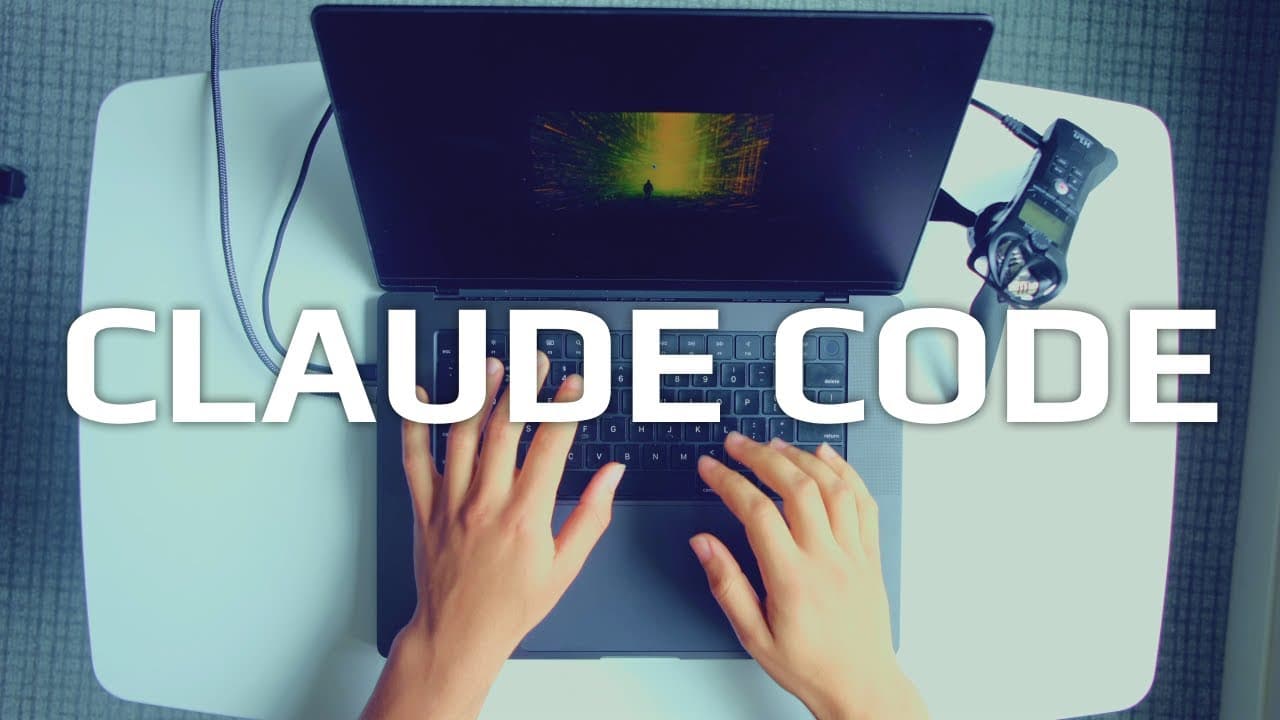
Claude Code changes engineering by making agentic coding scalable, programmable, and terminal centric. It blends a three part architecture, built in tools, and emergent models to run parallel agents from a single prompt, enabling faster workflows and deeper automation while keeping the interface simple and focused.
Transcript
It started quietly. No grand announcements, no hype marketing, just a simple command line interface that would change engineering forever. Cloud Code emerged not as a tool, but as a partner in a gentic system that understood context, state, and most importantly, engineering. It consistently reasons about code at a level previously thought impossibl... Read More
Key Insights
- Claude Code is a new engineering primitive that enables agentic coding from a single prompt.
- The architecture hinges on three essential elements: powerful LLMs, a baked in tool set, and the agent loop.
- Emergent behavior in models like Sonnet and Opus drives real world performance beyond benchmarks.
- Simplicity is a core principle, keeping the surface area minimal and the workflow straightforward.
- The tool is described as programmable and terminal-centric, emphasizing maximum control with minimal friction.
- Cloud Code enables infinite scalability by running multiple parallel sub agents and programmable modes.
- The engineering transition is from AI coding to agentic coding, expanding beyond code generation to full engineering workflows.
- The future trajectory includes multi agent systems and dedicated agent environments.
- More videos from this channel:
- More from this channel: IndyDevDan
Install to Summarize YouTube Videos and Get Transcripts
Explore YouTube Video Summarizer or Get YouTube Transcript Extractor
Questions & Answers
Q: What is Claude Code as described in the video, in simple terms?
Claude Code is presented as a fundamental new engineering primitive that enables agentic coding from a single prompt. It is more than a tool or a simple assistant; it acts as a building block for a new class of software development, allowing engineers to orchestrate multiple agents, run compute at scale, and maintain simplicity and control.
Q: How does Claude Code change the way engineers work with their tools?
The video explains that Claude Code changes engineering by focusing on the terminal as the highest leverage point, providing a programmable environment where engineers can call a powerful agentic toolset from any terminal. This reduces setup friction, keeps complexity low, and enables real engineering workflows with prompts and agents rather than manual steps.
Q: What are the three essential elements of Claude Code?
Claude Code is built on three essential elements: a powerful set of language models that can call tools within the agent loop, a baked-in toolkit of utilities, and the agent architecture that enables the agent loop to operate in the right environment. All three are required to achieve its capabilities.
Q: What is meant by benchmark ghosting models and why is it important?
Benchmark ghosting models refer to models like Sonnet 3.5 and Opus where emergent behavior is not reflected in benchmarks but yields superior real world performance. The video argues that these models understand context and intent, and that their true capabilities emerge with time and usage beyond what standard benchmarks show.
Q: Why is simplicity emphasized as a core principle for Claude Code?
Simplicity is highlighted as a core principle because it ensures reliable performance and reduces unnecessary complexity. The idea is to keep the tool simple on the surface—no heavy setups or extra complexity—so engineers can focus on problem solving, iteration, and scaling agentic workflows without friction.
Q: How does Claude Code enable scalability for engineers?
Claude Code enables scalability by allowing multiple parallel sub agents, programmable modes, and the ability to run from any terminal. This parallelism and programmability let engineers tackle multiple problems at once, increase throughput, and compose complex agentic systems without locking into a single workflow.
Q: What does the video say about the future of Claude Code and engineering?
The video points toward a future with multi agent systems, dedicated agent environments, and a level of automation that expands engineering capabilities. It frames Claude Code as a foundational unit for this next era, enabling more efficient use of time and resources and driving bets on the most impactful engineering investments.
Q: Who are the creators mentioned and what is their influence on Claude Code?
The video references Boris and Cat as the creators connected to Claude Code and notes their moves between labs like Anthropic and Cursor. Their work is presented as central to the emergence of Claude Code, reinforcing the emphasis on simple, terminal based, and engineer driven workflows rather than flashy demos or heavy complexity.
Summary & Key Takeaways
-
Claude Code is described as a new engineering primitive, not just a tool, transforming how engineers interact with compute and tools.
-
It emphasizes simplicity, terminal based operation, and a single prompt to drive complex agentic workflows across multiple tasks.
-
The video argues this approach makes engineering more scalable and capable by enabling parallel agents and programmable environments while avoiding unnecessary complexity.
Read in Other Languages (beta)
Share This Summary 📚
Summarize YouTube Videos and Get Video Transcripts with 1-Click
Try YouTube Summary with ChatGPT & Claude or YouTube Transcript Generator
Explore More Summaries from IndyDevDan 📚



Summarize YouTube Videos and Get Video Transcripts with 1-Click
Try YouTube Summary with ChatGPT & Claude or YouTube Transcript Generator