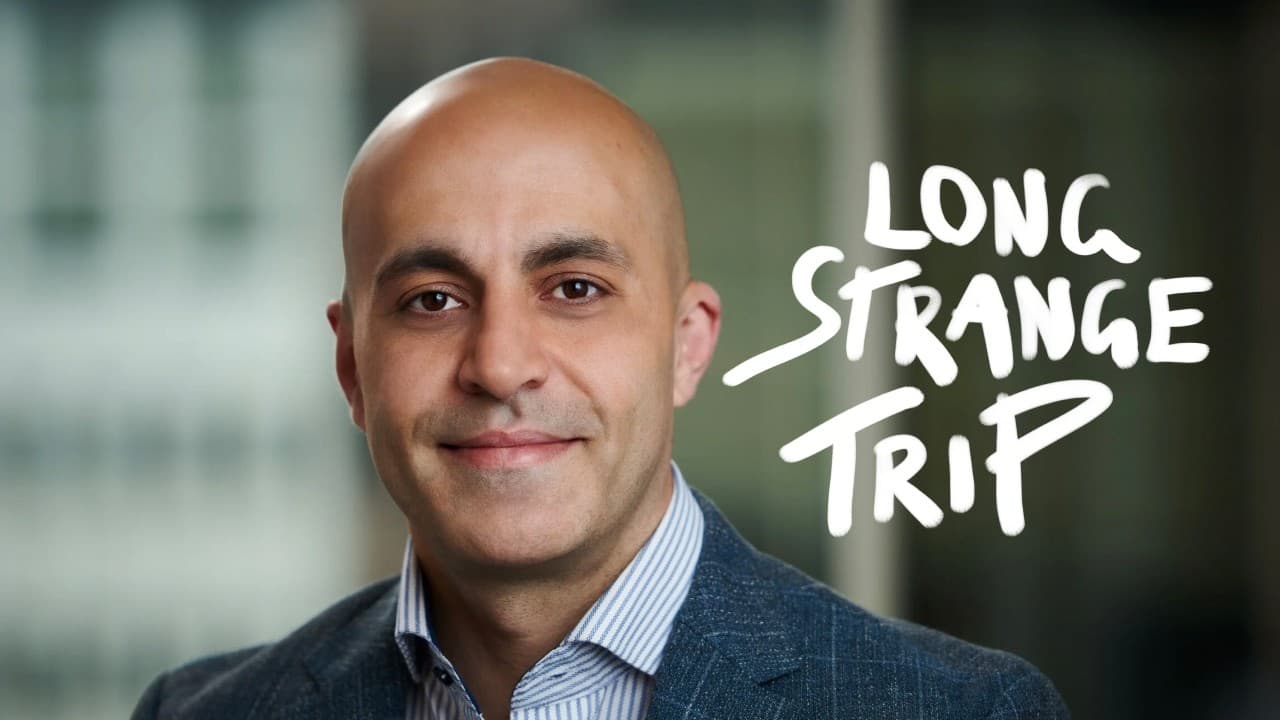
How Ali Ghodsi Built His Own CEO Playbook
TL;DR
Choose the path that challenges you most, learn aggressively, and build a leadership system from first principles instead of copying other executives. Ali Ghodsi says CEOs should identify the company’s largest bottleneck and direct disproportionate attention toward solving it, while accepting that demanding leadership requires difficult decisions and a willingness to face conflict.
Transcript
And is that Monday morning meeting really useful? Or is it theater? Can't you just have a Google doc and get it done that way? >> We're talking about humans. Why should I like you or trust you if I never get to meet you? >> Mhm. >> I don't know if you're married, but do you want Why do you Why do you have to meet your wife at all and their kids? Ca... Read More
Key Insights
- Databricks had strong open source adoption but weak commercial results in 2015, when Apache Spark was succeeding while GAAP revenue reached only $1.5 million. That mismatch created a turbulent atmosphere and prompted the board to consider a leadership change.
- Ali Ghodsi became CEO without meaningful commercial experience because the board preferred testing a founder rather than immediately installing an outside executive. The arrangement initially looked temporary, with no CEO-level salary and an apparent expectation that his performance would determine whether he remained.
- The harder path became Ghodsi’s decision rule after he reviewed pivotal choices across his life. University, a demanding PhD, a Berkeley postdoctoral role, and eventually the CEO position each offered greater uncertainty but also expanded his knowledge and capabilities.
- First-time CEOs must accept an extreme learning curve, according to Ghodsi. He responded by working 100-hour weeks, networking with highly capable people, reading books, and continually gathering ideas that could help him understand leadership and business.
- First-principles reasoning is central to Ghodsi’s management approach. He did not automatically copy practices recommended by prominent executives or books, but tested whether each idea made sense and combined useful lessons into a coherent personal CEO playbook.
- A company’s failure often traces to one dominant bottleneck, even when several smaller problems are visible. Ghodsi advises identifying that central constraint and focusing the company’s attention and resources disproportionately on resolving it rather than scattering effort across every issue.
- Databricks reinforced Ghodsi’s position after roughly one year by increasing his equity and salary and discussing longer-term strategic priorities. The board did not stage a formal announcement, but those decisions made clear that his appointment had moved beyond a temporary trial.
- Conflict aversion is incompatible with the CEO role in Ghodsi’s view, as summarized in the description. His approach includes rejecting impressive executive candidates when necessary, studying competitors without copying them, and maintaining conviction even when employees, consultants, or outsiders challenge the strategy.
Install to Summarize YouTube Videos and Get Transcripts
Explore YouTube Video Summarizer or Get YouTube Transcript Extractor
Questions & Answers
Q: How did Ali Ghodsi become CEO of Databricks?
Ali Ghodsi became CEO during a turbulent period in 2015, when Databricks had a successful open source project but only $1.5 million in GAAP revenue. The board quietly interviewed other candidates, while Ghodsi considered returning to academia. The board ultimately tested him in the role, initially without a CEO-level salary, partly reflecting its preference for founder leadership.
Q: Why did Ali Ghodsi choose business over academia?
Ghodsi chose the CEO role because it was more challenging and unfamiliar than returning to Berkeley, even though becoming a professor had long been his dream. Reviewing his earlier choices showed him that difficult paths had repeatedly expanded his horizons. He therefore treated the CEO opportunity as another chance to learn skills he did not yet possess.
Q: What can first-time CEOs learn from Ali Ghodsi?
First-time CEOs can expect a steep learning curve and must invest heavily in closing their knowledge gaps. Ghodsi worked 100-hour weeks, met with highly capable people, and read widely. Crucially, he evaluated every lesson through first principles, selecting ideas that made sense together instead of copying individual practices simply because respected leaders recommended them.
Q: How should a CEO identify the company’s main problem?
A CEO should search for the single dominant bottleneck that most limits the company, even if many smaller issues demand attention. Ghodsi argues that companies usually fail because of one major constraint, or possibly a small number of them. Once identified, that bottleneck should receive a disproportionate share of leadership attention and organizational effort.
Q: Why did Databricks need a leadership change in 2015?
Databricks faced a gap between technical adoption and commercial performance. Apache Spark was achieving strong open source success, but the company recorded only $1.5 million in GAAP revenue during 2015. The atmosphere became turbulent, and the board quietly explored CEO candidates. Ghodsi himself expected the founders might leave and applied for a faculty position at Berkeley.
Q: How did Ali Ghodsi create his CEO playbook?
Ghodsi created his playbook by gathering lessons from books, experienced people, and intensive work, then testing each idea through first-principles reasoning. He compared the process to combining useful elements from different martial arts into one system. The goal was a self-consistent leadership approach, not a collection of disconnected practices copied from other executives.
Q: When did Ali Ghodsi’s CEO role become permanent?
The transition became clearer roughly one year after Ghodsi took the position. During a meeting, Ben Horowitz gave him a much larger equity package, raised his salary, and discussed strategic work the company needed to pursue. Nobody formally declared that the trial had ended, but those actions indicated that the board had adopted a longer-term perspective on his leadership.
Q: How does Ali Ghodsi approach competitors and strategic criticism?
Ghodsi’s approach is to study competitors closely without copying them and to maintain conviction when a strategy survives first-principles analysis. The description says he used this approach against Snowflake and continued building the Lakehouse category even when consultants, sellers, and online critics laughed at its name. His method combines competitive awareness with independent strategic judgment.
Summary & Key Takeaways
-
Databricks entered 2015 with a successful open source project, Apache Spark, but only $1.5 million in GAAP revenue. While the board quietly considered outside CEO candidates, Ali Ghodsi contemplated returning to academia. The board ultimately placed him in the role as a founder who could be tested before receiving a stronger compensation package.
-
Ghodsi chose the CEO position because it presented a harder and less familiar challenge than returning to Berkeley. He connected that choice to earlier decisions to attend university, pursue a demanding PhD, and accept a postdoctoral position. Each difficult move expanded his knowledge, reinforcing his philosophy of deliberately seeking challenges throughout life.
-
As a first-time CEO, Ghodsi worked 100-hour weeks, built relationships with accomplished leaders, and read extensively. He filtered every lesson through first-principles reasoning rather than copying isolated practices. His resulting playbook centers on finding the company’s largest bottleneck and concentrating extraordinary organizational attention on that constraint for an extended period.
Read in Other Languages (beta)
Share This Summary 📚
Summarize YouTube Videos and Get Video Transcripts with 1-Click
Try YouTube Summary with ChatGPT & Claude or YouTube Transcript Generator
Explore More Summaries from Sequoia Capital 📚

Summarize YouTube Videos and Get Video Transcripts with 1-Click
Try YouTube Summary with ChatGPT & Claude or YouTube Transcript Generator