How Block Built an AI-First Enterprise with Goose
TL;DR
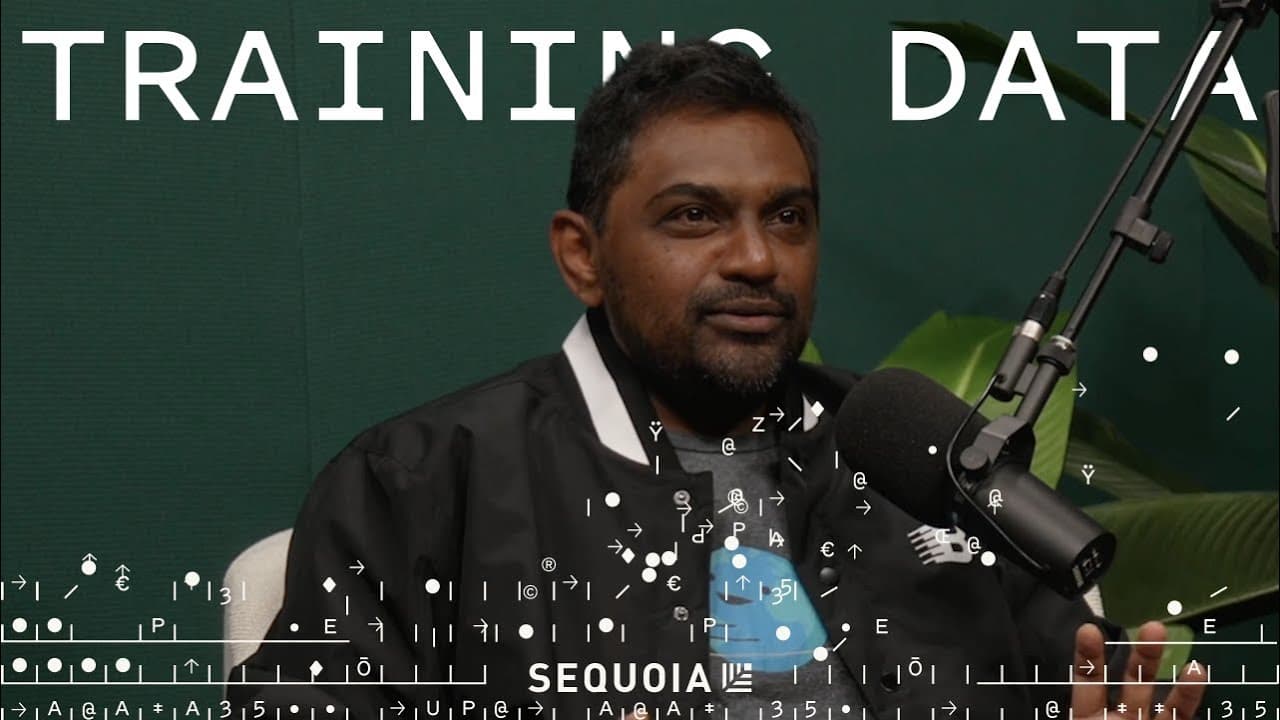
Block accelerated enterprise AI adoption by centralizing its organization and deploying Goose, an open-source agent that connects with existing tools through MCP. Engineers reportedly save 8–10 hours each week, while recipes let successful Goose workflows become reusable scripts that teammates can share, extending automation beyond engineering to sales teams and other employees.
Transcript
Our approach has been to not overengineer it. So we like to let goose learn from doing things. So we also have this feature called recipes where if you try a a workflow with goose and you really like it, you can bake it into a sort of script or or what we call a recipe and then share it out with your with your teammates. We find that goose is more ... Read More
Key Insights
- AI is a tool whose effects depend on who develops it and what purpose they pursue. Prasanna compares its potential to nuclear technology, which can support beneficial applications or harmful ones, and argues that the surrounding intent determines whether AI acts as a friend or foe.
- Block is positioned as a technology company rather than only a financial-services provider. Its history of embracing card-reader innovation, blockchain initiatives, Bitcoin products, machine learning, and generative AI supports the company’s belief that AI can strengthen its business and improve customer services.
- Generative AI expands Block’s technology scope beyond traditional machine-learning tasks. Earlier machine learning concentrated largely on risk, fraud, spam, abuse, classification, and clustering, while deep learning can contribute across many company functions and product areas.
- Centralized leadership is a major part of Block’s AI transformation. Prasanna urged Dorsey to invest in AI centrally and transform the entire company, and their alignment led Block to fund experiments before restructuring the organization around shared functional expertise.
- Functional organization is intended to unlock expertise previously contained within business-unit silos. Block brought teams closer together, including platform groups that had been separate, so it could unify policies, strengthen engineering and technical excellence, and respond faster to frequent industry shifts.
- Goose is an open-source, extensible agent designed to perform work on a user’s computer. It connects with existing enterprise tools through MCP and supports uses ranging from engineering work to sales workflows and custom applications created by people without conventional coding experience.
- Goose recipes turn successful workflows into reusable, shareable scripts. Instead of overengineering integrations in advance, Block lets Goose learn through performing tasks, then allows users to preserve effective workflows and distribute them to teammates.
- AI automation is reportedly saving Block engineers 8–10 hours per week. Goose is also used to produce most new code for its own codebase, support non-engineers building side projects, and contribute to the first revision of Jack Dorsey’s Bit Chat.
Install to Summarize YouTube Videos and Get Transcripts
Explore YouTube Video Summarizer or Get YouTube Transcript Extractor
Questions & Answers
Q: How did Block become an AI-first enterprise?
Block began by funding eight special-project bets, with roughly two to five engineers working on each project. It then progressively replaced business-unit silos with a functional organizational structure, brought platform teams closer to its other groups, unified technical policies, and emphasized engineering excellence. The transformation was centrally supported after Dhanji Prasanna and Jack Dorsey agreed that AI required company-wide investment.
Q: What is Goose and how does Block use it?
Goose is Block’s open-source, extensible agent for performing work on a user’s computer. It connects with existing enterprise tools through MCP and is used by engineers, sales teams, and non-engineers building custom applications. Examples in the source include supporting Jack Dorsey’s first revision of Bit Chat, enabling vibe-coded side projects, and writing most new code for the Goose codebase itself.
Q: How do Goose recipes automate repeatable workflows?
Goose recipes preserve workflows that users have already tried and found useful. A successful interaction can be baked into a script, called a recipe, and then shared with teammates. This approach lets the agent learn through doing tasks instead of requiring people to overengineer a specialized tool beforehand, while making proven processes repeatable across a team.
Q: How does Goose connect to existing enterprise tools?
Goose connects to existing enterprise systems through MCP, which supports tool use by the agent. Block’s approach is to avoid overengineering every integration or trying to redesign each tool specifically for Goose. According to Prasanna, Goose can often determine how to use available tools in surprising ways and complete that work faster than a person might expect.
Q: How much time does AI automation save Block engineers?
Block’s engineers reportedly save 8–10 hours each week through AI automation. Goose also contributes directly to software production, including writing the vast majority of new code for its own codebase. These uses indicate that Block applies the agent to practical development work rather than limiting it to demonstrations, isolated experiments, or conventional question-and-answer interactions.
Q: Why did Block reorganize around functional teams for AI?
Block believed its general-manager structure was keeping valuable knowledge inside the separate Square, Cash App, and Tidal organizations, while platform teams were also separated from them. A functional structure brought those capabilities together, enabled unified policies, and strengthened engineering and technical excellence. Prasanna argues that this depth and singular organizational focus matter when major technology shifts occur as frequently as weekly.
Q: Why did Block release Goose as open-source software?
Block released Goose as an open-source, extensible agent even though it had become a valuable internal AI tool. The source presents open source as an explicit company commitment and shows Goose being used both inside Block and by broader groups, including non-engineers. Its extensibility, MCP connections, and shareable recipes allow users and teams to adapt it to their own tools and workflows.
Q: How is generative AI different from Block’s earlier machine learning?
Block’s traditional machine-learning work focused mainly on risk-related applications such as fraud, spam, and abuse, alongside familiar tasks like classification and clustering. Prasanna distinguishes generative AI through deep learning and its capacity to do more than those earlier tasks. He argues that this broader capability can affect virtually every vertical and function within the company and beyond it.
Summary & Key Takeaways
-
Block treats AI as an opportunity because it has historically embraced new technology to improve services for customers. CTO Dhanji Prasanna and founder Jack Dorsey aligned on investing centrally in AI, transforming the whole company, and moving quickly enough to avoid being displaced by competitors using the same capabilities.
-
The transformation began with small special-project teams pursuing eight different ideas, then expanded through organizational restructuring. Block moved away from business-unit silos toward functional teams, bringing Square, Cash App, Tidal, and platform expertise closer together so it could unify policies, deepen technical excellence, and accelerate company-wide AI adoption.
-
Goose is an open-source, extensible agent that performs work on a user’s computer and connects with existing enterprise systems through MCP. Its recipe feature converts successful workflows into reusable scripts for teammates. Block uses Goose across technical and nontechnical work, with engineers reportedly saving 8–10 hours each week through automation.
Read in Other Languages (beta)
Share This Summary 📚
Summarize YouTube Videos and Get Video Transcripts with 1-Click
Try YouTube Summary with ChatGPT & Claude or YouTube Transcript Generator
Explore More Summaries from Sequoia Capital 📚
Summarize YouTube Videos and Get Video Transcripts with 1-Click
Try YouTube Summary with ChatGPT & Claude or YouTube Transcript Generator