How Did Supercell Turn Failure Into Mobile Hits?
TL;DR
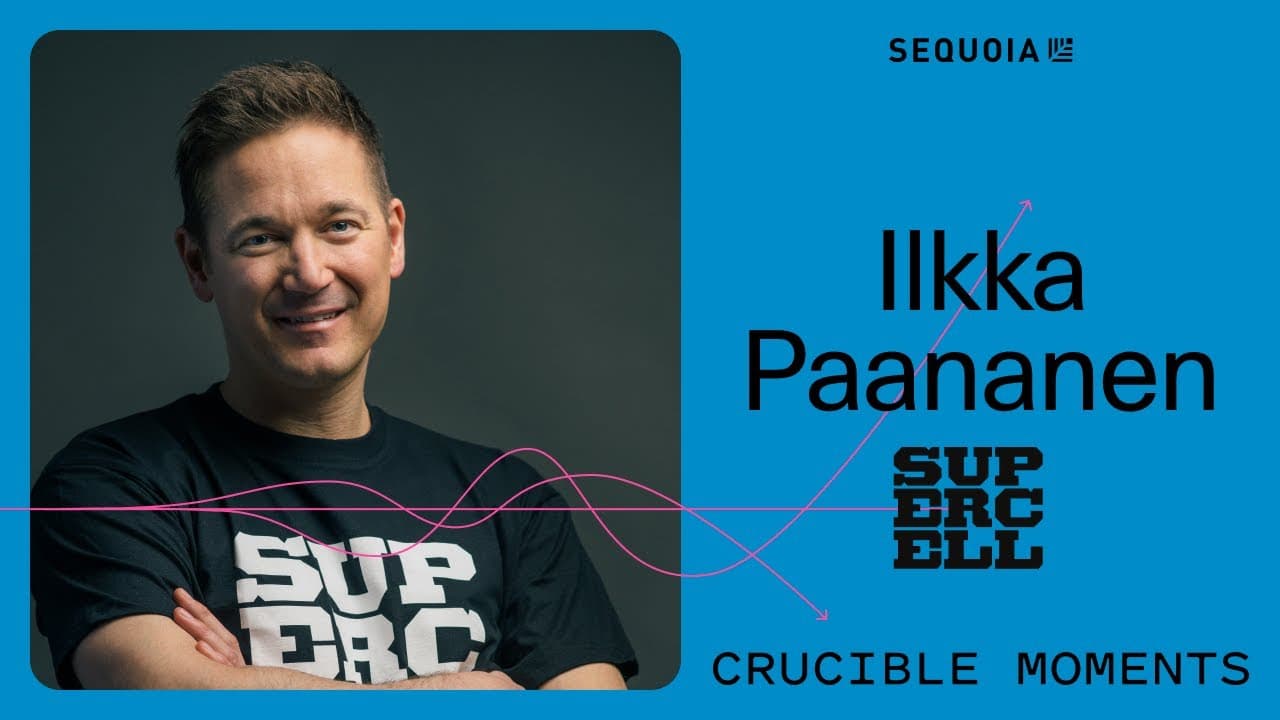
Supercell succeeded by giving small game teams control, abandoning weak ideas quickly, and treating failed projects as experiments that generate useful knowledge. Its decisive shift from Facebook to tablets and mobile enabled enduring games such as Hay Day and Clash of Clans, while today’s crowded market requires even bolder risks and unusually high quality.
Transcript
Often times what tends to happen at especially at the successful games company is that sometimes these game developers who actually build the games they sort of lose control and the control like moves to the upper management and and and so forth and then this idea kind of start to grow on me and and and sort of my fellow co-founders. What if you wo... Read More
Key Insights
- Supercell is organized around autonomous game teams that own their creative visions. The company deliberately reversed the traditional hierarchy in which control moves from developers to upper management, treating its small teams as independent cells and making game developers the central decision-makers.
- Supercell’s founding ambition is to create games that reach as many people as possible and remain relevant for a long time. This emphasis on both reach and longevity shaped its platform choices, development standards, willingness to cancel projects, and long-term aspiration to build a memorable company.
- Gunshine was a real-time MMO created for Facebook, which Supercell considered the platform with the widest reach in 2010. Although its soft launch produced promising metrics and helped support a Series A financing round, the company concluded that neither the game nor the platform fit its goals.
- The pivot to mobile required Supercell to abandon Gunshine and its Facebook strategy only months after raising €8 million. Supportive investors accepted the decision despite the discarded work and original financing premise, allowing the company to concentrate on tablets and mobile at an especially favorable time.
- Failure is treated as an experiment that tests a hypothesis and produces knowledge whether the hypothesis proves true or false. Supercell reinforces this view by sharing lessons across the company and maintaining a champagne tradition whenever a team decides to kill one of its games.
- Hay Day and Clash of Clans showed exceptionally strong soft-launch results that initially made Supercell question whether its analytics system was working correctly. Their rapid growth led the company to celebrate successive daily-active-user milestones, beginning with 10,000 and eventually reaching tens of millions.
- New game launches are harder because consumers have many strong alternatives and established titles absorb substantial attention. The transcript states that 60% of worldwide playtime went to games at least six years old, benefiting Supercell’s older titles while making its own new releases harder to establish.
- Supercell’s response to a high competitive bar is to pursue bolder ideas, accept more risk, and build experiences that have not existed before. Its long-term ambition is to create games and a company remembered forever, drawing inspiration from enduring organizations such as Nintendo and Lego.
Install to Summarize YouTube Videos and Get Transcripts
Explore YouTube Video Summarizer or Get YouTube Transcript Extractor
Questions & Answers
Q: How did Supercell give game developers more control?
Supercell reversed the conventional organizational model by placing ownership of each game’s vision with its individual development team instead of upper management. The founders viewed these small, startup-like teams as cells, which helped inspire the company’s name. This structure was intended to give developers decision-making power and make them the company’s central creative figures.
Q: Why did Supercell cancel Gunshine after raising funding?
Supercell cancelled Gunshine because it concluded that the game was not working for the kind of enduring experiences it wanted to create. It also decided that Facebook was the wrong platform. The choice came only months after an €8 million Series A round partly based on the game’s promising metrics, making the cancellation difficult but strategically necessary.
Q: Why did Supercell pivot from Facebook to mobile?
Supercell initially chose Facebook because it appeared to offer the widest possible reach in 2010. After testing Gunshine, however, the company determined that Facebook did not suit the games it wanted to build. It discarded its previous work and moved toward tablets and mobile, where there was still significant room for high-quality social games.
Q: How does Supercell treat failed game projects?
Supercell treats cancelled projects as experiments rather than purely as failures. Each project begins with a hypothesis, and the outcome provides useful knowledge whether that hypothesis proves true or false. Teams share what they learned with the wider company, and Supercell marks game cancellations with champagne, turning difficult decisions into occasions for reflection and organizational learning.
Q: What happened when Supercell soft-launched Hay Day and Clash of Clans?
The initial metrics for Hay Day’s Canadian soft launch were so strong that Supercell suspected its analytics system might be producing incorrect figures. Clash of Clans generated a similar reaction a few months later. User growth then passed successive daily-active-user milestones, including 10,000, 50,000, 100,000, half a million, one million, and eventually tens of millions.
Q: Why were industry experts skeptical of Clash of Clans?
When Ilkka Paananen showed a Clash of Clans prototype to senior industry figures at the 2012 Game Developers Conference, some asked why anyone would play it. They did not understand its appeal and questioned whether games on those devices were real games. Paananen later reflected that their skepticism may have resulted from how different the project appeared.
Q: Why is launching a successful new game more difficult now?
Launching a successful game is harder because competition is intense, consumers have many strong choices, and older titles retain substantial attention. The transcript states that 60% of worldwide playtime went to titles that were six years old or older. That longevity benefits established Supercell games, but it also raises the barrier facing every new Supercell release.
Q: What is Supercell’s long-term vision for its games and company?
Supercell wants to create games that are remembered forever and build a company with comparable endurance. It looks to long-lived organizations such as Nintendo and Lego as examples, while recognizing that Supercell is only 15 years old and remains early in its journey. The ambition supplies continuing energy while leaving substantial room for improvement and new opportunities.
Summary & Key Takeaways
-
Supercell was founded to reverse the conventional management structure of successful game companies. Instead of allowing executives to own each game’s vision, it gave that authority to individual development teams called cells. The company sought to make developers its central figures while creating games with broad reach and lasting appeal.
-
Supercell initially chose Facebook and developed Gunshine, a real-time MMO with promising soft-launch metrics. Shortly after raising €8 million in Series A financing, the company killed the game, rejected its Facebook strategy, and shifted toward tablets and mobile. That difficult decision became a defining moment for its culture and future success.
-
Hay Day and Clash of Clans produced unexpectedly strong early metrics, driving daily active users from early milestones into the millions. Yet launching new games has become harder because established titles command much of consumers’ playtime. Supercell believes overcoming that barrier requires greater boldness, risk, originality, and commitment to exceptional quality.
Read in Other Languages (beta)
Share This Summary 📚
Summarize YouTube Videos and Get Video Transcripts with 1-Click
Try YouTube Summary with ChatGPT & Claude or YouTube Transcript Generator
Explore More Summaries from Sequoia Capital 📚

Summarize YouTube Videos and Get Video Transcripts with 1-Click
Try YouTube Summary with ChatGPT & Claude or YouTube Transcript Generator