How to Structure Facebook Ads for Efficient Scaling
TL;DR
Separate Facebook ad audiences into prospecting, retargeting, and retention campaigns, then use hard exclusions to prevent overlap. This structure directs more incremental budget toward new customers, reduces excessive frequency among engaged and existing audiences, and makes each campaign’s performance easier to evaluate independently.
Transcript
Today, I'm going to walk you through the single most unfair Facebook ad strategy that you can use right now to reduce your cost per acquisition, increase your return on ad spend, and most importantly, reduce the wasted ad spend in your ad accounts right now. And by the way, this has been refined from my most recent strategies because we have seen b... Read More
Key Insights
- Blended Facebook campaigns can spend across new, engaged, and existing audiences simultaneously. Audience segment breakdowns reveal how much money each cohort receives, allowing advertisers to identify whether campaign budgets are disproportionately reaching people who already know the brand.
- Frequency is the average number of times a person saw an ad during the selected period. In the larger account examined over 30 days, engaged customers averaged 25 impressions and existing customers averaged 57.85 impressions, levels the presenter considered far too high.
- Budget increases do not automatically prioritize new customer acquisition. Because engaged audiences and existing customers are closer to purchasing and can produce higher returns naturally, Facebook may direct additional spending toward these easier-to-convert groups when a blended campaign is scaled.
- Audience size does not double merely because an advertising budget doubles. If spending on engaged and existing audiences rises proportionally with the budget, the additional money may primarily increase impression frequency instead of expanding acquisition among new prospects.
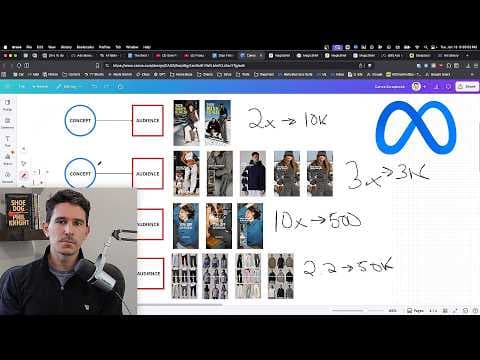
- Clear swim lanes divide advertising into prospecting, retargeting, and retention campaigns. This structure gives each audience cohort a dedicated campaign and makes it possible to judge new-customer acquisition separately from activity involving engaged visitors or previous purchasers.
- Prospecting exclusions prevent ads intended for new customers from reaching warmer audiences. The presented setup excludes 90-day website visitors, 90-day add-to-cart and initiate-checkout audiences, and purchasers from the previous 180 days.
- Retargeting exclusions keep existing customers out of campaigns for engaged non-buyers. The essential exclusion is purchasers from the previous 180 days, while excluding a 90-day Klaviyo list is presented as an optional additional measure.
- Audience controls must function as actual restrictions rather than suggestions. Leaving the recommended setting or the use-as-a-suggestion option enabled can broaden delivery, undermining the intended cohort boundaries created through inclusions and exclusions.
Install to Summarize YouTube Videos and Get Transcripts
Explore YouTube Video Summarizer or Get YouTube Transcript Extractor
Questions & Answers
Q: How should Facebook ad campaigns be structured by audience?
Facebook ad campaigns should be divided into three clear audience swim lanes: prospecting for new customers, retargeting for engaged people, and retention for existing customers. Each campaign should use inclusions and hard exclusions that prevent overlap. This separation reduces uncontrolled spending on warmer audiences and allows the advertiser to evaluate acquisition, retargeting, and retention performance independently.
Q: Why should Facebook prospecting campaigns exclude warm audiences?
Prospecting campaigns should exclude warm audiences because their purpose is to reach new customers. Without exclusions, Facebook can spend prospecting money on website visitors, cart abandoners, checkout initiators, and previous purchasers who are easier to convert. That behavior can make results appear efficient while increasing repeated impressions and limiting the amount of incremental budget directed toward genuinely new prospects.
Q: What audiences should a Facebook prospecting campaign exclude?
The presented prospecting setup excludes add-to-cart and initiate-checkout audiences from the previous 90 days, purchasers from the previous 180 days, and website visitors from the previous 90 days. These exclusions remove people assigned to retargeting or retention, leaving the prospecting campaign focused on new customers rather than users who have recently engaged with or purchased from the brand.
Q: What exclusion should be used in a Facebook retargeting campaign?
A Facebook retargeting campaign should exclude purchasers from the previous 180 days so that existing customers remain in the retention audience rather than the engaged audience. The presenter also uses a Klaviyo list to exclude people from the previous 90 days, but describes that step as optional. The 180-day purchaser exclusion is identified as the most important requirement.
Q: Why can scaling a blended Facebook campaign waste ad spend?
Scaling a blended campaign can waste spending because Facebook may increase delivery to engaged and existing audiences alongside new audiences. Those warmer groups often produce stronger returns because they are closer to purchasing, but their populations do not double when the budget doubles. Additional spending can therefore raise impression frequency instead of generating proportionate access to new customers.
Q: How does ad frequency reveal Facebook audience overspending?
Ad frequency shows how many times the average person saw an advertisement during the selected period. In the cited large account, engaged customers averaged 25 impressions and existing customers averaged 57.85 impressions over 30 days. These figures indicated that substantial spending was repeatedly reaching familiar users, including people who might have converted without so many additional ad exposures.
Q: How do Facebook audience suggestions affect exclusions?
Facebook audience settings must be configured as firm targeting rules rather than suggestions. If the recommended setup remains active or the use-as-a-suggestion option is not unselected, Facebook can broaden the audience beyond the intended definition. That broader delivery can defeat the purpose of separating prospecting, retargeting, and retention cohorts through precise inclusions and exclusions.
Q: How does separating Facebook audiences improve campaign analysis?
Separating audiences allows advertisers to judge prospecting, retargeting, and retention campaigns independently. A blended result can conceal how much money goes to existing or engaged users and how frequently those users see ads. Distinct campaigns expose the spending and performance of each cohort, making it easier to see whether incremental budget is supporting new-customer acquisition or repeated delivery.
Summary & Key Takeaways
-
Facebook can distribute campaign spending across new, engaged, and existing audiences when those groups are combined. In one cited account, engaged audiences averaged 25 ad exposures and existing customers averaged 57 over 30 days, showing how blended targeting can repeatedly serve ads to people already familiar with the brand.
-
The recommended account structure creates three distinct swim lanes: prospecting for new audiences, retargeting for engaged audiences, and retention for existing customers. Hard exclusions keep these cohorts separate, preventing prospecting campaigns from spending on recent visitors, checkout initiators, cart abandoners, or purchasers who belong in other campaigns.
-
Prospecting campaigns should exclude 90-day website visitors, 90-day add-to-cart and initiate-checkout audiences, and 180-day purchasers. Retargeting should exclude 180-day purchasers, while retention targets purchasers from the prior 180 days. Audience settings must also be configured as firm rules instead of suggestions that permit broader delivery.
Read in Other Languages (beta)
Share This Summary 📚
Summarize YouTube Videos and Get Video Transcripts with 1-Click
Try YouTube Summary with ChatGPT & Claude or YouTube Transcript Generator
Explore More Summaries from Sam Piliero 📚


Summarize YouTube Videos and Get Video Transcripts with 1-Click
Try YouTube Summary with ChatGPT & Claude or YouTube Transcript Generator