How to Generate Music with AI Prompts for Any Style
TL;DR
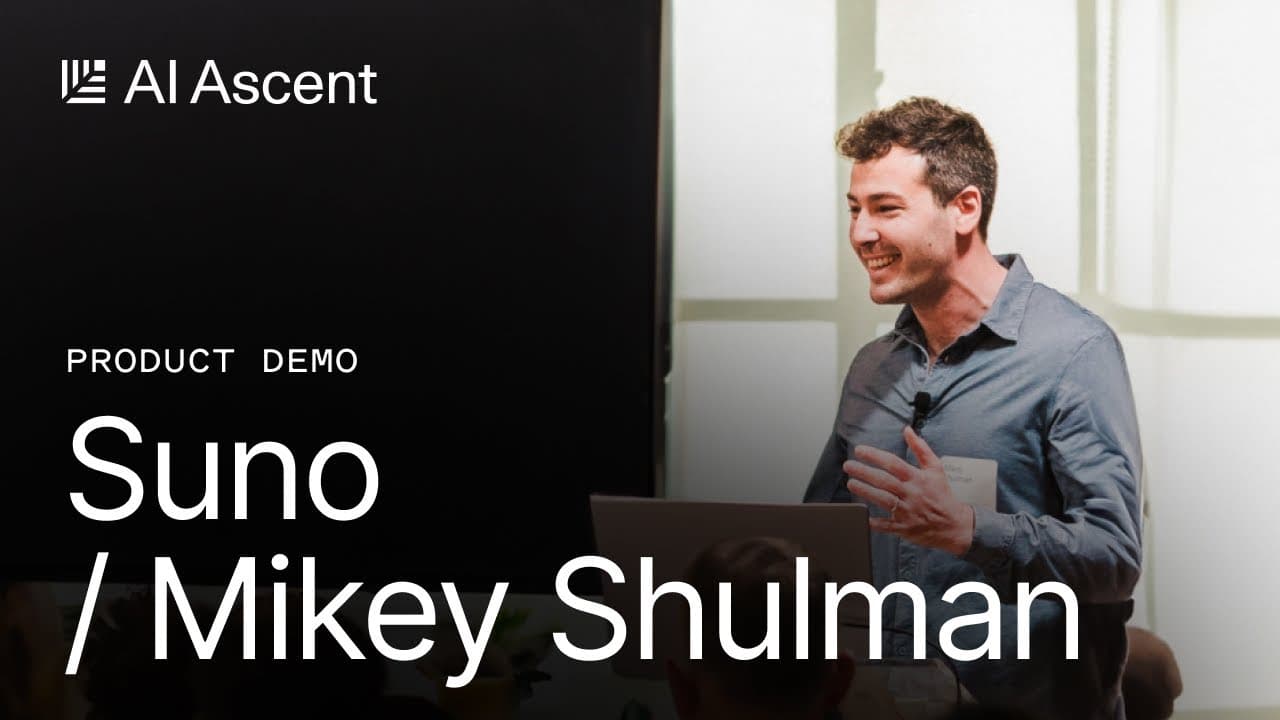
AI prompts describe genre, mood, tempo, and instruments to generate music. The presenter demonstrates using a collaborative, text-based workflow to create and refine music with Suno's AI, highlighting how people can produce music without traditional performance skills and explore diverse styles through prompts and iterations.
Transcript
up next we have Mikey Schulman who's the CEO of sunno in AI music company that can help anybody create great music uh and Mikey if if I remember correctly you're actually we're all going to make a song together that's the plan okay let's let's do it so everyone get get thinking on lyrics I love music uh I think most humans are kind of hardwired to ... Read More
Key Insights
- AI music tools enable broad participation by letting anyone describe a sound with text prompts
- Prompt-based generation supports rapid exploration of multiple genres and moods without traditional instruments
- Text prompts can combine disparate genres to create hybrid styles that feel novel yet coherent
- The creative process is collaborative, letting participants contribute ideas and refine the output collectively
- Users can be emotionally moved by user-generated pieces, indicating meaningful engagement beyond simple novelty
- Prompts can guide tempo, rhythm, and instrumentation to shape structure before production
- AI-generated music can reflect personal or cultural themes, expanding accessibility for diverse creators
- The technology encourages experimentation and curiosity, reducing the intimidation barrier for new musicians
- More videos from this channel:
- More from this channel: Sequoia Capital
Install to Summarize YouTube Videos and Get Transcripts
Explore YouTube Video Summarizer or Get YouTube Transcript Extractor
Questions & Answers
Q: What is the main way to create music with AI according to the video
The main method shown is using text-based prompts to describe genre, mood, tempo, and instruments to generate music. Participants can propose ideas, then the AI produces a track that can be further edited. This approach makes music creation accessible to people who may not play instruments and supports rapid experimentation across styles.
Q: How does the presenter describe the value of making music together with AI
The presenter emphasizes that making music together with AI allows many people to participate who might not traditionally engage in music creation. By sharing prompts and collaborating on a piece, a diverse group can contribute, experiment with ideas quickly, and experience the creative process as a communal activity rather than a solitary task.
Q: What kind of genres or riffs were explored in the demonstration
The demonstration shows mashups of multiple genres, including grunge and R&B, and adds a salsa feel. This illustrates how AI can blend contrasting musical styles, producing unusual yet intriguing results. The audience can request new genre combinations to steer the output toward a desired hybrid sound.
Q: What is the role of the audience in the session
The audience participates by suggesting genres and topics for the music, effectively co-creating the track. This collaborative dynamic leverages collective input to expand creative options, while the AI handles generation and initial structuring based on the prompts provided by participants.
Q: Can AI music generation be tied to personal or cultural themes
Yes, the speaker notes how user-generated pieces can reflect personal tastes or cultural elements, and even a piece in a language not spoken by the user resonates emotionally. This demonstrates how AI can translate personal experiences and cultural references into audible formats that connect with listeners.
Q: What does the speaker say about children and music with AI
The speaker mentions that kids are hardwired to love music and could benefit from tools that enable music creation. AI-based prompts and generation can unlock early creative experiences, helping children explore sounds and styles they enjoy while developing their own expressive capabilities and confidence.
Q: What is a personal takeaway from the session
A personal takeaway is witnessing a highly crafted user-made piece that resonated with the speaker, showing that AI can help create meaningful music that touches people. This underscores the potential of AI-assisted tools to foster real emotional connections through innovative musical expression.
Q: What is the overarching goal of Suno's AI music approach
The overarching goal is to enable anyone to create great music by providing accessible, text-based tools that translate descriptive prompts into musical output. This approach expands creative possibilities, supports diverse styles, and invites broader participation in music-making beyond traditional performers or producers.
Summary & Key Takeaways
-
The talk shows how AI can expand who creates music by removing barriers like instrument proficiency, inviting broad participation and collaboration across genres.
-
The demonstration uses genre mashups and topical themes to illustrate how prompts drive creative output and how users can iterate toward a desired sound.
-
The speaker emphasizes personal connections to the generated music, noting how a user-created piece resonated strongly and sparked interest in further collaboration and contact beyond the demo.
Read in Other Languages (beta)
Share This Summary 📚
Summarize YouTube Videos and Get Video Transcripts with 1-Click
Try YouTube Summary with ChatGPT & Claude or YouTube Transcript Generator
Explore More Summaries from Sequoia Capital 📚
Summarize YouTube Videos and Get Video Transcripts with 1-Click
Try YouTube Summary with ChatGPT & Claude or YouTube Transcript Generator