What Are the Best and Worst Back Exercises for Muscle Growth? (Ranked by Science)
TL;DR
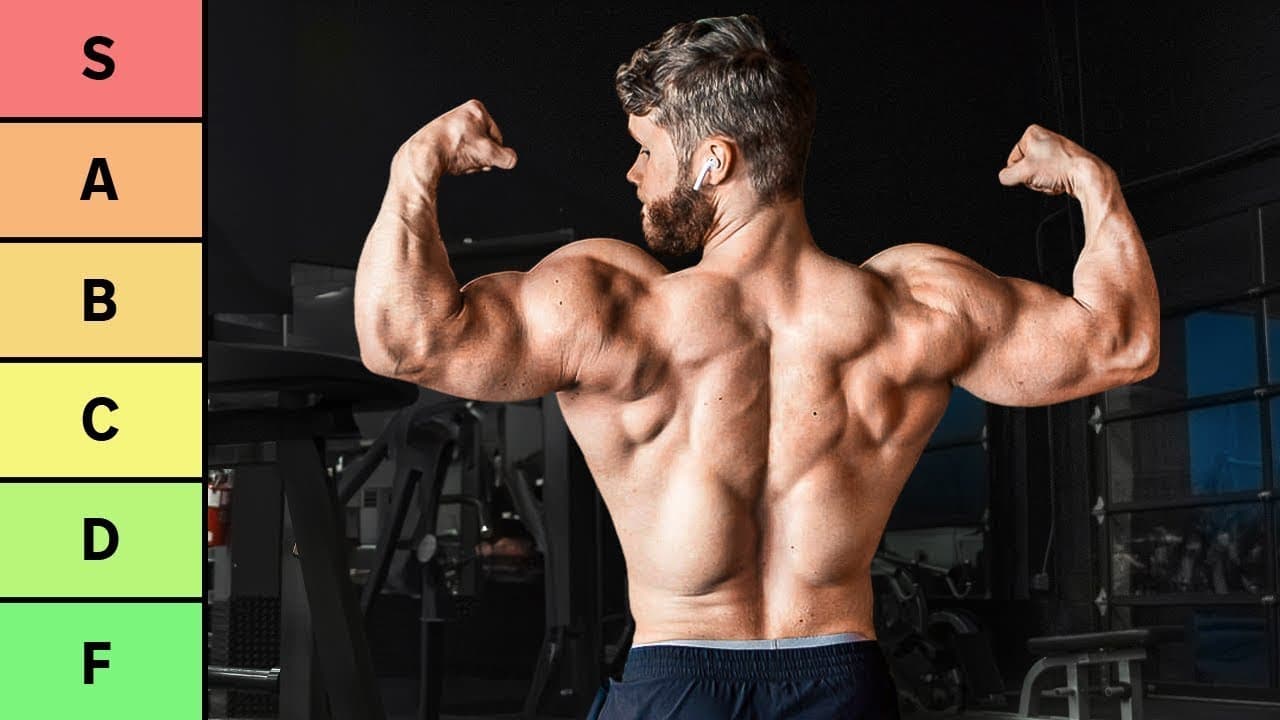
The chest-supported row is the best back exercise for muscle growth, while the Renegade row is the worst. The ranking compares 20 popular movements using three criteria: high tension with a big stretch, good feel, and simple progression through added weight or reps. Pull-downs, Meadows rows, and cable rows also reach S tier, while deadlifts rank C tier as back builders. Read on to see why each movement earned its place.
Transcript
what are the best and worst back exercises for muscle growth well in this video I'll be ranking 20 of the most popular movements on a tier list from s for super to F for fail and at the end I'll Crown one exercise as the best of the best raising it to S tier plus and one as the worst of the worst demoting it to F tier hell and to make sure your fav... Read More
Key Insights
- Chest-supported rows are the top exercise for back muscle growth due to their high tension and stability.
- Renegade rows are the least effective for back hypertrophy because of their lack of stability and tension.
- Wide-grip pull-ups and neutral-grip pull-ups are highly effective, providing high tension and good progression.
- Wide-grip lat pulldowns and neutral-grip lat pulldowns are excellent for a deep stretch and smooth tension.
- Barbell rows offer good stretch and tension but require stabilization from other muscles.
- Pendlay rows, with a controlled negative, offer high stretch and tension, suitable for strength development.
- Cable rows provide a deep stretch and a strong lat pump, making them highly effective.
- Face pulls can be unstable, but modifying them to be seated or lying down improves their effectiveness.
Install to Summarize YouTube Videos and Get Transcripts
Explore YouTube Video Summarizer or Get YouTube Transcript Extractor
Questions & Answers
Q: What are the best and worst back exercises for muscle growth?
The chest-supported row is ranked as the best back exercise because it directs tension toward the back with a stable, secure setup. The Renegade row is ranked worst because the combined plank and row limit the back’s stretch and tension while other muscles work to maintain balance.
Q: How were the 20 back exercises ranked?
Each exercise was judged on three criteria: a big stretch with high tension, good feel, and simple progression. Good feel includes a smooth resistance profile without pain, while progression means being able to add weight or reps over time.
Q: Why are chest-supported rows so effective for building the back?
Chest support removes much of the balance requirement and lets you focus the tension on your back. The movement can be performed with a chest-supported machine, dumbbell Helms rows against an incline bench, a T-bar setup, or another machine that helps you engage your back.
Q: Why are Renegade rows poor for back hypertrophy?
Renegade rows do not provide a strong stretch because the dumbbell reaches the floor, and they reduce back tension because other muscles must maintain balance. Combining a plank with a dumbbell row waters down the tension received by the back, placing the exercise in F tier.
Q: Which pull-up and pull-down variations rank highest?
Wide-grip and neutral-grip pull-ups rank in A tier because they provide high tension, a deep stretch, and straightforward progression. Wide-grip, neutral-grip, and half-kneeling one-arm lat pull-downs rank in S tier because they combine stretch, tension, good feel, and easy overload.
Q: Are deadlifts effective for back muscle growth?
Deadlifts rank in C tier as back builders because they do not stretch the lats or midback much or move the lats and traps through an active range of motion. They can still strengthen the total body and develop the spinal erectors and lower back, but the ranking identifies better options for pure back hypertrophy.
Q: How do Pendlay rows compare with standard barbell rows and Yates rows?
Standard barbell rows rank in B tier because they offer stretch and tension but require stabilization from the calves, glutes, and lower back. Yates rows rank in C tier because their upright posture and looser technique reduce stretch and can introduce momentum, while controlled-negative Pendlay rows rank in B tier because their bent-over position increases lat stretch and tension.
Q: Why do cable rows rank in S tier?
Cable rows provide a deep lat stretch, especially when leaning forward during the negative, along with a strong lat pump. They also support steady progression by adding reps or weight, and a wide grip can shift more emphasis toward the mid traps.
Summary & Key Takeaways
-
Chest-supported rows are the best back exercise, providing high tension and stability for both lats and midback. They are versatile and can be performed in various effective ways. (50 words)
-
Renegade rows are rated the worst for back muscle growth due to insufficient stability and tension. They combine a plank and dumbbell row, diluting the back tension and making them ineffective for hypertrophy. (50 words)
-
Wide-grip and neutral-grip pull-ups, along with lat pulldowns, are highly recommended for back growth. They offer high tension, deep stretch, and smooth resistance, making them effective for muscle building and progression. (50 words)
Read in Other Languages (beta)
Share This Summary 📚
Summarize YouTube Videos and Get Video Transcripts with 1-Click
Try YouTube Summary with ChatGPT & Claude or YouTube Transcript Generator
Explore More Summaries from Jeff Nippard 📚


Summarize YouTube Videos and Get Video Transcripts with 1-Click
Try YouTube Summary with ChatGPT & Claude or YouTube Transcript Generator