How to set healthy boundaries to ease anxiety
TL;DR
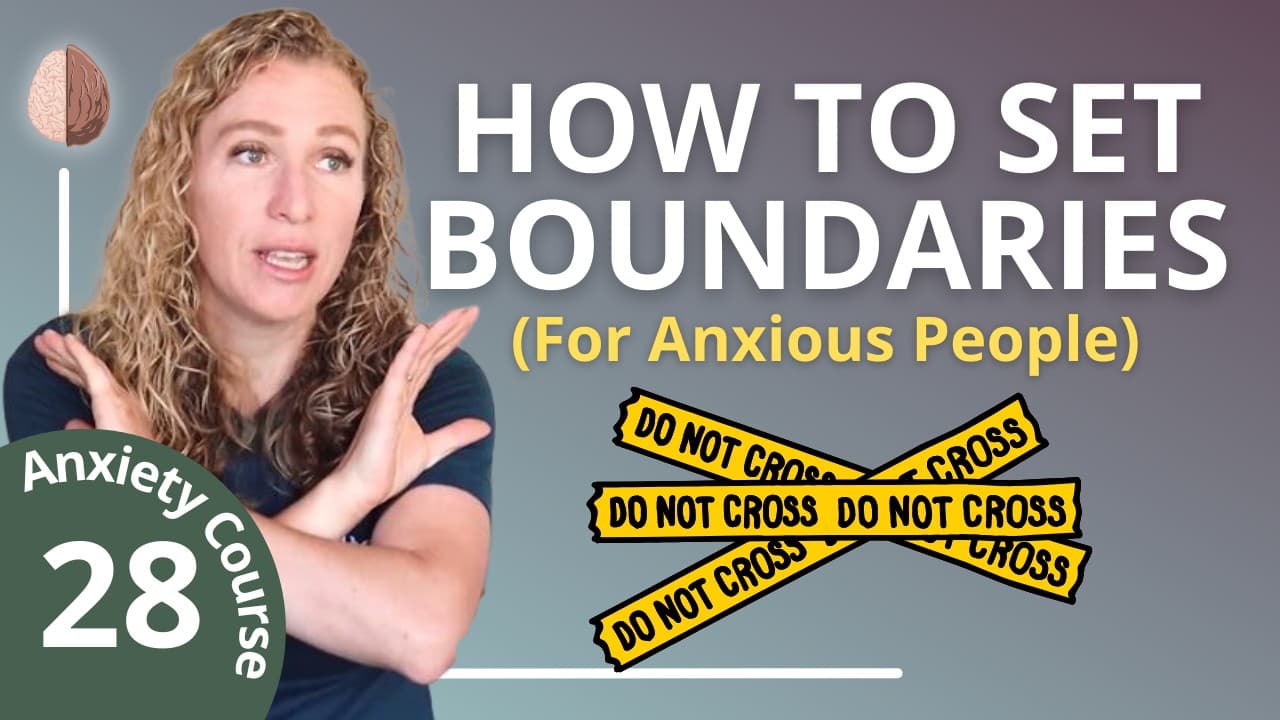
Clear boundaries reduce anxiety by clarifying what you will and will not allow in your life. The video outlines three faulty beliefs that block boundary setting and presents a three step process: make a request, use if then, and stay consistent, with practical examples to apply in daily life.
Transcript
People with anxiety often struggle with boundaries. And that's partly because setting a boundary makes them anxious and not holding a boundary makes them anxious. And because many people with anxiety are sensitive and empathetic, they're more likely to sacrifice their own needs and wants than to set boundaries on others. If you tend to be anxio... Read More
Key Insights
- Boundaries are based on values and protect your time, energy, and resources.
- Anxious people often confuse niceness with kindness, which harms boundaries in the long run.
- Boundaries are not about controlling others but about controlling your own actions and reactions.
- Saying no can be necessary to reduce stress and protect well being.
- Boundaries require clear, assertive communication using eye statements and direct language.
- If then statements are used to articulate limits and expected responses.
- Consistency is essential; boundaries must be upheld even when uncomfortable.
- Setting boundaries helps improve relationships by clarifying expectations and reducing misunderstandings.
- More videos from this channel:
- More from this channel: Therapy in a Nutshell
Install to Summarize YouTube Videos and Get Transcripts
Explore YouTube Video Summarizer or Get YouTube Transcript Extractor
Questions & Answers
Q: How can boundaries reduce anxiety in daily life
Boundaries reduce anxiety by clarifying what you will and will not allow, which lowers uncertainty about how you will handle requests and pressure. The approach emphasizes aligning actions with your values, enabling you to protect your time, energy, and resources. Through consistent application, anxiety about over committing or being overwhelmed decreases as expectations become clear.
Q: What are the three faulty beliefs that block boundary setting
The video identifies three faulty beliefs that block boundary setting: 1) thinking that making others feel good is kindness and saying no is mean; 2) believing boundaries are about telling others what to do; 3) waiting to feel certain emotions before setting a boundary. Reframing these beliefs helps you act in ways that protect your well being and relationships.
Q: What is the first step in setting a boundary
The first step is to make a request. This involves clearly and assertively communicating your needs, using eye statements to express how you feel and what you need. It also allows for empathy and problem solving to find a mutual solution, improving communication and reducing friction in relationships.
Q: What is the second step in setting a boundary
The second step is to use if then statements. This step involves articulating a clear limit based on what you control. For example, you might say what you will do if the other party does not respect the boundary. This creates a concrete consequence that protects your boundaries.
Q: Why is consistency important in boundary setting
Consistency is crucial because boundaries only work if they are upheld over time. If you waver, others learn to test the boundary, which reinforces anxiety and confusion. Being consistent reinforces trust and predictability in relationships and supports your own emotional safety.
Q: How should you respond if someone talks to you in a way you won’t accept
If someone talks to you in a way you won’t accept, you respond with clear consequences, such as stating that you will hang up, walk away, or not respond. You control your actions, not their behavior, and this enforces the boundary without escalating the conflict.
Q: What is the difference between being kind and being nice in boundary work
Kindness is doing what is best for people, which may include saying no to protect well being, whereas niceness is about avoiding discomfort and sometimes enables unhealthy dynamics. Boundaries require acting with kindness, even when it feels uncomfortable, to support long term health of the relationship.
Q: How can boundaries improve relationships with others
Boundaries improve relationships by clarifying what you want and can offer, which reduces miscommunication and resentment. Clear limits about time, energy, and resources help each person understand expectations, respect, and mutual need for space, ultimately supporting healthier connections and less anxiety between people.
Summary & Key Takeaways
-
Boundaries help protect time, energy, and resources by aligning actions with personal values, making it easier to manage anxiety. The speaker emphasizes that boundaries are not about control but about clarity and self care within relationships.
-
Three faulty beliefs hinder boundary setting are discussed, including thinking saying no is unkind and believing boundaries control others. Reframing these beliefs helps you act kindly and effectively for everyone involved.
-
The three steps to setting boundaries are explained: make a request, implement if then, and be consistent, with emphasis on communication, assertiveness, and follow through as essential skills.
Read in Other Languages (beta)
Share This Summary 📚
Summarize YouTube Videos and Get Video Transcripts with 1-Click
Try YouTube Summary with ChatGPT & Claude or YouTube Transcript Generator
Explore More Summaries from Therapy in a Nutshell 📚


Summarize YouTube Videos and Get Video Transcripts with 1-Click
Try YouTube Summary with ChatGPT & Claude or YouTube Transcript Generator