What Changes With Continual Learning in AI?
TL;DR
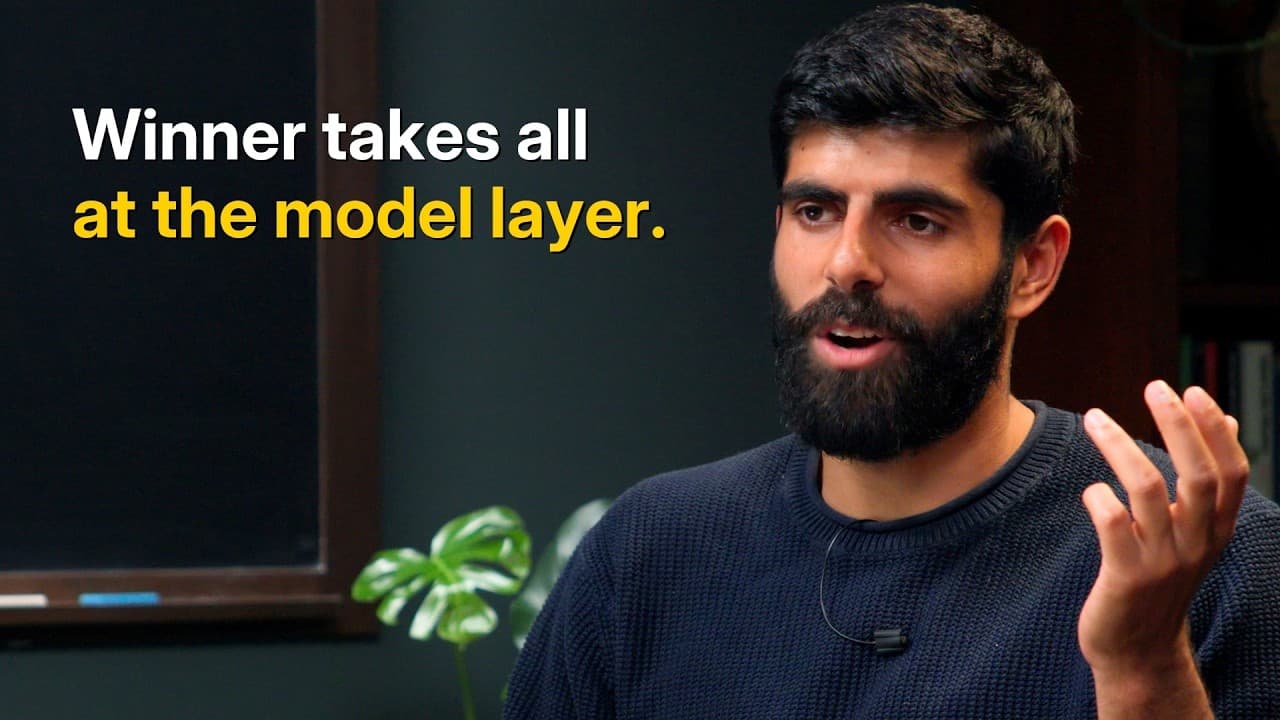
Continual learning means AI systems improve from ongoing interaction rather than staying static after training. It changes safety checks, alignment research, and how value is created for labs and enterprises. Deployment itself becomes part of learning, creating faster feedback loops and new economic dynamics.
Transcript
I've explained elsewhere why I think actual continual learning is needed. I don't think you can have AIs that perform whole jobs as competently as humans if they are forced to just write markdown files from session to session. Just to give an illustrative example, imagine if this is the way that students learn to play the saxophone. You ha... Read More
Key Insights
- Continual learning requires moving safety inspections from a one time post training check to monthly or quarterly risk assessments.
- Alignment research must address maintaining trust and safety as weights are updated and experiences are shared across users.
- AI minds will become more diverse because real world experience differs across providers and instances, reducing monolithic uniformity.
- Deployment becomes part of training, accelerating the feedback loop so models improve faster than before.
- Labs may be pressured to release smarter models earlier as real world interaction informs updates.
- A strong moat can emerge for leading labs because continuous learning raises switching costs between providers.
- Enterprises may face lock-in pressures as models improve with session based learning, influencing outsourcing decisions.
- Inference economics improve with batching and larger scale, making personalized weight serving more efficient for big organizations.
- More videos from this channel:
- More from this channel: Dwarkesh Patel
Install to Summarize YouTube Videos and Get Transcripts
Explore YouTube Video Summarizer or Get YouTube Transcript Extractor
Questions & Answers
Q: How will continual learning change AI safety checks over time?
Continual learning implies safety evaluations should occur on a regular basis rather than at a single pre deployment moment. This means monthly or quarterly risk inspections, accommodating ongoing updates as the AI system learns from more sessions. It shifts the safety paradigm toward continuous monitoring and adaptation.
Q: What is the core idea behind changing AI alignment research in a continual learning world?
The core idea is to design alignment that remains robust even when the model weights update constantly. Researchers must address preventing jail breaks, malicious pivots, or deceptive shifts that could occur as the AI system accumulates knowledge from diverse interactions across users.
Q: Why might AI minds become more diverse in a continual learning regime?
Because experiences differ across providers and across instances of the same model, continual learning could yield a wider range of learned behaviors and capabilities. This diversity would counter the current trend toward a few similar base models and could improve resilience and adaptability.
Q: How does deployment speed interact with learning in this framework?
If deployment feeds learning, the fastest learning models gain more real world feedback, creating a race where earlier and more capable systems pull ahead. This accelerates the overall AI development cycle and increases the importance of rapid, safe deployment strategies.
Q: What effect does continual learning have on innovation and timing for labs?
Labs may feel pressure to deploy their most capable models sooner because real user interaction drives improvements. Delays between internal testing and public release become costly as competitors leverage deployment based learning to outperform static, offline benchmarks.
Q: What is meant by a moat for AI labs, and how is it created?
A moat refers to competitive barriers that protect leading labs from easy switching by users. Continual learning creates switching costs since organizations accumulate context and gains from ongoing interactions, making it harder to migrate to other providers without losing those benefits.
Q: How could enterprises respond to potential lock-in from continual learning?
Enterprises might seek options that avoid deep lock-in such as negotiating data sharing terms, using providers that allow modular updates, or maintaining parallel systems. The goal is to preserve the ability to switch while still benefiting from continual learning improvements.
Q: What are the economies of scale in continual learning for both training and inference?
Training economies scale as more users share the same model, while inference economies improve through batching. Large organizations can serve many concurrent sequences efficiently, but individuals may face higher relative costs unless batching becomes widely adopted across user bases.
Summary & Key Takeaways
-
Continual learning shifts safety and regulatory thinking from a single post training checkpoint to ongoing risk inspections that occur regularly. It also requires new alignment research focused on keeping systems reliable as weights update continuously. This changes how regulators and labs think about model safety.
-
The diversity of AI minds could increase as experiences diverge between providers and instances, reducing the current trend toward a few monolithic models. This may enhance robustness and compete on more than just a single baseline approach.
-
Economics of AI shift toward stronger lock-in and faster value capture as models improve with use. Enterprises may face new tradeoffs between performance gains from ongoing learning and the risk of vendor dependence, while labs optimize deployment speed to maintain competitive advantage.
Read in Other Languages (beta)
Share This Summary 📚
Summarize YouTube Videos and Get Video Transcripts with 1-Click
Try YouTube Summary with ChatGPT & Claude or YouTube Transcript Generator
Explore More Summaries from Dwarkesh Patel 📚




Summarize YouTube Videos and Get Video Transcripts with 1-Click
Try YouTube Summary with ChatGPT & Claude or YouTube Transcript Generator