How Did Mao Conquer China and Then Cause a Famine?
TL;DR
Mao won China's civil war by building a shadow government from the ground up, then caused history's worst peacetime catastrophe. His Great Leap Forward policies, including communes and backyard furnaces, produced the only nationwide famine in Chinese history and about 40 million deaths, yet many Chinese still revere him as a national hero.
Transcript
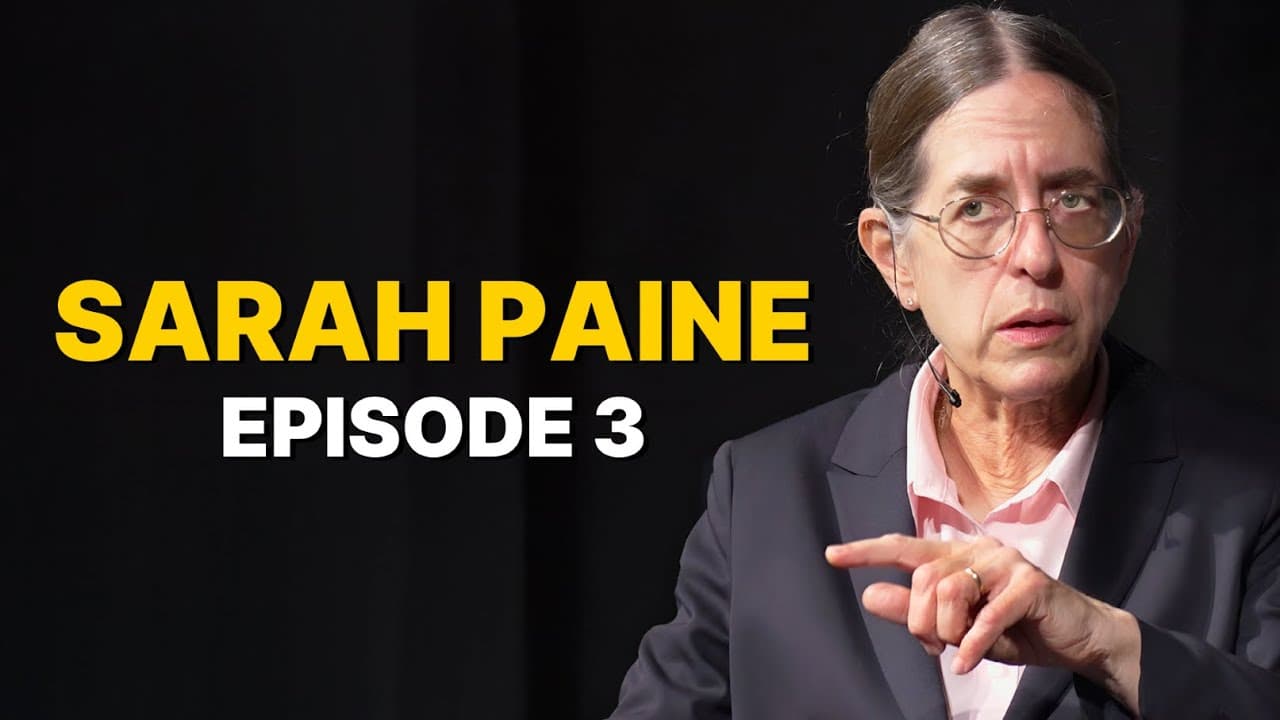
What I'm about to say are my ideas, they don't necessarily represent those of the US government, the US Navy Department, the US Department of Defense, or the Naval War College, you got that clear? Complain to me if you got problems. All right, I'm going to talk about Mao. He’s an incredibly consequential figure. For the 20th century, he's one ... Read More
Key Insights
- Mao is a different kind of theorist from Clausewitz, Sun Tzu, Mahan and Corbett, who wrote about warfare between states, because Mao's subject is triangle building: an insurgent assembling people, military and government from the ground up.
- Triangle building comes from Clausewitz's abstractions of passion, creativity and rationality, associated mainly with the people, the military and the government. A state already has these institutions, while an insurgent must construct them.
- Mao's methods appealed to the decolonizing world after World War II because those countries were agricultural and underdeveloped, unlike industrial Russia, so his model seemed more relevant to them than the Soviet one.
- A social revolution goes beyond a political revolution because it wipes out entire social classes. The lecture describes it as handing people a mass grave to dig and then putting them in it.
- The Great Famine was the only nationwide famine in Chinese history and was caused by policies set in Beijing rather than by weather. Communes put the party in control of the food supply.
- Mao kept exporting food during the famine because food exports were a major source of government income. About 40 million Chinese starved, mostly in rural areas and disproportionately peasant girls.
- Many Chinese revere Mao because he reunified China under communism and fought the major capitalist powers to a stalemate in the Korean War, which they see as ending the era of humiliations.
- Chiang Kai-shek nearly destroyed the Communists through five encirclement campaigns, but divided attention between Japan and the Communists let them survive the Long March, which cost them 95% of their forces.
Install to Summarize YouTube Videos and Get Transcripts
Explore YouTube Video Summarizer or Get YouTube Transcript Extractor
Questions & Answers
Q: Why is Mao considered a different kind of military theorist?
Clausewitz, Sun Tzu, Mahan and Corbett all wrote about warfare between states. Mao's subject is triangle building, in which an insurgent takes over a host state from within by building a shadow government and eventually taking power. A state already has military and civil institutions linked to its people, but an insurgent must build them from the ground up.
Q: What is triangle building in Mao's theory?
The term comes from Clausewitz, who described passion, creativity and rationality as mainly, but not exclusively, associated with the people, the military and the government. A state has full military and civil institutions connected to its people. An insurgent builds these elements from the ground up, which is what Mao did when creating a shadow government.
Q: What caused the Great Famine in China?
The Great Famine was caused by policies set in Beijing, not by weather. During the Great Leap Forward, Mao put peasants on communes, which gave the party control of the food supply, meaning control over who lived and who died. He also decentralized industry into backyard furnaces, and agricultural and industrial production collapsed.
Q: How many people died in the Great Famine?
About 40 million Chinese starved to death, primarily in rural areas and disproportionately peasant girls, the least valued members of society. The figure comes from Yang Jisheng, a journalist who used access to provincial archives to investigate starvation statistics, including the death of his own father, and wrote his book as an eternal tombstone.
Q: Why did Mao keep exporting food during the famine?
Food exports were Mao's pocket change, a major source of government income he needed in order to do anything. So the government kept exporting food even as production collapsed. The result was that about 40 million Chinese starved, in the only nationwide famine in Chinese history, which was caused by Beijing's policies.
Q: Why do many Chinese still revere Mao?
Many Chinese, certainly among the Han majority, believe their country must be a great power. Mao reunified China under communism and fought the coalition of major capitalist powers to a stalemate in the Korean War, which many see as a victory. That ended what they call the era of humiliations that began in the mid-19th century.
Q: Why did Mao's theories appeal to decolonizing countries?
Many decolonizing countries after World War II were tired of the West, having been colonized. The Soviets and Chinese Communists seemed to offer a better model. Because these countries were agricultural and underdeveloped, unlike industrial Russia, many thought Mao offered the more relevant model for taking over a failing state from within.
Q: What happened to the Communists during the Long March?
After Chiang Kai-shek's fifth encirclement campaign succeeded against their primary base, the Jiangxi Soviet, the Communists retreated to desolate Yenan in the far north. The lecture calls it the Long Rout, since they lost 95% of their forces. Chiang did not wipe them out because Japan's aggression divided his attention.
Summary & Key Takeaways
-
Sarah Paine presents Mao as one of the most consequential political and military figures of the 20th century and a major theorist of insurgency. Unlike Clausewitz, Sun Tzu, Mahan or Corbett, who addressed war between states, Mao built a shadow government inside a host state.
-
The lecture contrasts Mao the military genius, who reunified a broken China after 1911, with Mao the peacetime disaster. The Great Leap Forward's communes and backyard furnaces collapsed production and caused the Great Famine, with about 40 million deaths documented by Yang Jisheng.
-
To explain Mao's wars, Paine traces the fall of the Qing in 1911, the warlord era, the Nationalist-Communist united front, the White Terror, the encirclement campaigns, the Long March, and Japan's invasion of Manchuria in 1931, which divided Chiang Kai-shek's attention.
Read in Other Languages (beta)
Share This Summary 📚
Summarize YouTube Videos and Get Video Transcripts with 1-Click
Try YouTube Summary with ChatGPT & Claude or YouTube Transcript Generator
Explore More Summaries from Dwarkesh Patel 📚



Summarize YouTube Videos and Get Video Transcripts with 1-Click
Try YouTube Summary with ChatGPT & Claude or YouTube Transcript Generator