What Does Charles C. Mann Say About Americas Before Columbus and Scientific Wizardry on the Lunar Society?
TL;DR
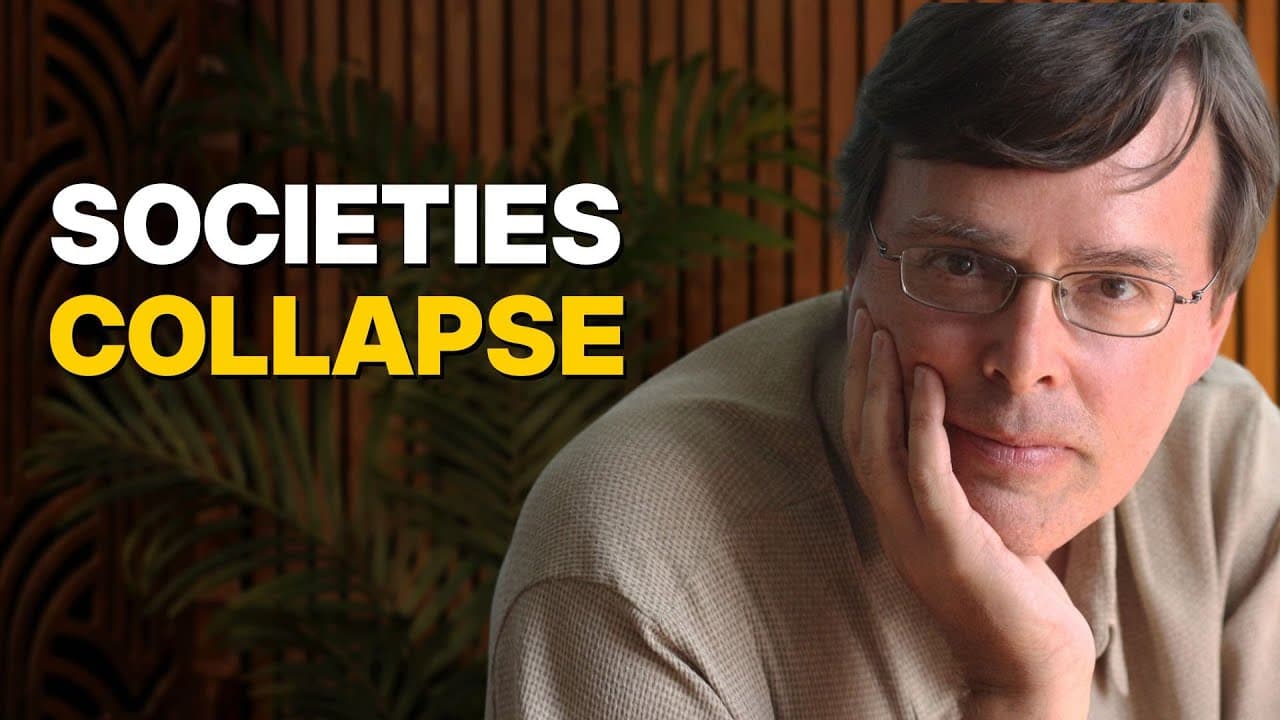
Charles C. Mann argues that contact between Eurasia and the Americas was likely, but its consequences depended on chance, contingency, and human agency. He connects Eurasia’s greater number of domesticable animals to zoonotic diseases, explains how Cortés exploited divisions within the Triple Alliance, and contrasts technological solutions with natural limits. Read on for his account of conquest, empire, disease, and environmental thought.
Transcript
one of the weird things is that um about podcasts is that as far as i can tell the average podcast interviewer is far more knowledgeable and uh thoughtful than the average sort of mainstream uh journalist interviewer had i just find that amazing i don't unders don't understand it so i think you guys should be hired by the uh you know they should sw... Read More
Key Insights
- 🎙️ Podcast interviewers surpass mainstream journalists in their knowledge and thoughtfulness.
- 😘 Elites frequently collaborate to increase power and exploit the lower classes in the rise of empires.
- 🎁 Science and technology present solutions to environmental challenges, but natural limits and planetary boundaries must be considered.
- ❓ The encounter between Eurasians and Native Americans was destined to happen due to the disparity in domesticable animals and zoonotic diseases.
- ⌛ Collapse should be reevaluated as many indigenous communities have persisted and successfully adapted over time.
- 💱 The American West of the future will likely experience environmental changes, ethnic diversification, energy dominance, and indigenous sovereignty.
- 🧑🏭 The historical perspective of collapse should factor in the cultural values, trade networks, and societal complexities of the affected civilizations.
Install to Summarize YouTube Videos and Get Transcripts
Explore YouTube Video Summarizer or Get YouTube Transcript Extractor
Questions & Answers
Q: Was contact between Eurasians and Native Americans inevitable?
Mann says contact between people from Eurasia and the Western Hemisphere was likely to happen eventually. However, the exact course of the encounter was shaped by chance, contingency, and human agency.
Q: Why was there an epidemiological disparity between Eurasia and the Americas?
Mann attributes much of the disparity to Eurasia having many more domesticable animals. This encouraged zoonotic diseases, which begin in animals, cross the species barrier, and become human diseases.
Q: Did disease make the historical outcome of European contact unavoidable?
No. Mann says diseases were likely to accompany contact, but the outcome did not have to unfold as it did. He points to alternative histories in which earlier Viking contact changes the epidemiological balance before Columbus arrives.
Q: Does Charles C. Mann say European slavery was inevitable?
No. He says it is possible to imagine Europeans not engaging in wholesale slavery. He notes that the practice was debated and that members of the Catholic monarchy asked the pope whether it was acceptable.
Q: How did Cortés defeat the Triple Alliance?
Mann says Cortés exploited existing tensions and helped foment a civil war within the empire. He brought together enemies of the Triple Alliance and some of its own members to create a new political order.
Q: Why does Charles C. Mann prefer the term Triple Alliance to Aztec?
Mann says Aztec is an invention from the 19th century and that Triple Alliance is a better name. He describes it as three groups in central Mexico, with the Mexica as the largest.
Q: What does Charles C. Mann say about elites and the rise of empires?
Mann says elites often recognize one another and form arrangements that increase both sides’ power. He identifies this pattern in the East India Company and Spain, while people below those elites are exploited.
Q: How do the wizard and prophet views differ on environmental problems?
The wizard view holds that properly applied science and technology can produce a way out of environmental dilemmas. The prophet view emphasizes that natural systems follow laws and have carrying capacities, limits, or planetary boundaries.
Summary & Key Takeaways
-
Who: Charles Mann wrote 1491, 1493, and The Wizard and the Prophet.
-
Definition: Zoonotic diseases begin in animals, cross the species barrier, and become human diseases.
-
Compare: Eurasia had many more domesticable animals than the Western Hemisphere, contributing to a major epidemiological disparity.
-
When: Contact between Eurasian and Western Hemisphere peoples was likely, but its exact form depended on chance, contingency, and human agency.
-
Compare: Alternative history can preserve contact and disease while imagining a different outcome from European conquest.
-
Definition: The Triple Alliance consisted of three groups in central Mexico, with the Mexica as the largest.
-
Who: Cortés exploited internal resentments, enemies, and members of the Triple Alliance to foment civil war and create a new order.
-
Compare: Elites can cooperate to increase their power while exploiting people below them, as Mann says occurred with Spain and the East India Company.
-
Tool: Properly applied science and technology can help societies produce their way out of environmental dilemmas.
-
Compare: Wizards emphasize technological solutions, while prophets emphasize carrying capacity, natural limits, and planetary boundaries.
Read in Other Languages (beta)
Share This Summary 📚
Summarize YouTube Videos and Get Video Transcripts with 1-Click
Try YouTube Summary with ChatGPT & Claude or YouTube Transcript Generator
Explore More Summaries from Dwarkesh Podcast 📚




Summarize YouTube Videos and Get Video Transcripts with 1-Click
Try YouTube Summary with ChatGPT & Claude or YouTube Transcript Generator